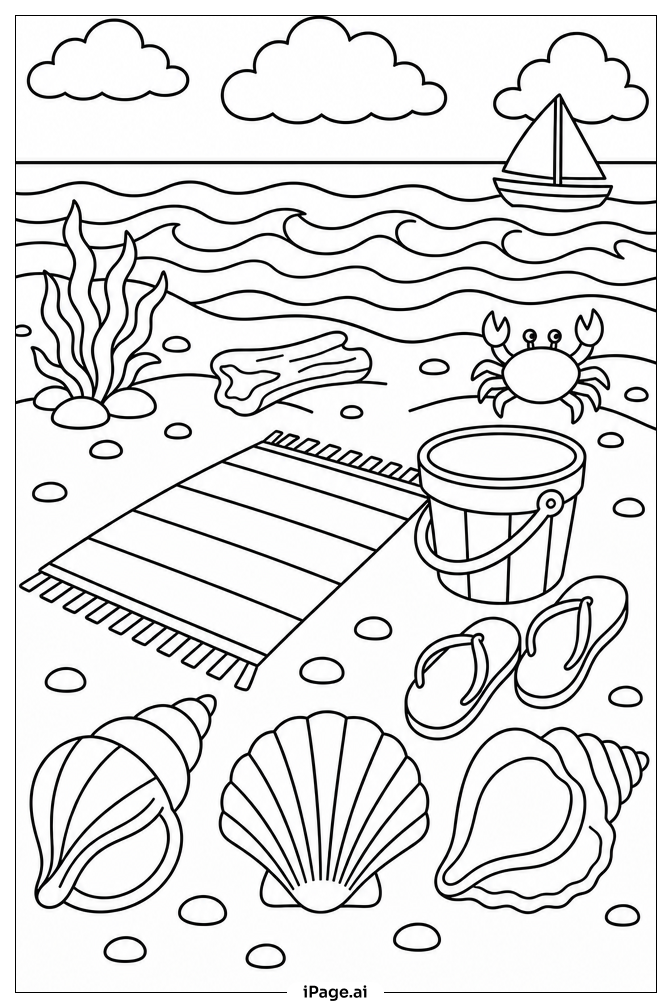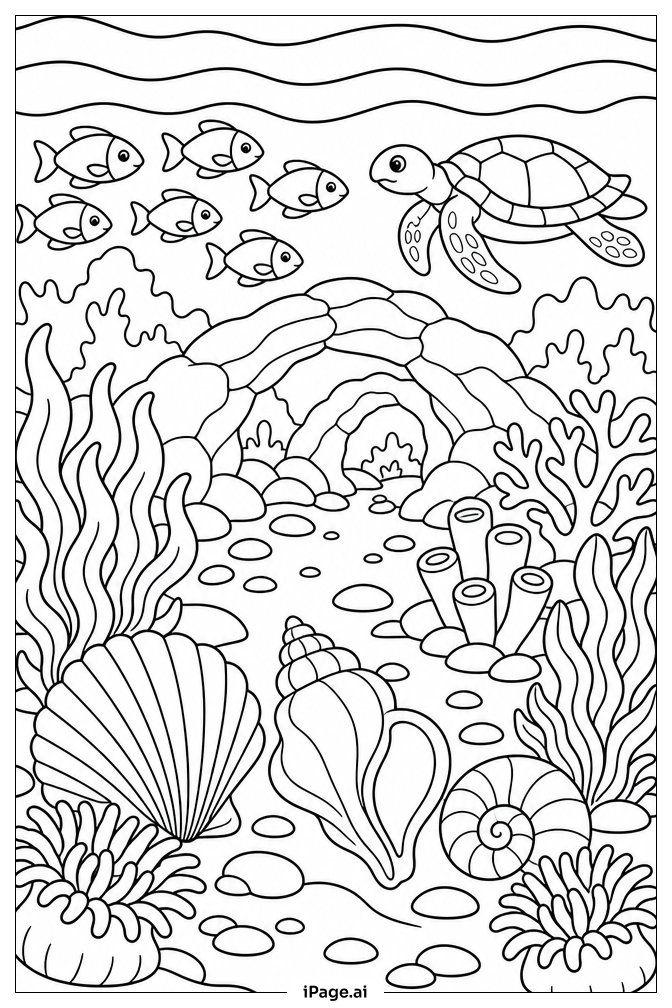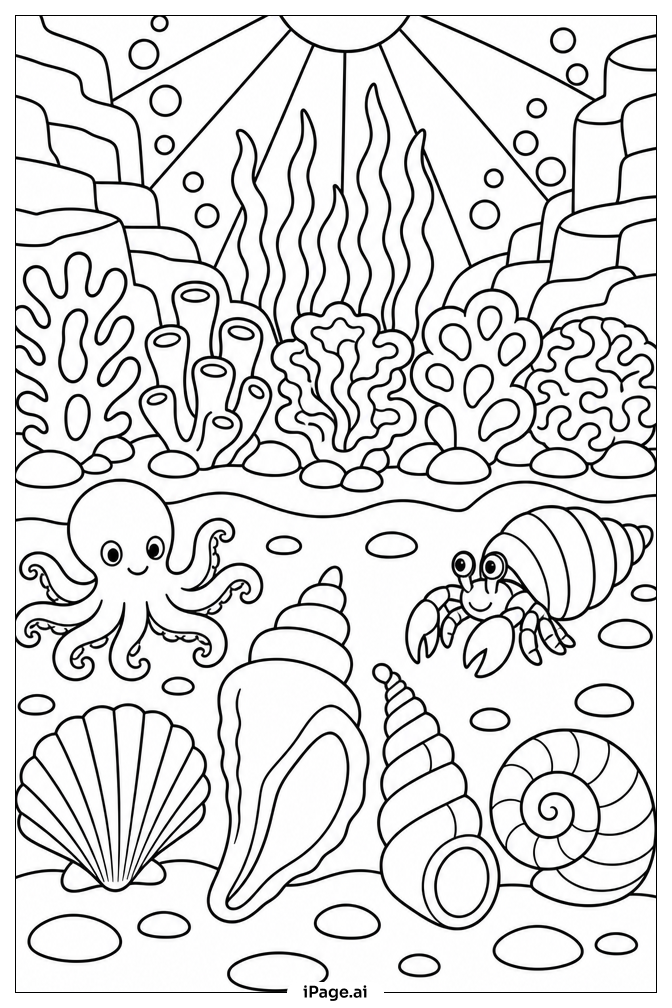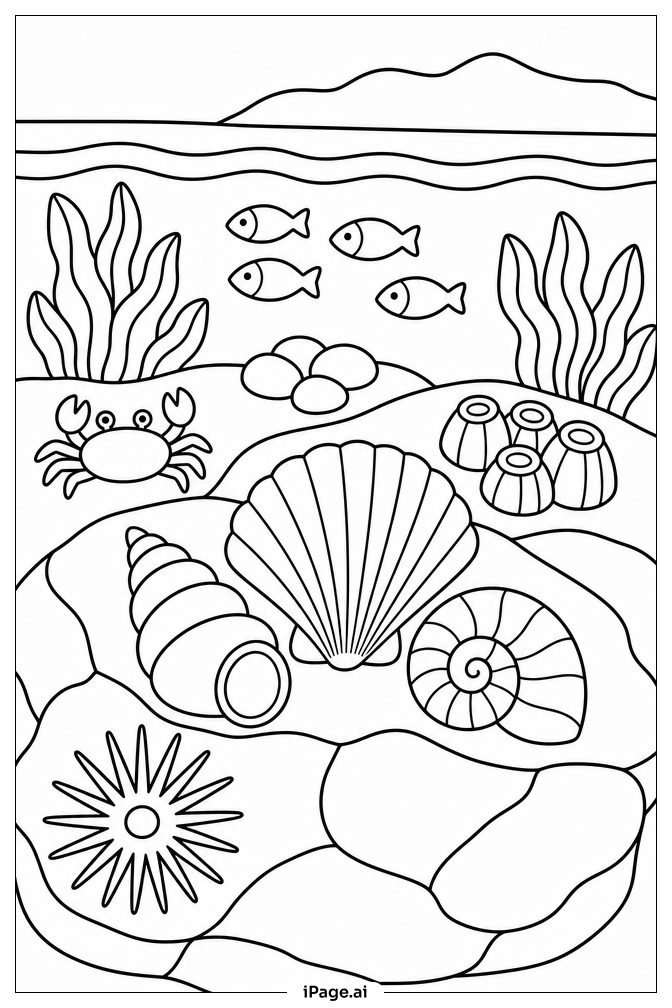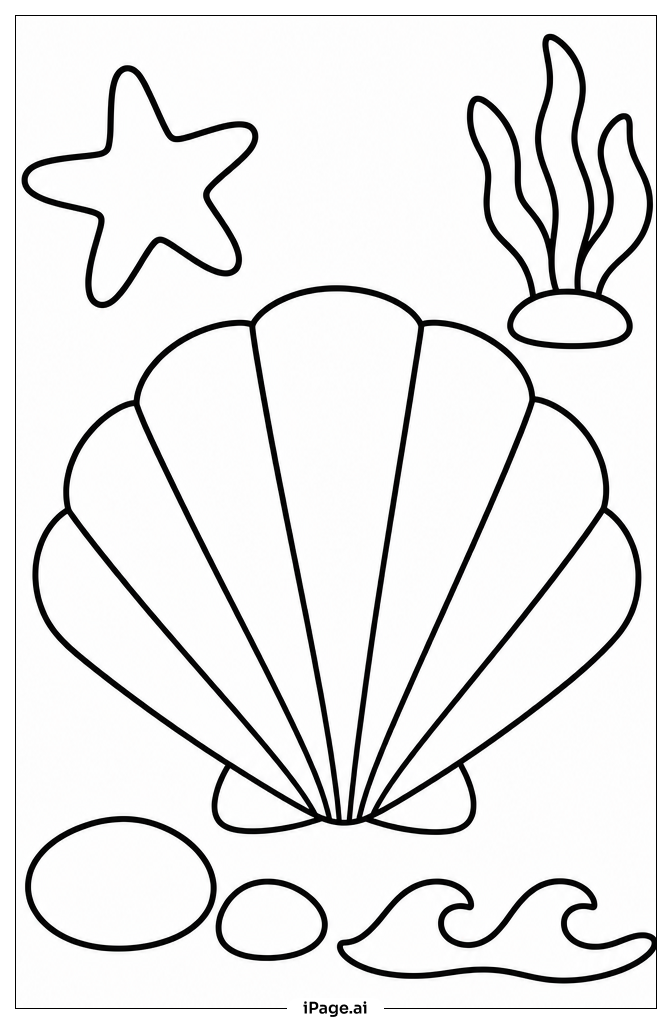
Coloring tips: How to color Seashell On Sand coloring page well?
Start with the sandy background. Use light tan, beige, or warm yellow tones. Add small dots or short strokes to show the texture of sand grains. For the seashell, try soft pinks, creamy whites, or light oranges. Many real seashells have a mix of warm tones, so feel free to blend peach, coral, and ivory together. Use darker shades of the same color along the ridges and grooves to give the shell a 3D look. The inner opening of the shell is often a glossy, pale pink or deep rose color. For the background waves or water hints, light blues and soft teals work great. Don't be afraid to add a little purple or lavender to the shell for a magical, ocean-inspired touch. Use a white crayon or colored pencil to add highlights on the shiny parts of the shell.
Coloring challenges: Which parts are difficult to color and need attention for Seashell On Sand coloring page?
Coloring this seashell image comes with several fun but tricky challenges:
• **Intricate Shell Patterns:** The seashell has many fine ridges, spiral lines, and detailed grooves. Staying inside these small sections requires a sharp pencil or thin marker. It takes patience and a steady hand to fill each tiny area neatly.
• **Creating a 3D Effect:** A real seashell has a rounded, curved surface that reflects light. To make your coloring look lifelike, you need to use light and dark shades of the same color. The raised ridges should be lighter, and the deep grooves should be darker. Blending these tones smoothly can be tricky for beginners.
• **Realistic Sand Texture:** Sand looks simple, but coloring it realistically takes effort. You need to layer different shades of beige, tan, and brown, and add subtle variation so it doesn't look flat. Using small circular strokes or dots helps create the grainy texture of real sand.
• **Balancing Colors Between Shell and Background:** The shell and the sand share similar warm tones. Making sure the shell stands out from the sandy background without clashing takes careful color selection. Choosing a slightly darker or more saturated shade for the shell helps it pop.
• **The Shell's Inner Opening:** The inside of the shell is a unique area — it's often smoother and shinier than the outside. Capturing this difference by using brighter, lighter colors on the interior compared to the more muted exterior tones is a small but important detail that adds realism to the finished piece.
Benefits of coloring books: Advantages of drawing Seashell On Sand coloring page
Coloring this seashell image offers many wonderful benefits for kids and beginners alike.
First, it helps improve **fine motor skills**. Carefully coloring the tiny ridges and spiral lines on the shell trains your hands and fingers to make precise, controlled movements — a skill that helps with writing and drawing too.
Second, it encourages **creativity and imagination**. There is no single "correct" way to color a seashell. Kids can choose any color combination they love, from realistic pinks and creams to rainbow fantasy shells. This freedom builds confidence and creative thinking.
Third, it teaches **patience and focus**. The detailed patterns on the shell require slowing down and paying close attention. Finishing a complex image gives a strong sense of achievement and helps build concentration skills.
Fourth, coloring a nature scene like this sparks **curiosity about the natural world**. Children may become interested in learning about oceans, marine life, and how seashells are formed — turning a fun art activity into a gateway for science exploration.
Finally, coloring is a great way to **relax and reduce stress**. The calm, repetitive motion of filling in shapes is soothing for both kids and Adults, making it a healthy and enjoyable way to unwind after a busy day.