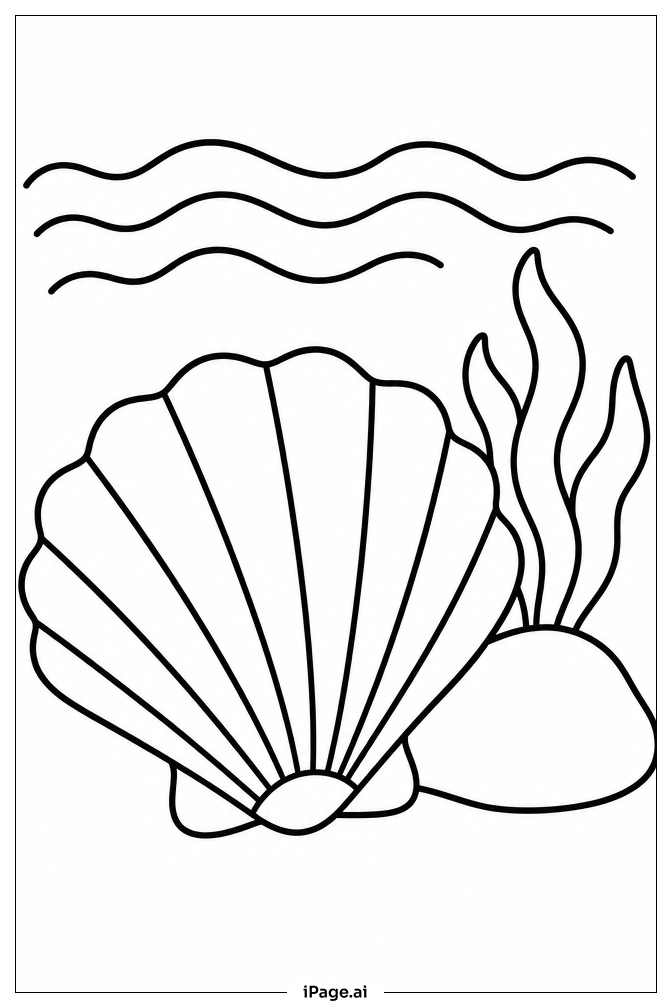
Coloring tips: How to color Seashell Near Waves coloring page well?
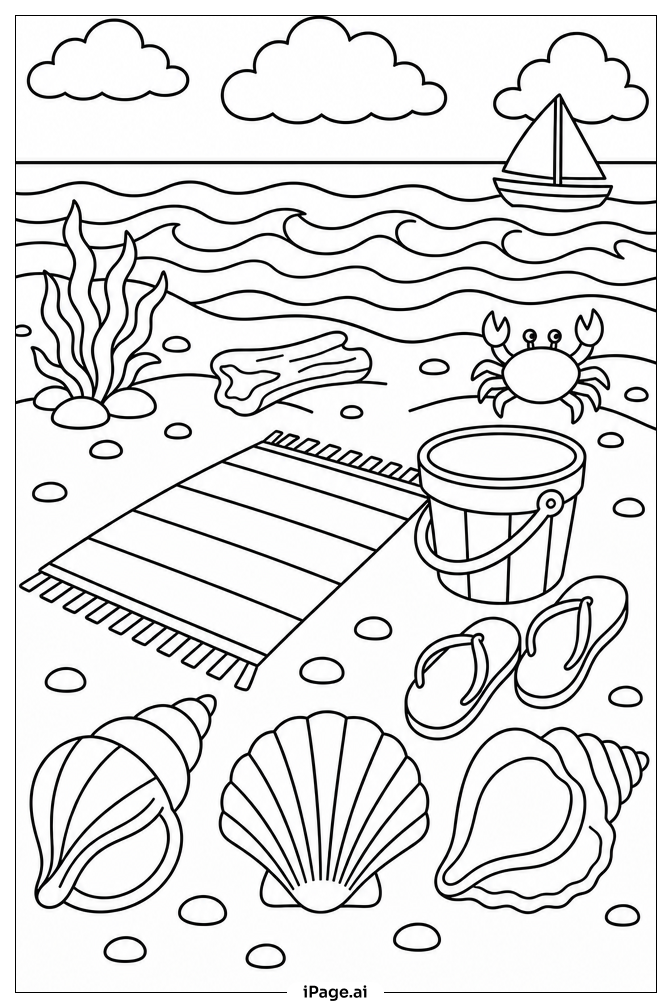
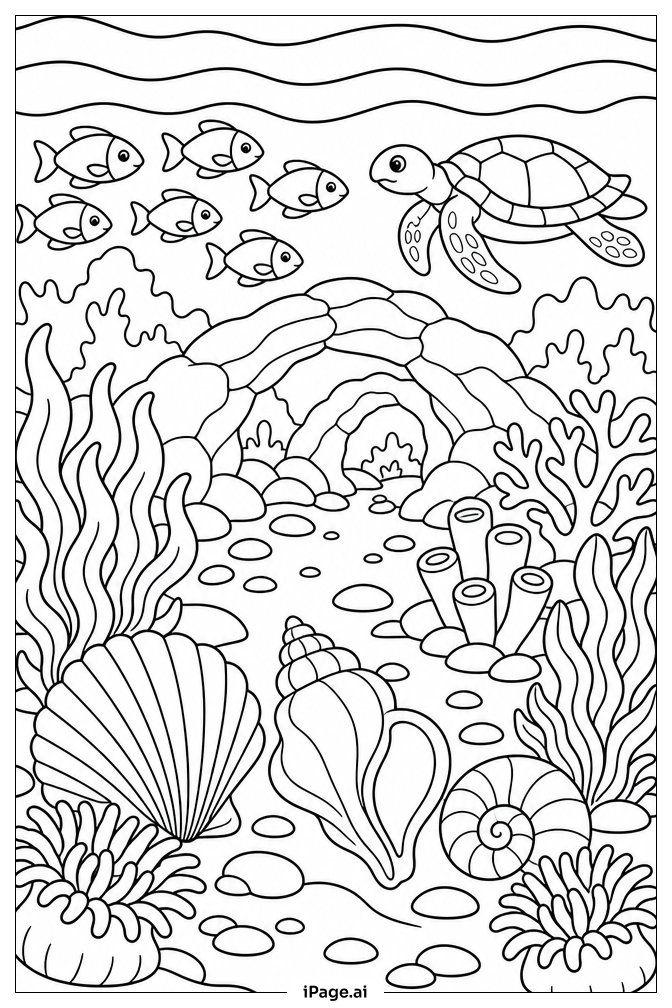
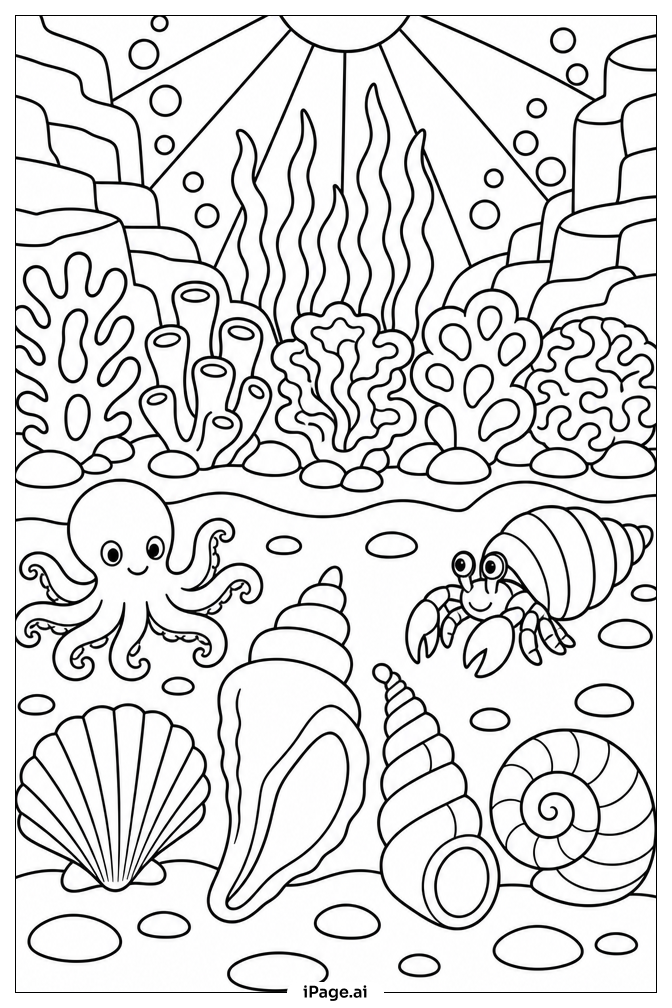
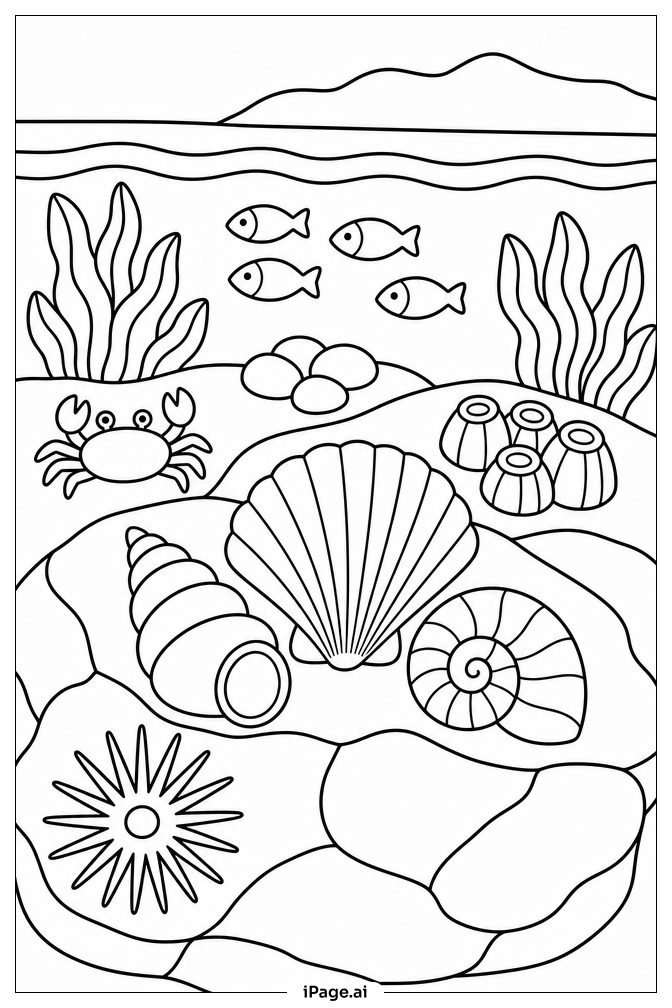
Start with the seashell itself. Use warm, sandy tones like cream, peach, and light brown for the base. Add hints of pink, coral, or soft orange along the ridges to bring the shell to life. Use darker shades to color the grooves and inner curves so the shell looks three-dimensional.
For the waves, try soft blues and aqua greens. Use lighter shades near the foam and darker blues where the water is deeper. White can be added at the wave tips to show the frothy seafoam.
Color the sand with tan and golden yellow. Mix in light brown and white to give it texture. Small pebbles can be colored gray or brown.
Keep the overall palette light and fresh to capture the breezy feeling of a beach scene. Kids can also try bolder, more imaginative colors — a rainbow shell or purple waves can look just as wonderful!
Coloring challenges: Which parts are difficult to color and need attention for Seashell Near Waves coloring page?
Coloring this beach scene comes with several fun challenges to keep in mind:
• **Shell Texture and Detail:** The seashell has many ridges, curves, and spiral lines packed closely together. Staying within these small sections requires a steady hand and a fine-tipped coloring tool. Younger children may find it tricky to color each ridge separately, so using broader strokes that follow the shell's curves is a helpful workaround.
• **Blending the Shell's Colors:** Real seashells often show gradual color changes from one shade to another. Recreating this gradient effect — for example, moving from pale cream at the edges to deeper pink near the center — can be difficult without blending tools or multiple shades of the same color family. Colored pencils work best here for gentle layering.
• **Wave Motion and Depth:** Waves are not a single flat color. They have light areas, dark areas, and transparent sections. Capturing that sense of movement and depth using just flat color tools is a real challenge. Try using at least two or three shades of blue and leave some white spaces untouched to suggest foam and light.
• **Sand Texture:** The sandy ground around the shell needs to feel gritty and natural without looking like a solid block of color. Light, short pencil strokes in multiple sandy tones can help suggest individual grains.
• **Balancing the Composition:** Making sure the shell stands out from the background without the waves and sand overpowering it requires careful color choices. Keep background tones softer and use the brightest or most saturated colors on the shell itself.
Benefits of coloring books: Advantages of drawing Seashell Near Waves coloring page
Coloring this seashell and ocean scene offers many wonderful benefits for kids and adults alike.
For children, tracing the fine lines of the shell's spiral and ridges helps develop fine motor skills and hand-eye coordination. Choosing colors for the shell, waves, and sand encourages creative thinking and imagination. It also builds patience and focus as kids work through the detailed sections one at a time.
Learning about the natural world is another great benefit. As children color, they can think about where seashells come from, how ocean waves move, and what life is like at the beach. It turns a fun activity into a gentle learning moment.
For older kids and adults, this scene offers a calming, mindful experience. The repetitive motion of coloring the shell's ridges and the flowing waves can reduce stress and anxiety. It gives the mind a chance to slow down and enjoy a peaceful, creative task.
Finishing the page also gives a real sense of accomplishment. Seeing the completed, colorful beach scene is genuinely rewarding. It can even inspire an interest in art, nature, or ocean science. Overall, this is a simple but enriching activity that benefits people of all ages.