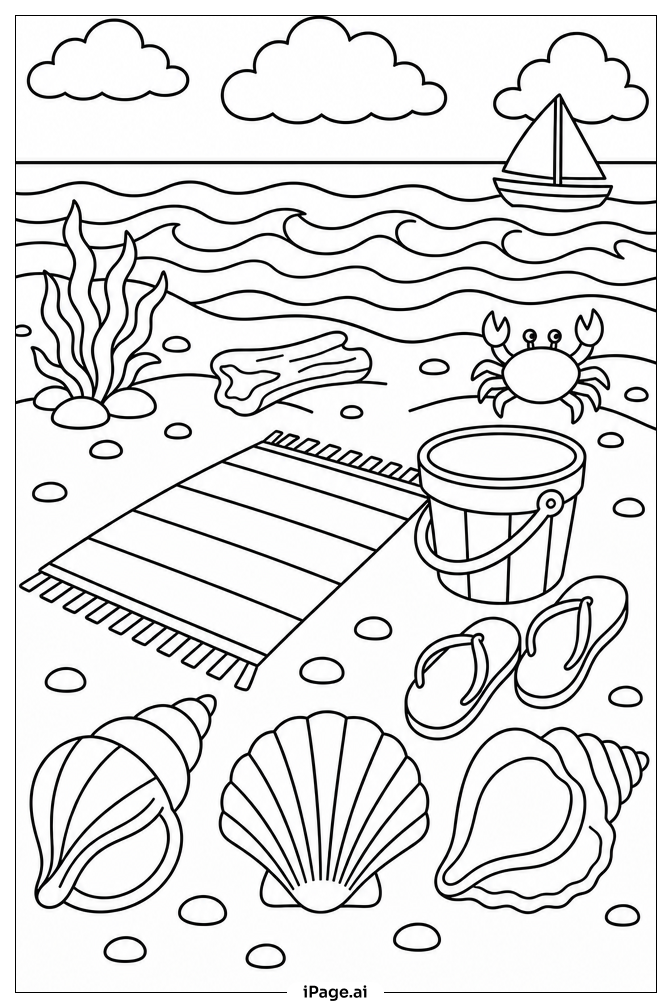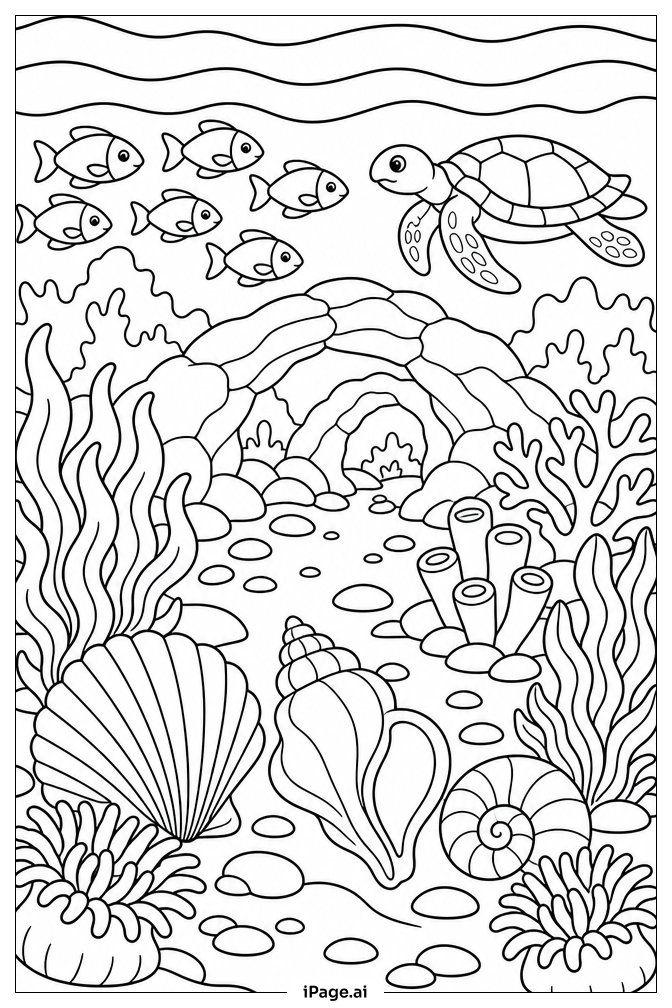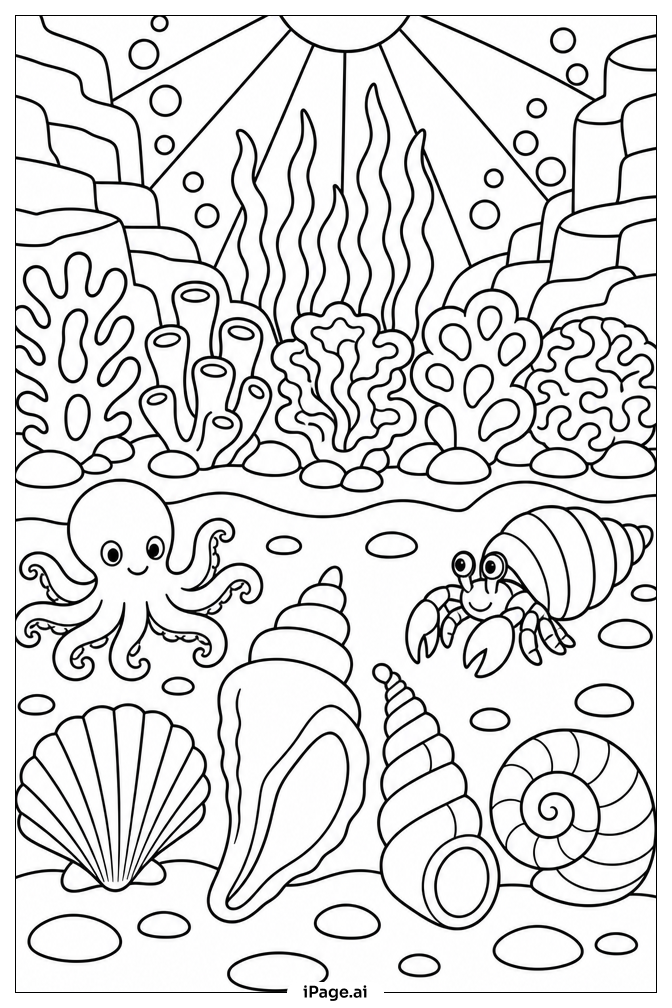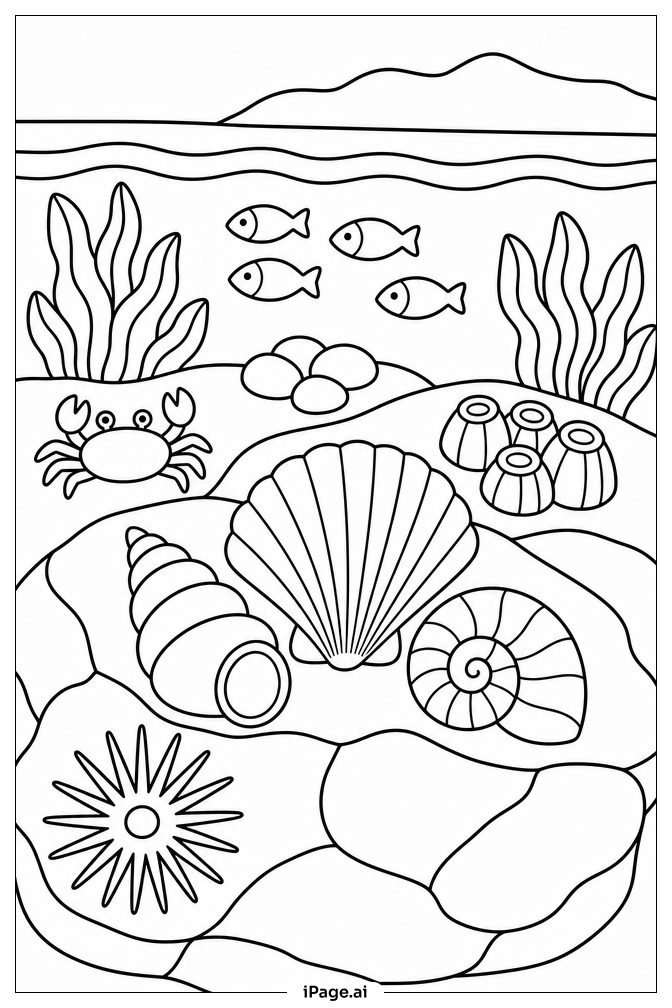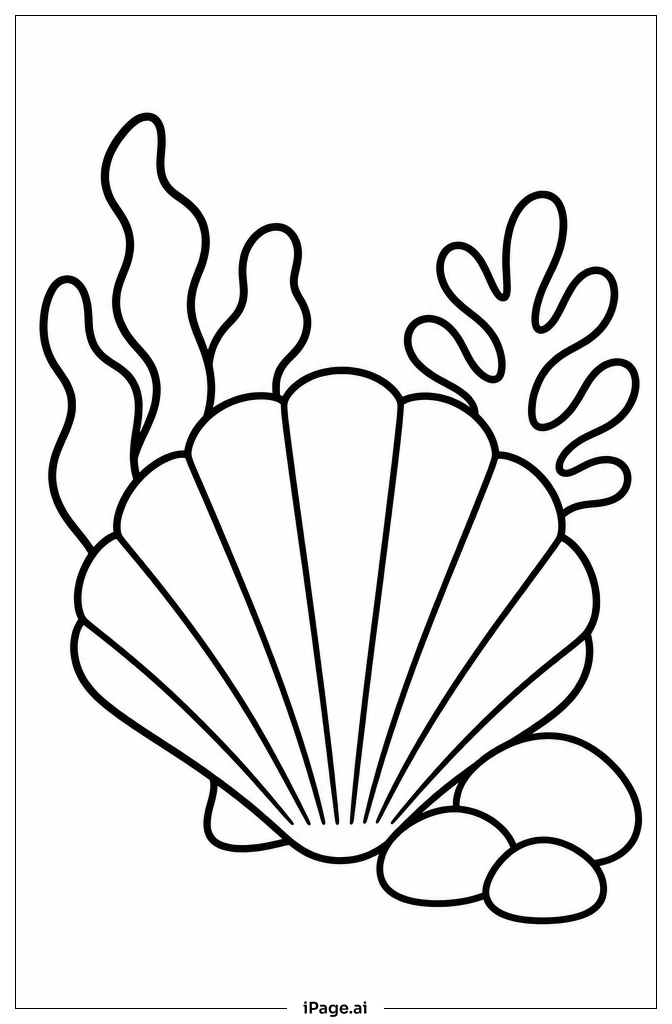
Coloring tips: How to color Seashell Garden coloring page well?
Start with the background first. Use soft sandy tones like tan or light beige for the ocean floor. Add pale blue or aqua for any water areas.
For the shells, try a wide range of warm colors. Conch shells look great in peachy pink, coral, or orange. Scallop shells can be cream, soft yellow, or lavender. Clam shells work well in gray, white, or pale purple.
Use contrasting colors on the ridges and spiral lines of each shell to make the patterns stand out. A darker shade of the same color works perfectly for this.
Paint the starfish in golden yellow or warm orange. Color sea urchins in deep purple or burgundy. Use green, teal, or dark olive for the seaweed and coral branches.
For the small sea flowers, pick bright and cheerful colors like pink, red, or violet. This adds energy and contrast to the softer shell tones.
Feel free to mix and blend colors to give each shell its own unique look. There are no rules here — let your imagination guide you!
Coloring challenges: Which parts are difficult to color and need attention for Seashell Garden coloring page?
• Shell Spiral and Ridge Patterns: Many shells in this image feature tight spiral lines and layered ridges. Staying inside these fine lines requires a sharp pencil or a thin-tipped marker. Using thick crayons or broad brushes can cause colors to bleed across sections, making the patterns look muddy. Take your time tracing along each line carefully.
• Overlapping Elements: Several shells, starfish, and pieces of seaweed overlap each other throughout the scene. When two objects overlap, you need to decide which one sits in front and color accordingly. Choosing slightly different shades for overlapping areas helps each element stand out and keeps the image from looking flat or confusing.
• Blending Gradients on Shell Surfaces: Real seashells often show a natural gradient, shifting from one color to another across their surface. Recreating this effect on a coloring page can be tricky, especially for younger colorists. Try layering a lighter color first, then gently adding a darker shade at the edges or tip of the shell without pressing too hard.
• Tiny Decorative Details: Small pebbles, sea urchin spines, and miniature sea flowers are scattered throughout the image. These tiny details are easy to overlook but make a big difference in the final result. Use fine-tip tools and steady hands to fill them in neatly without accidentally coloring outside their borders.
• Maintaining Color Harmony: With so many different shells and ocean elements packed into one scene, it can be easy to end up with a chaotic mix of colors. Choosing a consistent color palette before you start — such as warm coral tones or cool ocean blues — will help the whole image feel balanced and visually pleasing.
Benefits of coloring books: Advantages of drawing Seashell Garden coloring page
Coloring this Seashell Garden image offers a wonderful range of benefits for children and young artists of all ages.
Fine motor skills get a real workout here. Carefully filling in spiral shell patterns and tiny sea details requires steady hands and good pencil control, skills that help with writing and everyday tasks.
Creativity and color sense are naturally developed as colorists choose palettes for dozens of unique shells, starfish, and ocean plants. Learning how colors interact and complement each other is a fun, hands-on lesson in art and design.
Patience and focus are built through the process of coloring complex textures and overlapping shapes. Children learn to slow down, pay attention to detail, and complete tasks step by step.
The ocean theme also sparks curiosity about the natural world. Kids may become interested in learning about real seashells, marine life, and coastal ecosystems after spending time with this image.
Finally, coloring is a calming activity. It helps reduce stress and anxiety, offering a quiet creative outlet that feels both relaxing and rewarding. Finishing a beautiful Seashell Garden page gives a strong sense of pride and accomplishment that boosts confidence in young artists.