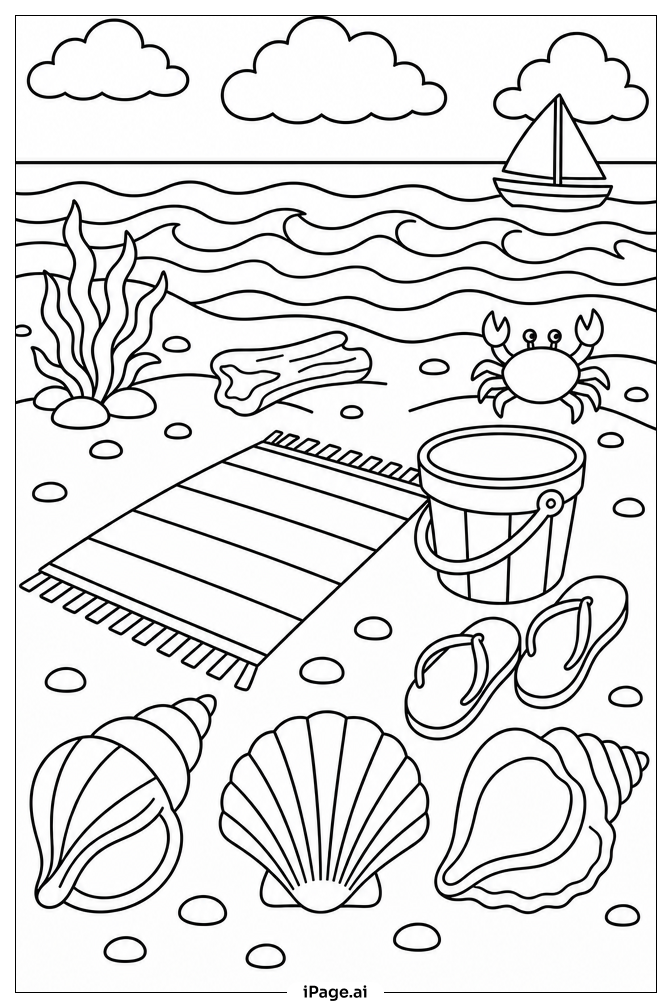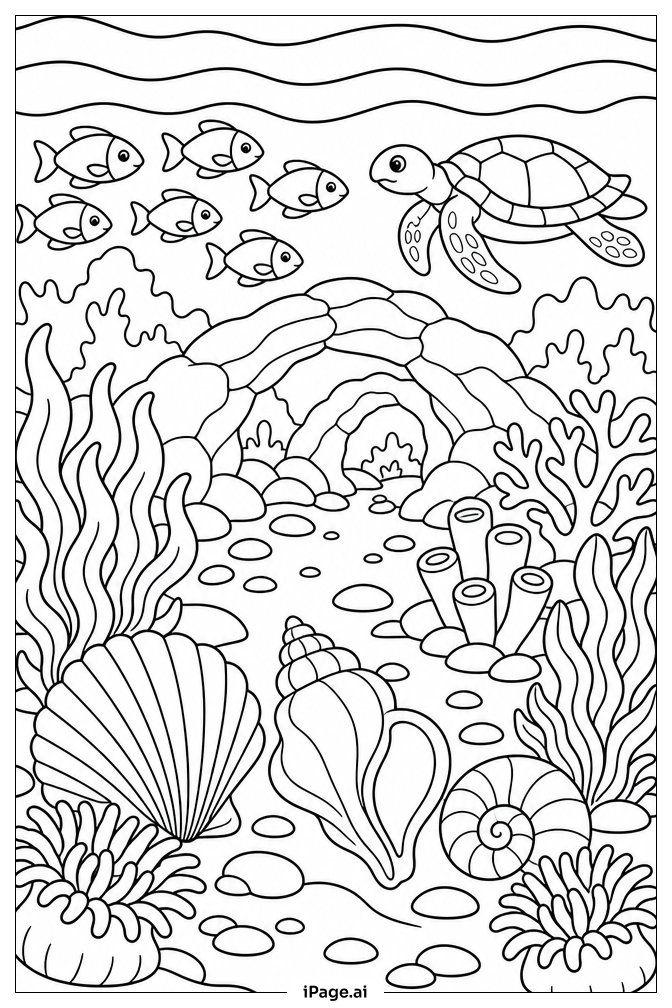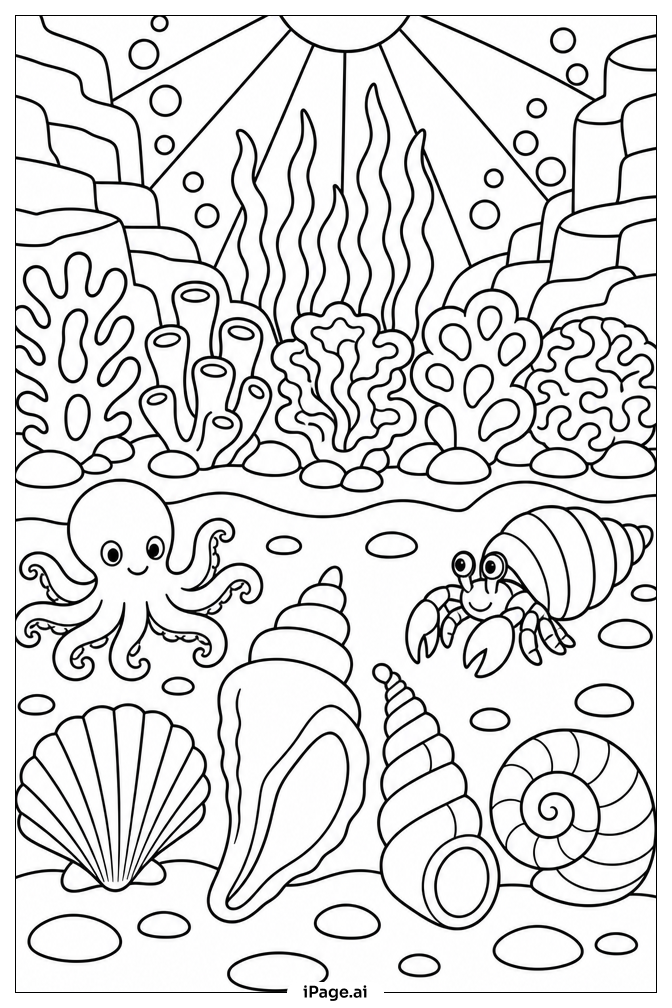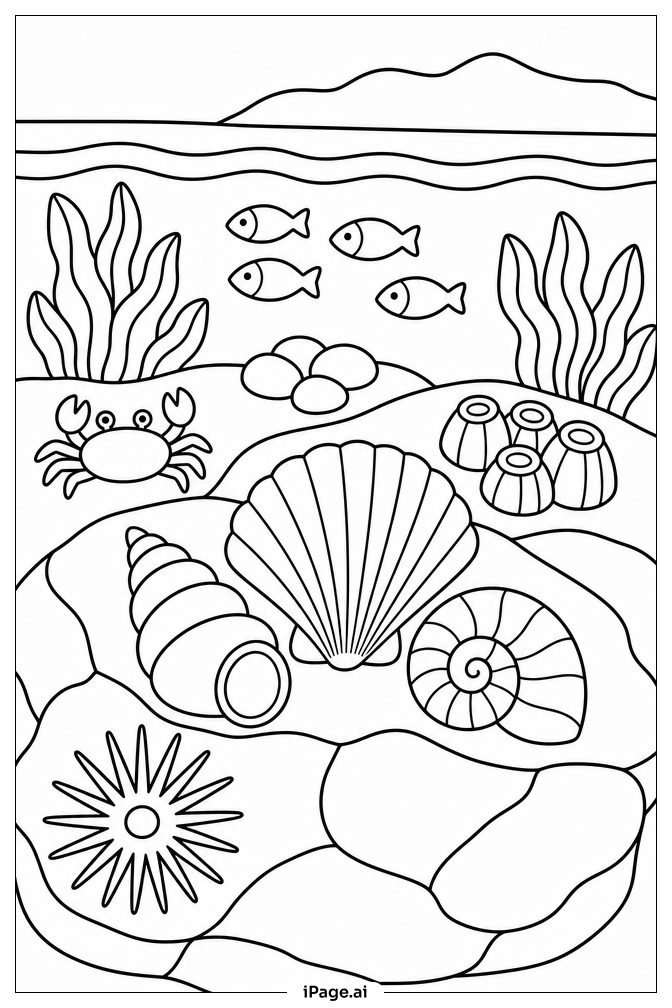
Coloring tips: How to color Seashell Collection On Beach coloring page well?
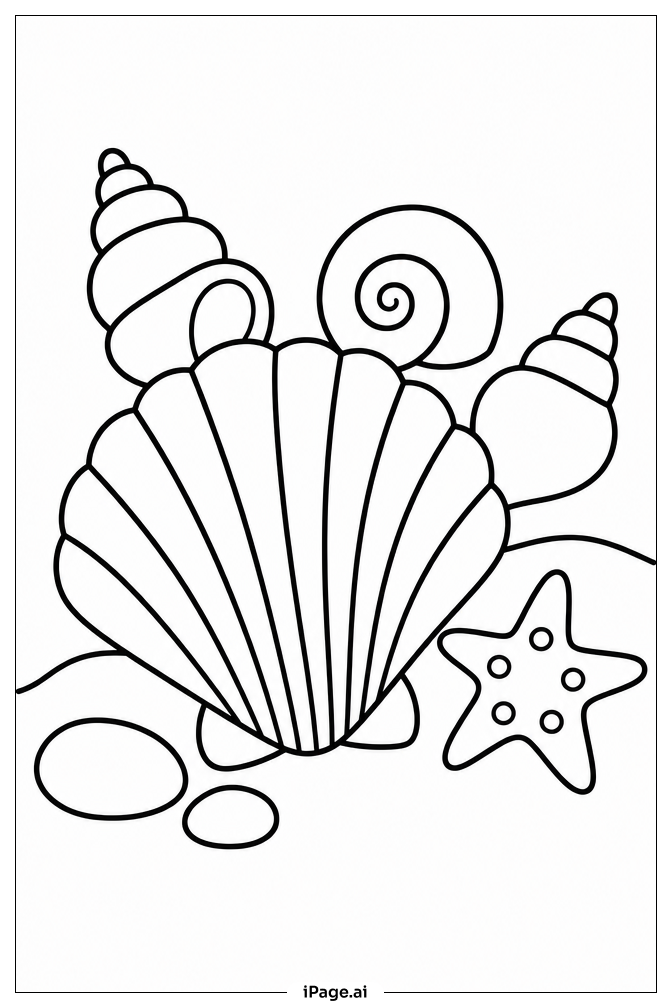
Start with the sandy background using warm shades of tan, beige, or golden yellow. Add soft shading to show where the sand dips and rises. For the shells, try a wide range of colors — pale pink, peach, cream, lavender, orange, and soft brown all look great. Use lighter shades on the raised parts of each shell and slightly darker tones in the grooves to make them look three-dimensional. Scallop shells look lovely with striped patterns in two or three colors. Conch shells shine with a spiral gradient from deep rose at the tip to pale cream at the opening. Starfish can be colored golden yellow or sandy orange. For a fun twist, kids can use bright, imaginative colors like turquoise or purple — there are no rules at the beach! Finish by adding light blue or seafoam green hints near the wave patterns in the background to complete the ocean feel.
Coloring challenges: Which parts are difficult to color and need attention for Seashell Collection On Beach coloring page?
Coloring this seashell beach scene is rewarding, but it comes with several challenges worth knowing before you begin:
• **Intricate shell details:** Each shell is packed with fine lines, ridges, spirals, and dot patterns. Staying inside these tiny areas requires a sharp pencil or a fine-tipped marker. Young or beginner colorists may find it helpful to use colored pencils rather than thick markers for better control.
• **Shading for a 3D effect:** Shells are curved, rounded objects. To make them look realistic rather than flat, you need to apply lighter color where light hits and darker color in the shadows. Blending two or three tones of the same color smoothly can be tricky, especially for beginners who are just learning about gradients and shading.
• **Keeping colors consistent across overlapping shells:** Several shells overlap or sit close together. Choosing colors that look good next to each other without clashing — while still making each shell stand out — requires some planning. Picking a color palette before you start can help avoid confusion.
• **Texturing the sandy background:** The sand has ripple lines and tiny details that are easy to overwork. Coloring the background too darkly can make the shells disappear. Using a light hand and keeping the background softer than the foreground shells is the key to a balanced result.
• **Starfish and small details:** The small starfish and pebbles scattered between the shells are easy to overlook. Taking the time to color these small elements carefully adds a lot to the finished look and makes the whole scene feel complete and lively.
Benefits of coloring books: Advantages of drawing Seashell Collection On Beach coloring page
Coloring this seashell beach scene offers a wonderful range of benefits for kids and adults alike.
For children, it builds fine motor skills and hand-eye coordination as they carefully fill in the intricate ridges and spiral patterns of each shell. It also sparks curiosity about the natural world — kids may become interested in learning the names of different shells and the sea creatures that once lived inside them.
Choosing colors and creating their own unique palette encourages creative thinking and personal expression. There are no wrong answers, which builds confidence in young colorists.
For older kids and adults, the detailed patterns provide a calm, meditative activity that helps reduce stress and quiet a busy mind. Focusing on small, manageable sections gives a satisfying sense of progress and accomplishment.
The scene also gently introduces concepts like shading, color harmony, and composition — foundational skills for anyone interested in art and design.
Completing the page gives a strong sense of pride and achievement. The finished artwork makes a beautiful display piece or a thoughtful handmade gift. Overall, this coloring page combines relaxation, learning, and creativity in one peaceful beach-themed activity.