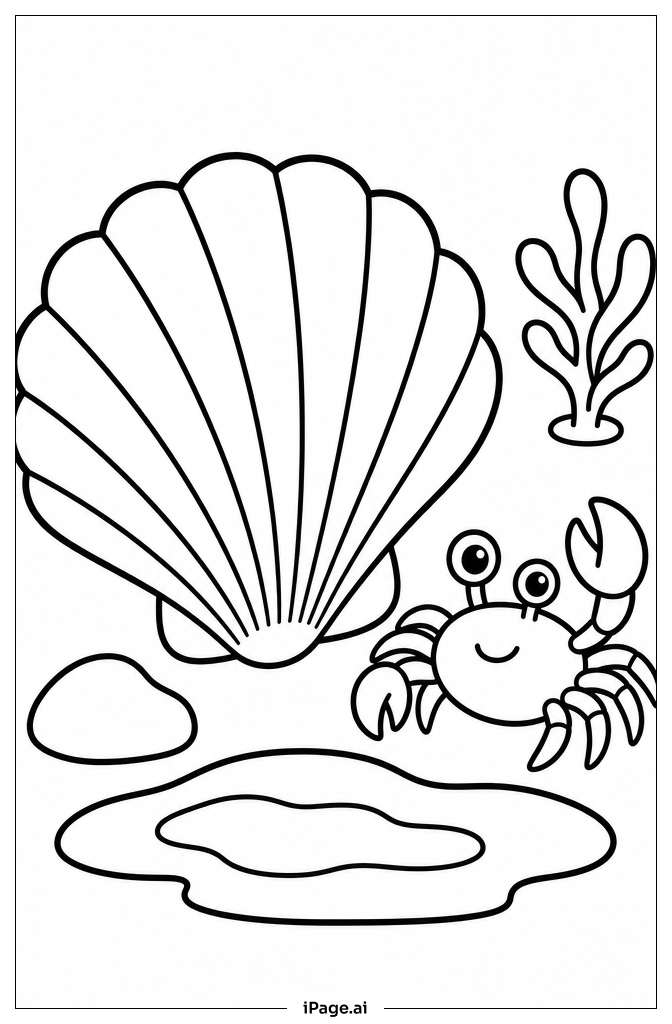
Coloring tips: How to color Seashell And Crab coloring page well?
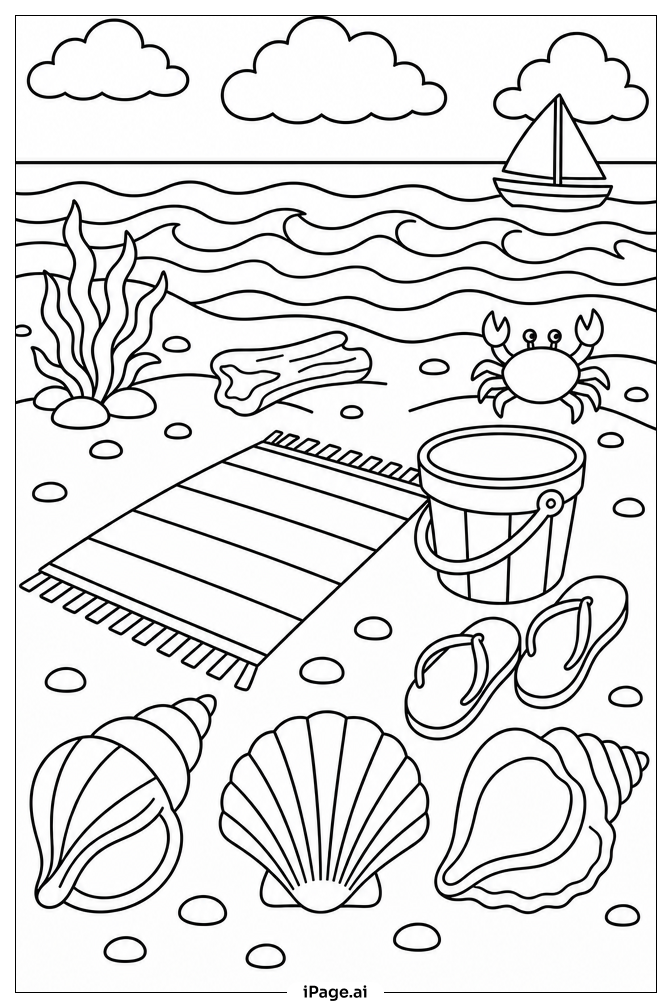
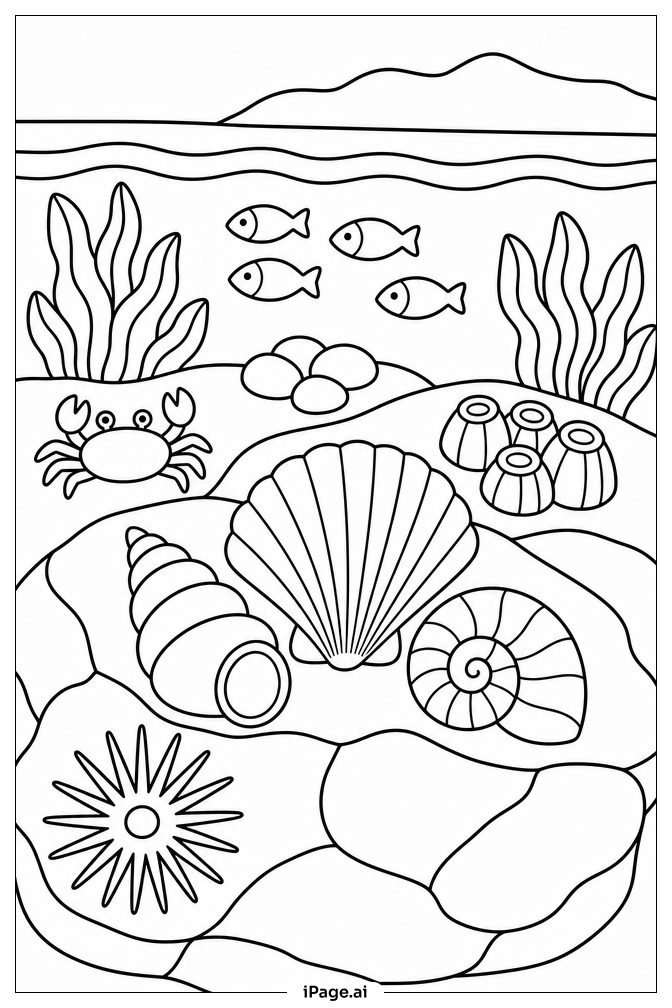
Start with the seashell using warm, natural tones. Try cream, peach, or light pink for the outer surface. Add soft brown or tan along the ridges to give it depth. For a more magical look, blend purple and rose tones into the spiral curves.
Color the crab in classic orange or red. Use a darker shade on the edges of the claws and legs to make them stand out. The crab's belly can be a lighter cream or yellow.
For the background, use sandy yellows and beiges on the ground. Add light blue or seafoam green for any water elements. You can dot the sand with tiny spots of brown or gray for pebbles.
Feel free to use your imagination. Seashells can be any color you like — try rainbow stripes or pastel gradients for a fun, creative twist!
Coloring challenges: Which parts are difficult to color and need attention for Seashell And Crab coloring page?
Coloring this image comes with several fun but tricky challenges to keep in mind:
• **Seashell ridges and spiral details:** The seashell is full of fine lines, curves, and layered ridges. Staying inside these small sections requires a sharp colored pencil or a fine-tipped marker. Blending colors smoothly along the spiral without going over the lines takes patience and a steady hand. Young colorists may find this the most challenging part of the page.
• **Crab's segmented body and legs:** The crab has many small, connected body parts — claws, jointed legs, and a textured shell. Each segment benefits from slightly different shading to look realistic. Keeping track of which sections to color darker or lighter can be confusing, especially where the legs overlap or curl.
• **Creating depth and dimension:** Both the seashell and crab are three-dimensional objects. To make them look round and lifelike rather than flat, colorists need to apply lighter tones in the center and gradually darken toward the edges. This shading technique can be difficult for beginners to master.
• **Small background details:** Pebbles, sand textures, and any background waves are tiny and closely packed. Coloring these neatly without smudging nearby areas requires careful control of the coloring tool, especially when switching between many small shapes in a limited space.
• **Color transitions between elements:** Where the crab rests against the seashell, the two objects share close borders. Choosing colors that are distinct enough to separate the two subjects — while still looking harmonious together — is a subtle but important creative challenge.
Benefits of coloring books: Advantages of drawing Seashell And Crab coloring page
Coloring this seashell and crab scene offers wonderful benefits for kids and beginners alike.
**Builds fine motor skills.** Carefully tracing along the shell's ridges and the crab's tiny legs strengthens hand muscles and improves pencil control — skills that also help with writing.
**Sparks creativity.** Choosing colors for the shell and crab encourages kids to experiment. There are no wrong answers, which builds confidence and a love of self-expression.
**Teaches about nature.** As children color, they naturally notice the shapes of the shell's spiral and the crab's claws. This curiosity can lead to questions about ocean life and spark an interest in science.
**Promotes focus and calm.** The detailed patterns in this image require concentration. Sitting quietly and working through the page helps children practice patience and mindfulness in a relaxed, enjoyable way.
**Encourages color theory learning.** Deciding how to shade the shell or contrast the crab against the sandy background introduces basic ideas about light, shadow, and complementary colors in a hands-on, pressure-free setting.
Overall, this ocean-themed page is a perfect blend of fun and learning for young artists.