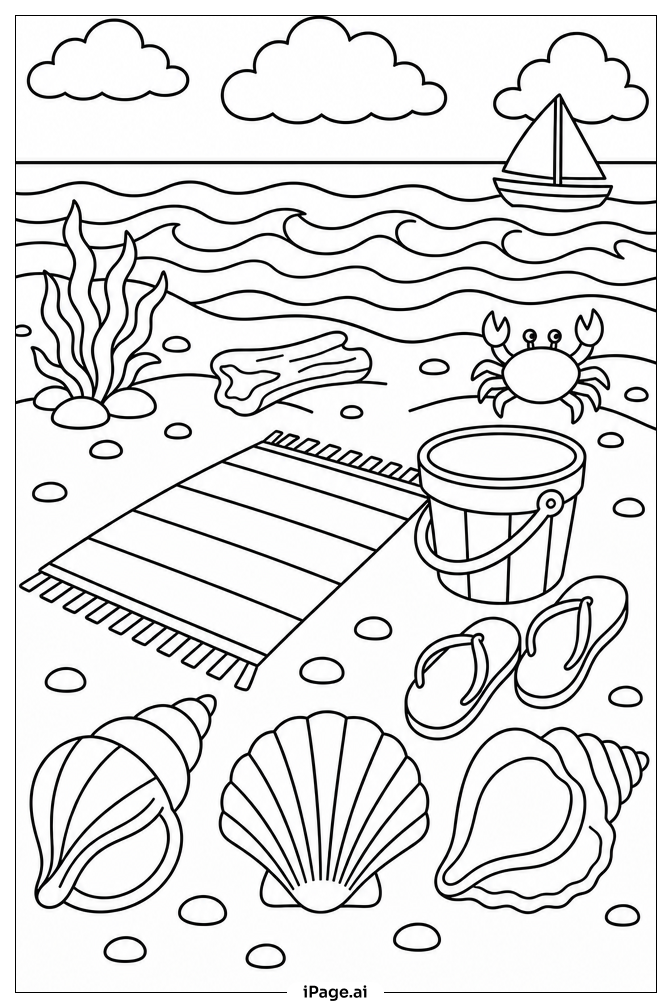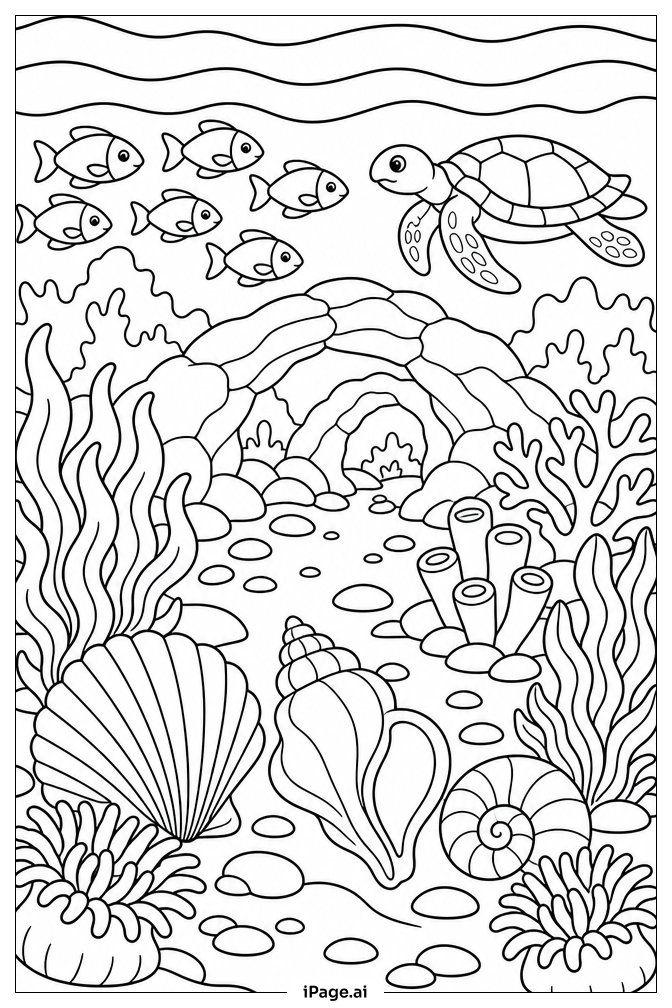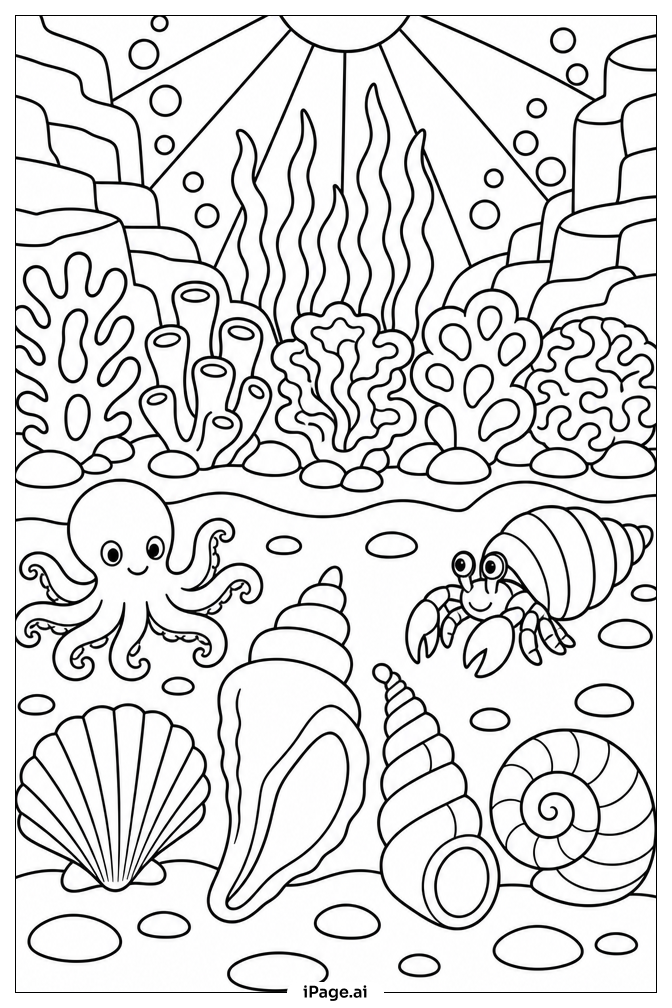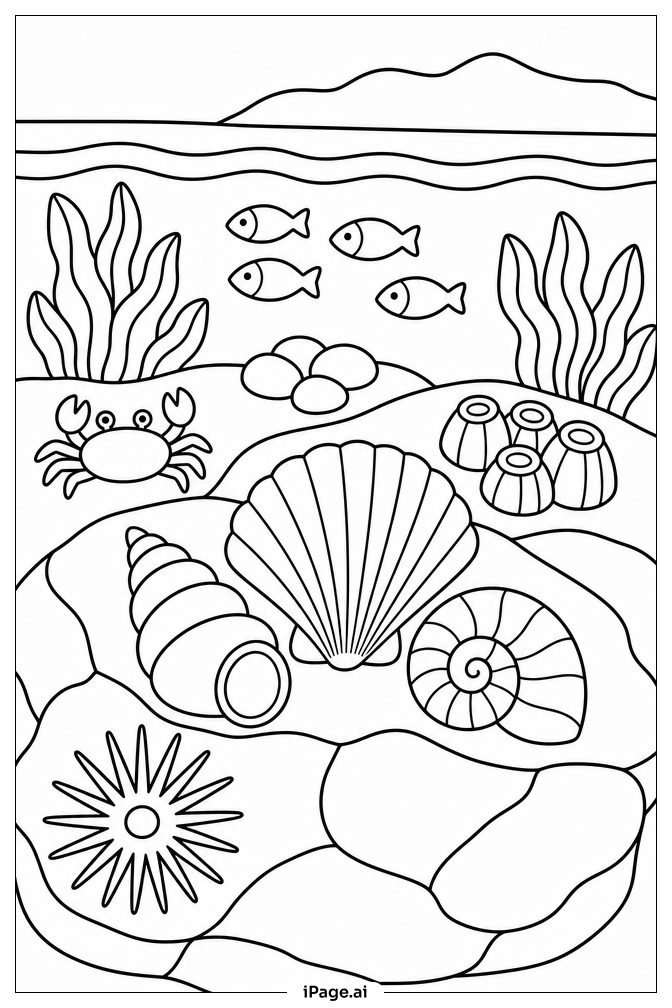
Coloring tips: How to color Happy Seashell Face coloring page well?
Start with the shell's main body. Use warm sandy tones like cream, peach, or light tan as your base color. Then add soft pink or coral shades along the ridges and spiral curves to bring out the shell's natural beauty. For a more magical look, try blending purple, lavender, or golden yellow into the swirl details. Color the eyes with bright blues or sparkling whites to make them pop. Use a rosy pink or red for the smiling mouth and cheeks. For the background, think ocean vibes — soft blues, seafoam greens, or even a warm sunset orange. Leave some areas lighter to create a natural shiny glow on the shell's surface. Have fun mixing colors to make this happy seashell totally your own!
Coloring challenges: Which parts are difficult to color and need attention for Happy Seashell Face coloring page?
• Spiral and Ridge Details: The shell's surface has many curved lines, ridges, and spiral patterns layered closely together. Staying within these small, narrow sections requires a steady hand and a fine-tipped coloring tool. Using colored pencils or thin markers will help you control the color more precisely in these tight areas.
• Facial Features: The cartoon face sits right in the center of the shell. The eyes, smile, and cheeks are small but important. Coloring them neatly without going outside their outlines can be tricky, especially around the curved edges of the eyes and the mouth's curves. Take your time and use small, careful strokes.
• Blending Colors on the Shell Body: A real seashell has many subtle color shifts — from cream to pink to tan. Recreating that natural gradient on the shell's body takes patience. Blending two or three colors smoothly without creating harsh lines is one of the trickier parts of this image.
• Background Details: The swirls and wave-like shapes around the shell need colors that complement the shell without overpowering it. Choosing the right contrast and keeping the background elements evenly colored while leaving the shell as the clear focal point can take some planning.
• Maintaining Overall Color Harmony: With so many small sections — the ridges, face, swirls, and background — making sure all the colors work well together across the whole image is a real creative challenge. Try sketching out your color choices lightly before fully committing to them.
Benefits of coloring books: Advantages of drawing Happy Seashell Face coloring page
Coloring this Happy Seashell Face page offers a wonderful mix of fun and learning. For young children, it helps build fine motor skills as they practice staying within the shell's curved lines and small facial details. It also strengthens hand-eye coordination and encourages focus and patience.
The cheerful, smiling face of the seashell sparks imagination and creativity. Kids are inspired to choose their own colors, mix shades, and make the image uniquely their own — all great ways to develop artistic thinking and self-expression.
For older children and teens, blending colors across the shell's ridges and swirls is a satisfying challenge that builds real coloring technique. It teaches them how to create depth and texture using color, which is a valuable artistic skill.
This image also has a calming effect. Focusing on filling in the shapes helps quiet a busy mind and reduce stress, making it a great quiet-time activity after a long day.
The ocean theme connects kids to the natural world, sparking curiosity about sea life and the beautiful creatures that call the ocean home. Overall, coloring this page is a joyful, creative, and genuinely enriching experience for kids of all ages.