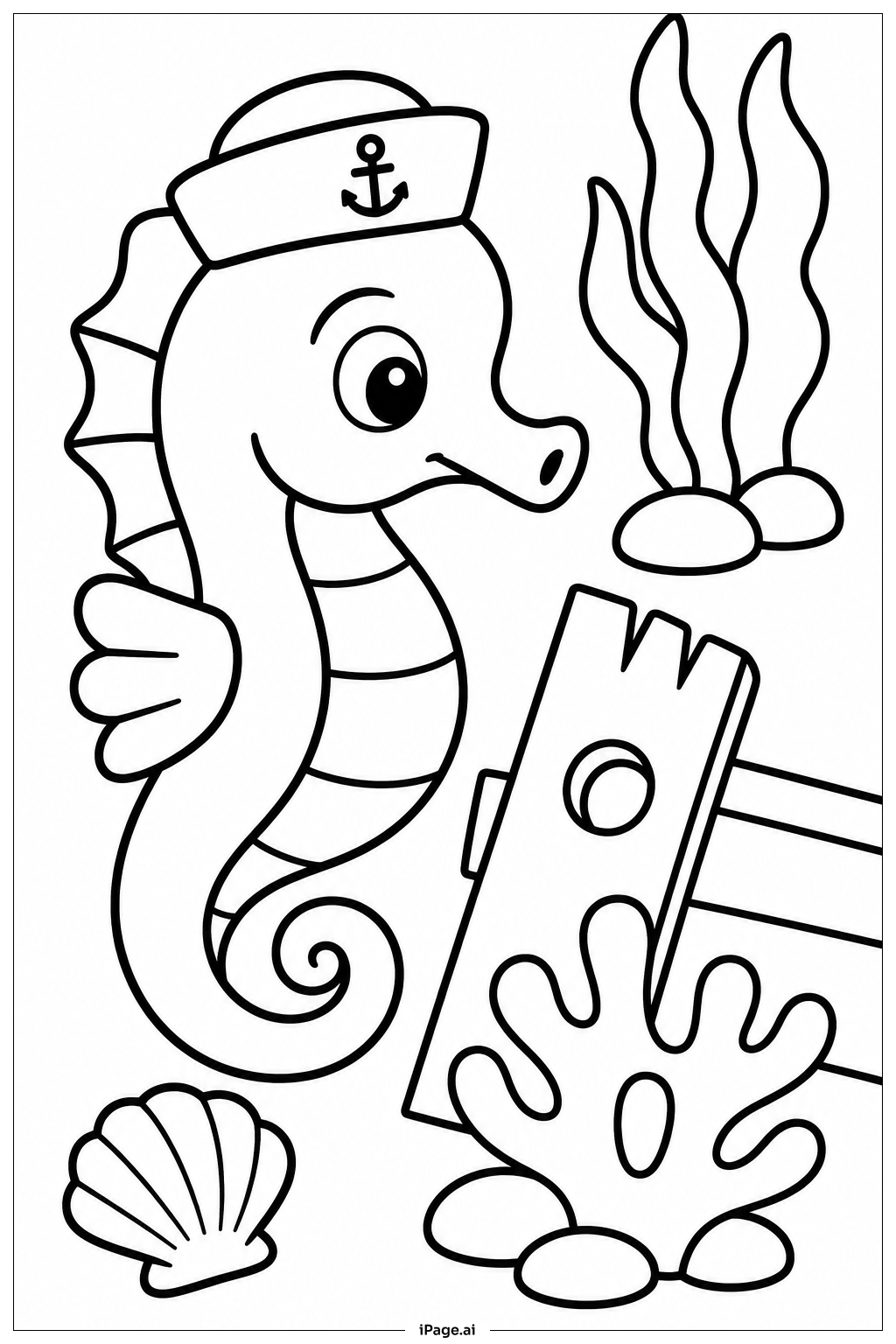
Coloring tips: How to color Seahorse Near Shipwreck coloring page well?
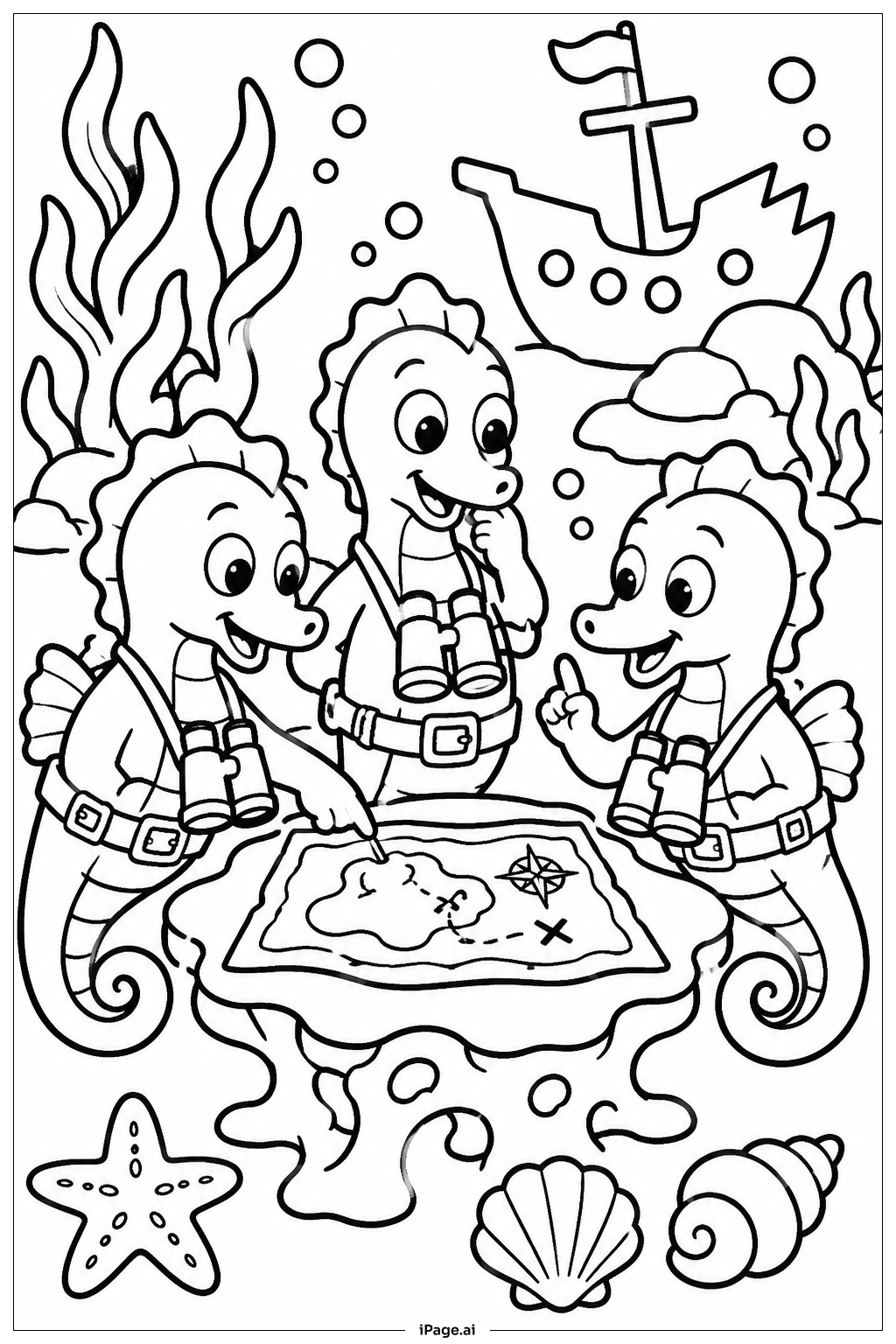
Start with the seahorse. Use warm golden yellow or soft orange for its body. Add darker brown or rust tones along the ridges to give it texture. Color the dorsal fin a lighter shade, like pale yellow or cream. For the shipwreck, use dark browns, grays, and mossy greens to show old, weathered wood. Paint the barnacles and coral in bright pinks, reds, and purples to make them pop. Use deep blue and teal for the water background. Add lighter blue streaks to suggest movement. Color the seaweed in shades of green, from lime to dark forest green. Make the bubbles light blue or leave them white. Use a mix of dark and light tones throughout to create depth and make the scene feel like a real ocean floor.
Coloring challenges: Which parts are difficult to color and need attention for Seahorse Near Shipwreck coloring page?
• **The Seahorse's Ridged Body:** The seahorse has many small ridges, bumps, and bony plates along its body. Coloring each section neatly without going over the lines takes patience and a fine-tipped pencil or marker. Blending two shades together to show the curved, three-dimensional shape adds another layer of difficulty.
• **The Shipwreck Details:** The broken wood, barnacles, anchor chains, and portholes are packed closely together. Each element needs a slightly different color or texture to stand out. Keeping these areas distinct without making the scene look messy requires careful color choices and steady hands.
• **Underwater Lighting and Depth:** Real underwater scenes have uneven, filtered light. Recreating this effect means using darker shades in shadowed corners and lighter tones where light would reach. This kind of shading is tricky, especially for younger colorists who are still learning how to blend.
• **Background Water:** Filling in the water background evenly while leaving room for bubbles and small fish is harder than it looks. Streaks or uneven pressure can make the water look patchy. Using smooth, consistent strokes and layering two or three shades of blue helps create a natural, flowing look.
• **Small Decorative Elements:** Tiny details like coral branches, individual seaweed strands, and fish in the background are small and close together. Coloring them without accidentally bleeding into neighboring areas calls for a sharp pencil tip and slow, deliberate movements.
Benefits of coloring books: Advantages of drawing Seahorse Near Shipwreck coloring page
Coloring this Seahorse Near Shipwreck scene offers a wonderful mix of fun and learning. Kids get to explore the underwater world while building important skills. Staying inside the detailed lines of the seahorse and shipwreck helps improve hand control and fine motor skills. Choosing colors for the ocean, coral, and old wood encourages creative thinking and imagination. Children learn about real ocean creatures and underwater environments in a playful, hands-on way. The quiet focus needed to color a detailed scene like this also helps kids practice patience and concentration. For older children, experimenting with shading and blending builds early art skills that carry into other creative projects. Adults can enjoy this image too — the intricate details make it a relaxing, meditative activity that helps reduce stress after a busy day. Whether you color it quickly for fun or take your time with every detail, this scene brings the magic of the deep sea right to your fingertips.