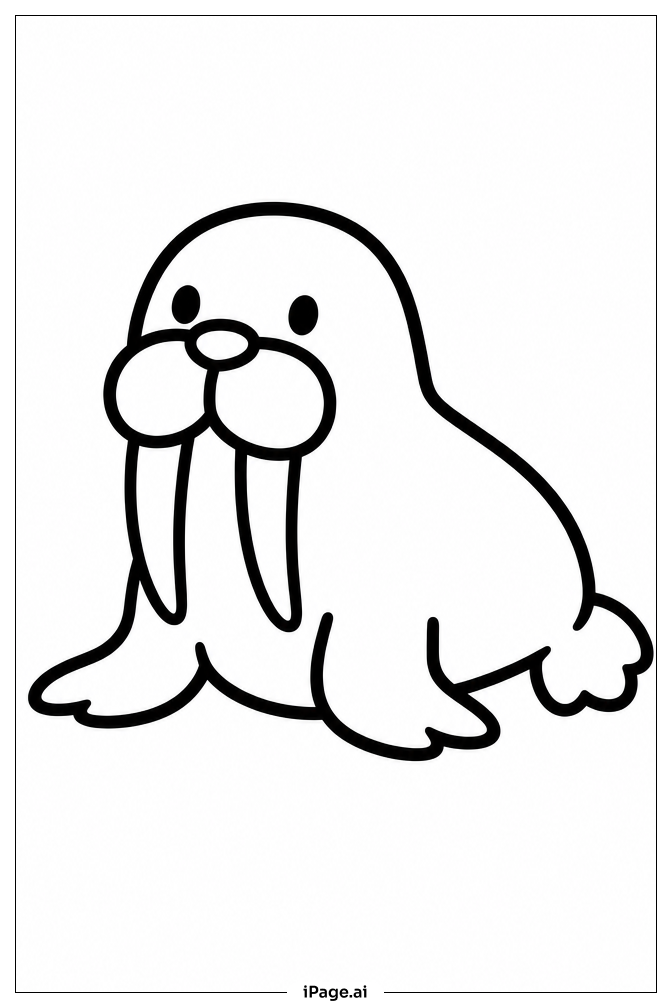
Coloring tips: How to color Sea Animals Walrus coloring page well?
Start with the walrus's body and use warm brown or tan tones to fill in its large, rounded frame. You can add hints of pinkish-brown or gray to show the folds and wrinkles in its thick skin. Color the long tusks ivory or pale yellow — they should stand out against the body. Use a light gray or bluish-white for the icy surface the walrus rests on. For the ocean water, try shades of blue and teal to bring the Arctic sea to life. The whiskers can be left white or colored in light gray. If you want to add depth, use a slightly darker shade of brown along the edges and skin folds to create a sense of shadow. Feel free to experiment with color — some walruses even have pinkish skin when they warm up in the sun!
Coloring challenges: Which parts are difficult to color and need attention for Sea Animals Walrus coloring page?
Coloring this walrus image comes with a few fun challenges to keep in mind:
• **Skin texture and wrinkles:** The walrus has heavily wrinkled, folded skin across its body. Capturing this texture with color requires patience. Try using a base color first, then layer a slightly darker shade along the fold lines to make the wrinkles look realistic and three-dimensional.
• **Tusk shading:** The long curved tusks may seem simple, but adding subtle shading is tricky. Tusks are not fully white — they have a slightly yellowish or ivory tone with shadows on one side. Carefully blend light and slightly darker tones to give them a rounded, realistic look.
• **Distinguishing body from background:** The walrus's brown body needs to stand out clearly from the icy ground and ocean water. Choosing contrasting colors for the background — such as cool blues and whites — while keeping the body in warm earth tones will help the walrus pop from the scene.
• **Flippers and body edges:** The flippers share a similar color to the body but have a slightly different texture. Use slightly darker shading near the edges of the flippers to separate them visually from the main body mass.
• **Water ripples:** The background ocean waves and ripples involve smooth, flowing lines. Using multiple shades of blue and blending them gently will make the water look natural, but getting those smooth transitions can take some practice and a steady hand.
Benefits of coloring books: Advantages of drawing Sea Animals Walrus coloring page
Coloring this walrus page offers a wonderful mix of fun and learning for kids of all ages.
**Builds focus and patience:** The walrus has lots of detailed textures — wrinkles, whiskers, tusks, and water. Working through each section helps children practice staying focused and taking their time.
**Sparks curiosity about nature:** As kids color the walrus, they naturally become curious about this fascinating Arctic animal. It's a great starting point for learning about sea animals, ocean habitats, and wildlife conservation.
**Develops fine motor skills:** Staying inside the bold outline and carefully shading small areas like the tusks and whiskers helps young children strengthen hand control and pencil grip.
**Encourages creative thinking:** There is no single "right" way to color a walrus. Children can experiment freely with colors, patterns, and shading, building confidence in their own creative choices.
**Provides a calming activity:** The steady, rhythmic motion of coloring is relaxing and soothing. It gives children a healthy, screen-free way to unwind while still being engaged and productive.
This page is a great choice for Boys and Girls alike, and even Adults can enjoy its detailed design!