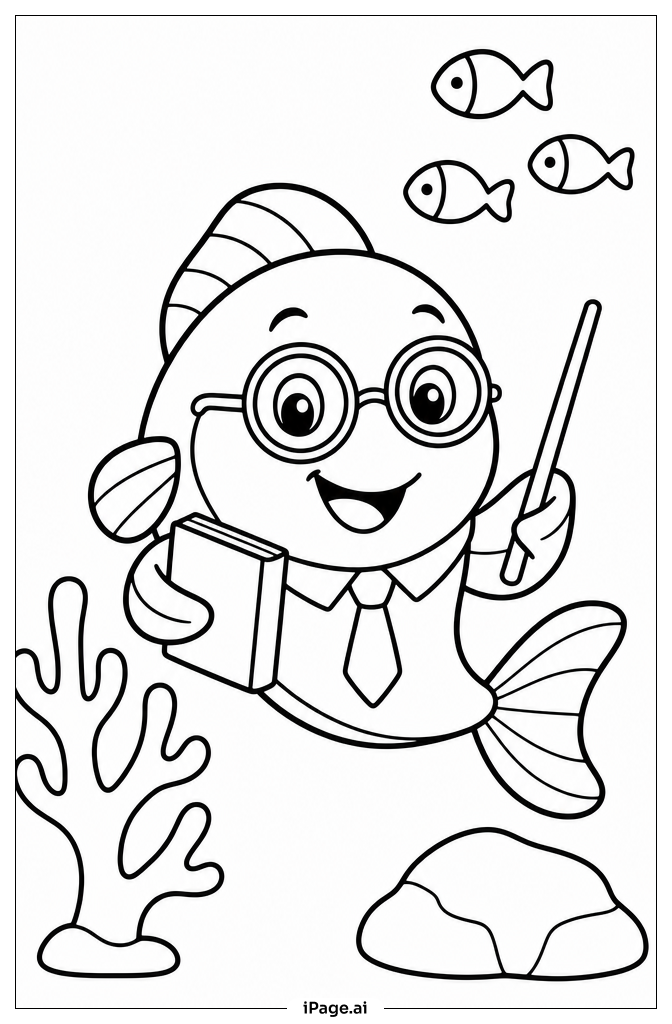
Coloring tips: How to color Sea Animals Underwater School coloring page well?
Start with the lightest colors and work your way to the darker ones. Use shades of blue and teal for the ocean background to give a sense of depth. The octopus teacher looks great in soft purple or orange. Give the clownfish bright orange with white stripes, and color the starfish yellow or coral pink. Try light green or golden yellow for the seahorse. Use sandy brown or red for the little crab. The shark can be a cool blue-gray. For the desks and chalkboard, use warm browns and dark green. Add pink, red, and orange to the coral in the background to make it pop. Use a pale yellow or white for the light rays filtering through the water. Don't forget the bubbles — leave them light or use a soft sky blue. Let your imagination run wild and make each sea animal unique and colorful!
Coloring challenges: Which parts are difficult to color and need attention for Sea Animals Underwater School coloring page?
• Background Complexity: The underwater background is filled with coral, seaweed, and floating bubbles. These overlapping elements sit very close together, making it tricky to color each one separately without accidentally going over the lines. Thin-tipped markers or colored pencils work best for these tight spaces.
• Character Details: Each sea animal has its own unique features — the octopus has many tentacles, the clownfish has fine stripes, and the crab has detailed claws and legs. Staying within these small, detailed outlines requires patience and a steady hand, especially for younger colorists.
• Overlapping Figures: Several sea creatures are seated close to one another at their desks. Where characters overlap, choosing colors that contrast well with each other is important. If two neighboring animals share similar shades, they can blend together and lose definition.
• Light and Shadow Effects: The light rays filtering from above create a natural layering effect in the scene. Capturing this subtle glow — by using lighter tones near the top and gradually deepening the blues toward the bottom — adds realism but can be challenging for beginners.
• Consistent Color Storytelling: With so many different characters and background elements, keeping the overall color palette balanced is a real challenge. Too many bold colors in one area can make the scene feel chaotic. Planning which areas to make bright and which to keep soft helps the whole image feel harmonious and visually pleasing.
Benefits of coloring books: Advantages of drawing Sea Animals Underwater School coloring page
Coloring this Sea Animals Underwater School page offers a wide range of wonderful benefits for kids of all ages. First, it builds fine motor skills. Carefully coloring within the lines of tentacles, fins, and tiny desk details helps strengthen hand muscles and improve pencil control. Second, it sparks creativity. Choosing colors for a clownfish, an octopus teacher, or a little crab encourages kids to think imaginatively and express themselves freely. Third, it teaches focus and patience. The detailed background and many characters ask colorists to slow down, concentrate, and work through the image step by step — a great habit for learning. Fourth, it introduces ocean life in a fun, engaging way. As children color each sea creature, they naturally become curious about real clownfish, seahorses, and sharks, turning a creative activity into a gentle learning experience. Fifth, it provides a calming, screen-free outlet. Sitting quietly and coloring reduces stress and anxiety, helping kids feel relaxed and accomplished when they finish. Overall, this page is a joyful blend of art, learning, and imagination.