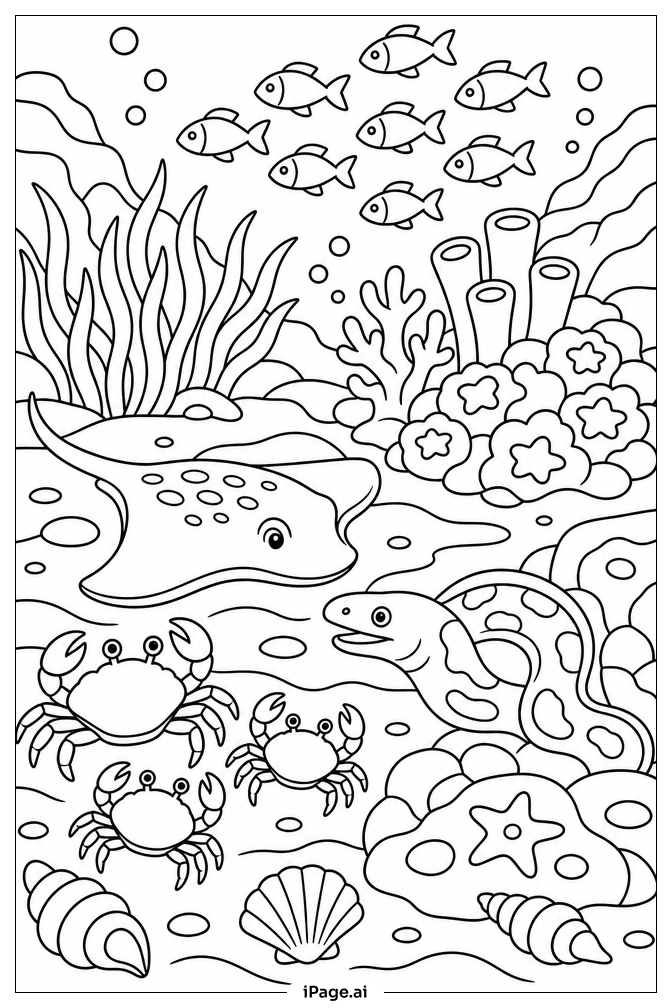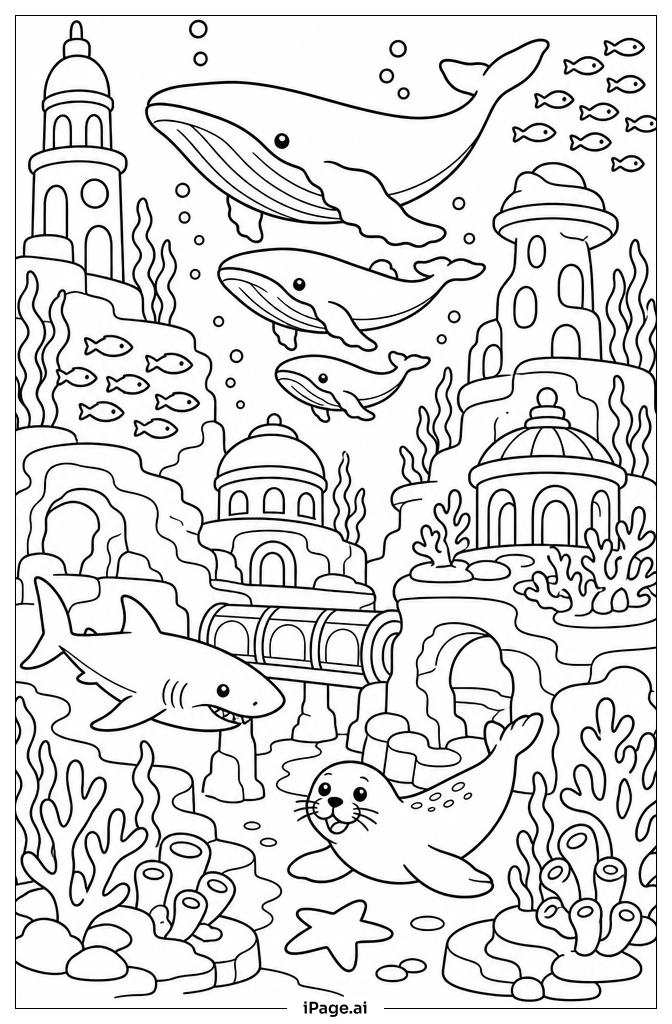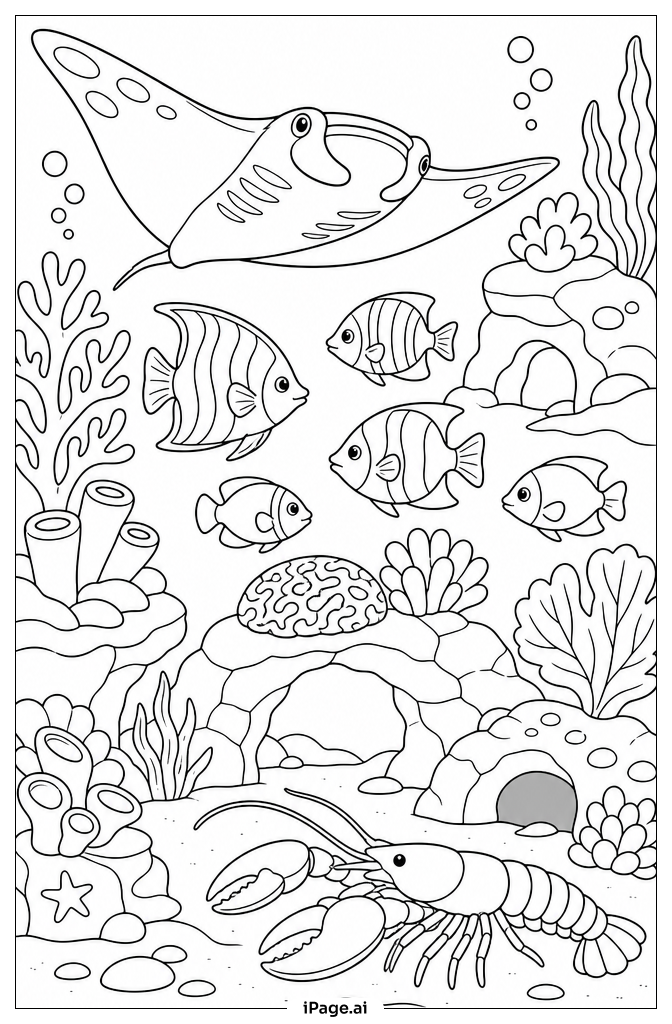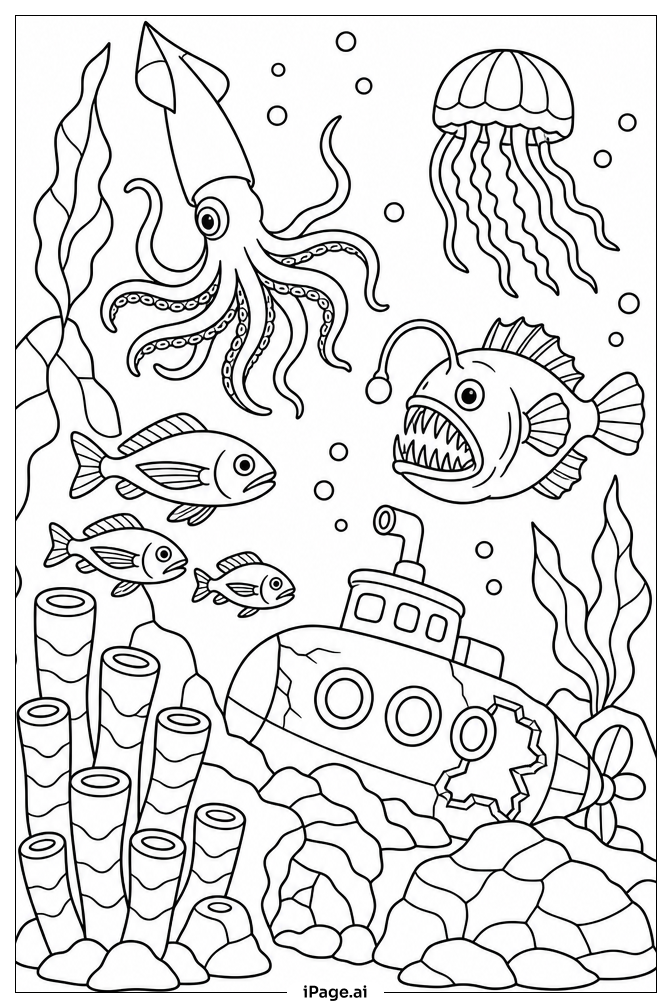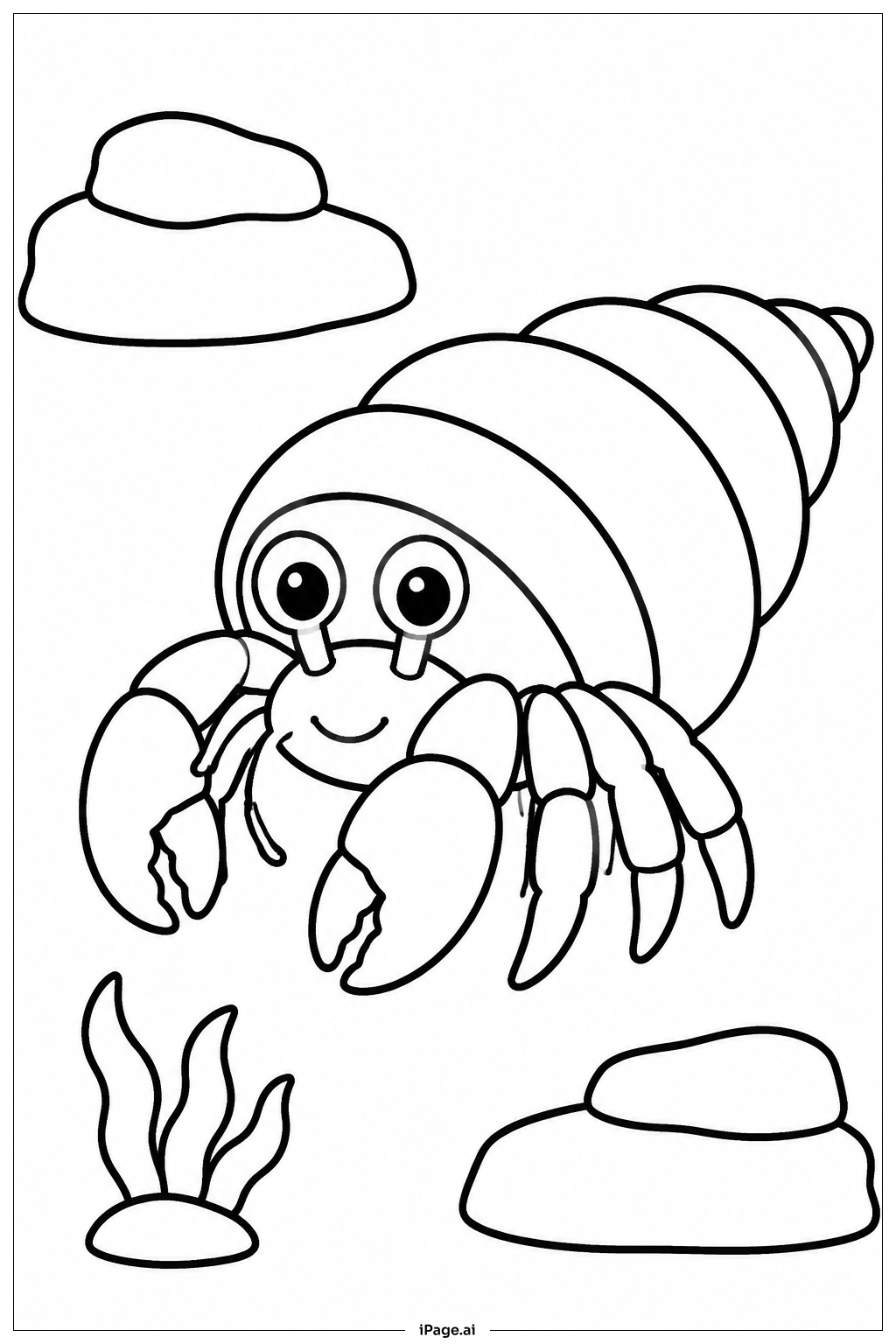
Coloring tips: How to color Sea Animals Tide Pool coloring page well?
Start with the largest shapes first. Color the rocks in shades of gray, tan, or brown to set the background. Then move on to the sea animals. Use bright orange or red for the starfish, and deep purple or green for the sea urchin. The octopus looks great in orange, pink, or even a fun blue. Give the anemone warm pinks, reds, or yellows to make it pop. Use light blue and white for the water areas to suggest a clear, shallow pool. Hermit crabs can be colored in earthy reds and oranges. For the seaweed and coral, go with greens, teals, and soft purples. Feel free to mix colors and experiment. There are no wrong choices here. Use colored pencils for fine details on the shells and rocks, and markers or crayons for larger flat areas. Adding light and shadow with two tones of the same color can make your tide pool feel three-dimensional and really come alive.
Coloring challenges: Which parts are difficult to color and need attention for Sea Animals Tide Pool coloring page?
• Overlapping Creatures and Rocks: Many of the sea animals are positioned close together or partly hidden behind rocks. It can be tricky to tell where one shape ends and another begins. Take your time to trace each outline carefully before applying color, so each creature stands out clearly from its neighbor.
• Tiny Details on Shells and Urchins: The hermit crab shells and the sea urchin have lots of small lines, dots, and patterns. Coloring these tiny areas neatly requires a sharp colored pencil or a fine-tipped marker. Rushing through these sections may cause colors to bleed into the wrong spaces.
• Water and Reflection Lines: The rippling water lines that fill the pool area are thin and closely spaced. Keeping the color even and light in these sections without going outside the lines takes patience. Using a light blue pencil with gentle pressure works best here.
• Anemone Tentacles: The sea anemone has many long, flowing tentacles that spread out in different directions. Each tentacle is narrow, making it difficult to color without going over the outlines. A sharp pencil tip and slow, careful strokes are recommended for this part.
• Balancing the Overall Color Palette: With so many different creatures and textures packed into one scene, choosing colors that work well together can be a challenge. If every animal is colored in a very bright hue, the image may feel overwhelming. Try mixing a few bold colors with softer, neutral tones to create a balanced and natural-looking tide pool scene.
Benefits of coloring books: Advantages of drawing Sea Animals Tide Pool coloring page
Coloring this Sea Animals Tide Pool page offers a wide range of benefits for kids and adults alike. For younger children, it builds fine motor skills as they practice staying within the lines of small, detailed shapes like tentacles and shells. It also introduces them to real ocean creatures in a fun and engaging way, sparking curiosity about marine life and the natural world.
For older kids and teens, the scene encourages creative thinking as they experiment with color combinations and decide how to bring each animal to life. Researching what real tide pool animals look like can make the activity feel educational and rewarding at the same time.
For adults, coloring this intricate scene is a great way to unwind and practice mindfulness. Focusing on small details like the urchin spines or the anemone tentacles requires concentration that gently pulls attention away from stress and everyday worries.
Across all age groups, completing the full image builds a sense of accomplishment and pride. Sharing the finished page or displaying it can also encourage self-expression and boost confidence. Whether used in a classroom, at home, or as a quiet solo activity, this tide pool coloring page combines creativity, learning, and relaxation in one enjoyable experience.