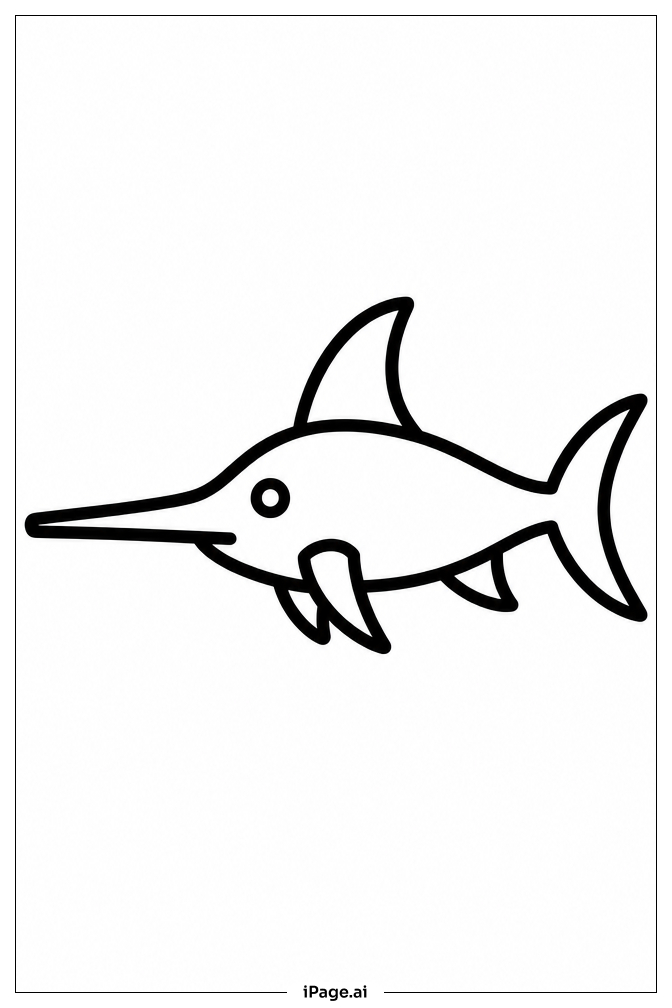
Coloring tips: How to color Sea Animals Swordfish coloring page well?
Start with the swordfish's body using shades of deep blue or steel gray on the upper side. Blend into a lighter silver or white on the belly to show the fish's natural two-tone pattern. Use dark navy or black to outline the long bill, adding a sharp, realistic look. Color the large dorsal fin with purplish-blue or dark teal tones. For the tail and other fins, try a mix of blue and gray with thin dark streaks to show movement. The ocean waves can be painted in multiple shades of blue and turquoise. Add white highlights to the wave tips to create a foamy, splashing effect. Use light yellow or gold to suggest sunlight hitting the water surface. Keep the scale details in slightly darker tones than the body base for a realistic texture. Feel free to experiment with bright ocean blues to make your swordfish truly stand out!
Coloring challenges: Which parts are difficult to color and need attention for Sea Animals Swordfish coloring page?
Coloring this swordfish image comes with a few fun challenges to keep in mind:
• **Blending the body gradient:** The swordfish has a natural color transition from dark blue-gray on top to pale silver-white on the belly. Smoothly blending these two tones without harsh lines can be tricky, especially for younger colorists. Using light, layered strokes and working gradually from dark to light will help achieve a natural look.
• **Detailing the scales:** The body is covered in small, overlapping scale patterns. Coloring each scale individually takes patience and a steady hand. Using a fine-tipped colored pencil or marker will help stay within the small scale shapes. A subtle color variation between scales adds realism but requires careful control.
• **Coloring the long bill:** The swordfish's long, narrow bill is one of the most distinctive features in the image. Keeping color neat and consistent along such a thin shape without smudging or going outside the lines is a real test of precision, particularly for younger children.
• **Capturing water movement:** The splashing waves around the swordfish involve irregular shapes and flowing lines. Conveying the look of moving water using color — layering blues, greens, and whites — can be challenging but very rewarding. Leaving some areas white or very light helps suggest foam and spray.
• **Balancing the overall composition:** Making sure the swordfish stands out boldly against the water background without the colors blending together requires thoughtful color choices. Using contrasting tones for the fish versus the waves will help the swordfish pop off the page.
Benefits of coloring books: Advantages of drawing Sea Animals Swordfish coloring page
Coloring this swordfish page offers many wonderful benefits for kids and beginners alike. As you carefully fill in the scales, fins, and splashing waves, you naturally improve your fine motor skills and hand-eye coordination. The detailed patterns encourage focus and concentration, helping you practice patience and attention to detail.
Choosing colors for the ocean scene sparks creativity and imagination. Kids learn about the natural colors of sea creatures while experimenting with their own artistic ideas. This builds confidence as they make their own color choices and see a beautiful result come to life.
The dynamic, action-packed pose of the leaping swordfish makes the activity exciting and engaging. It can spark curiosity about ocean life, encouraging kids to learn more about marine animals and their habitats. This makes coloring both a creative and educational experience.
Spending quiet time coloring is also a great way to relax and reduce stress. It gives kids a calm, screen-free activity that feels fun rather than like work. Completing the page gives a strong sense of accomplishment and pride. Whether coloring solo or with friends and family, this swordfish page is a joyful and enriching activity for everyone.