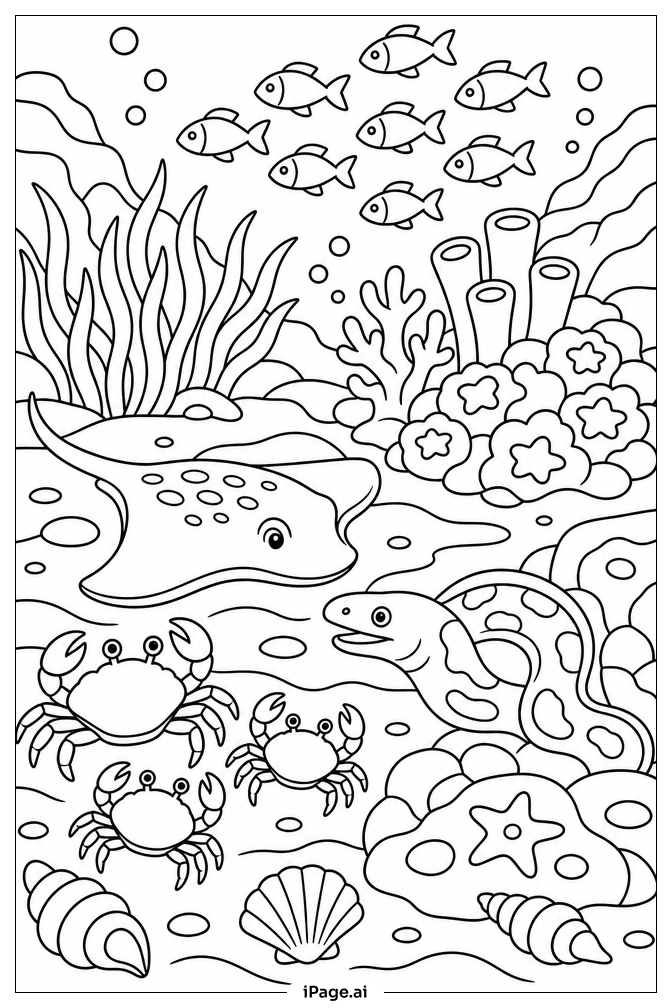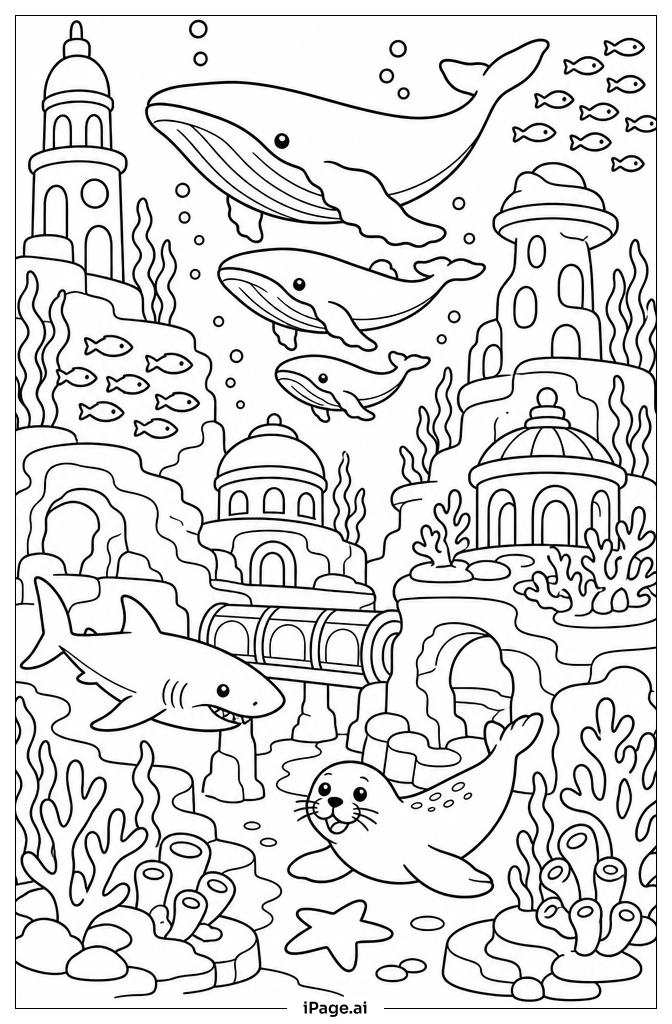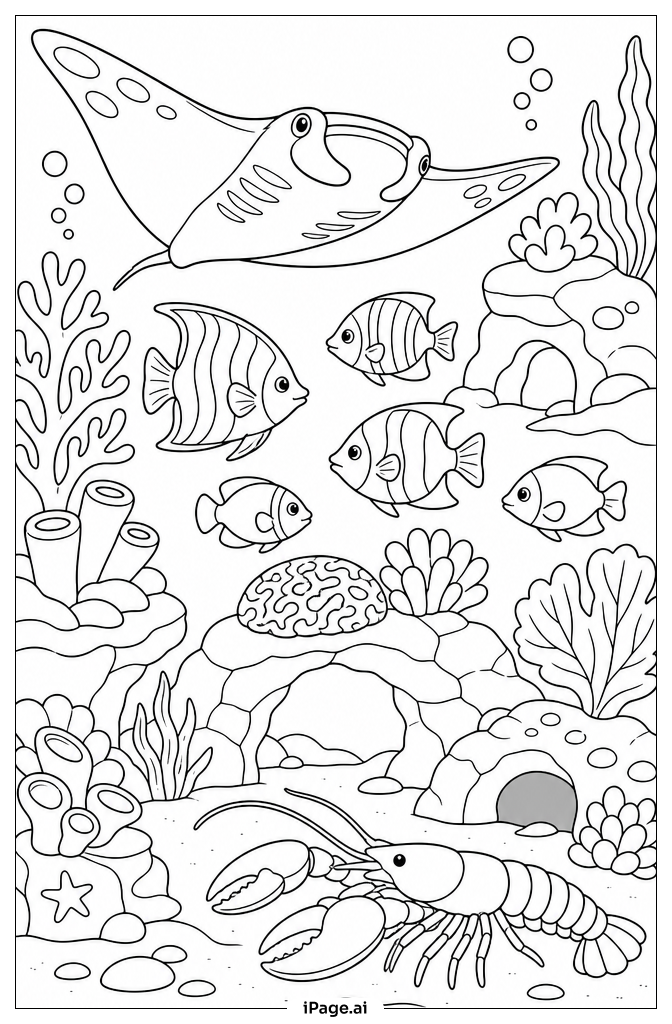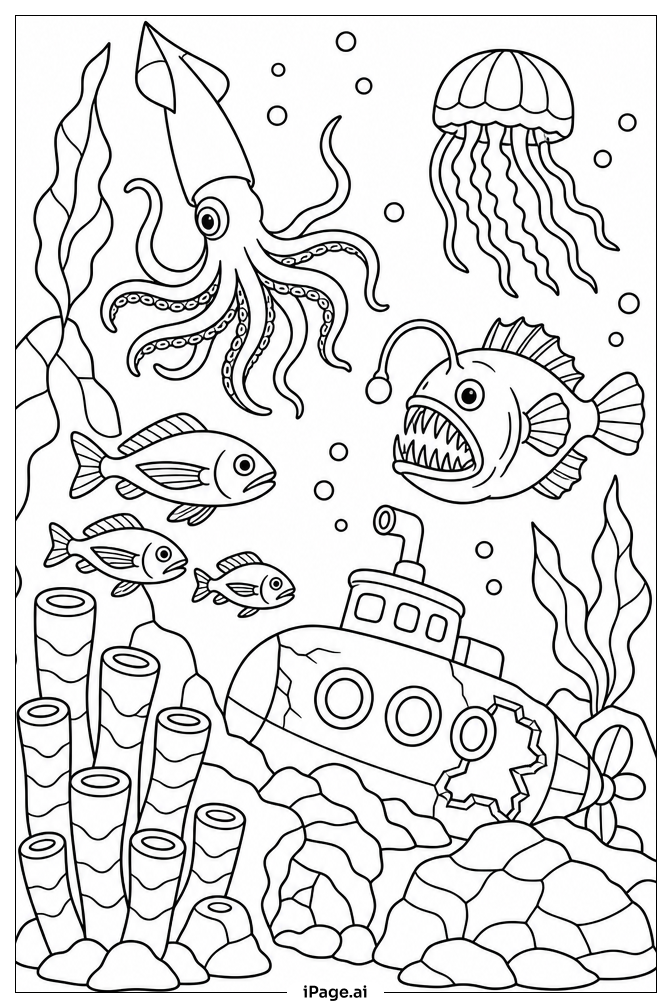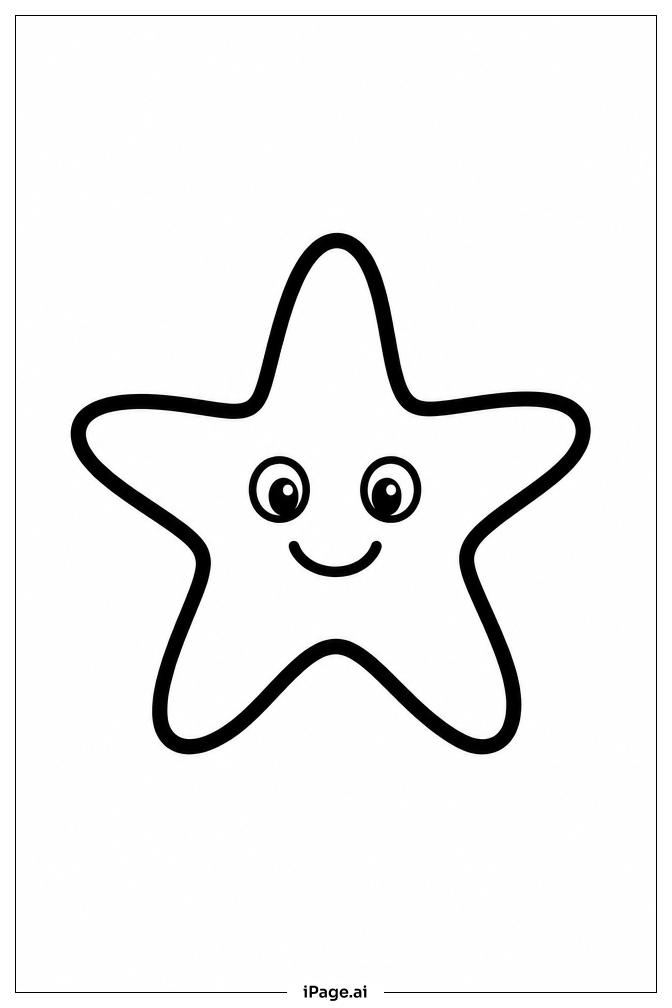
Coloring tips: How to color Sea Animals Starfish coloring page well?
Start with the starfish itself — orange, red, or yellow are classic starfish colors, but feel free to use purple or pink for a fun twist! Color each arm the same shade or try a gradient effect, going lighter toward the tips. Use a darker tone to shade the bumpy texture on the arms, giving the starfish a three-dimensional look. For the background ocean elements, use different shades of blue and green for the water and seaweed. Color the seashells in soft peach, cream, or sandy tones. Make the bubbles light blue or leave them white to keep them looking airy. Using colored pencils or watercolor pencils works especially well here, as they allow gentle blending. Don't be afraid to mix colors — the ocean is full of surprises!
Coloring challenges: Which parts are difficult to color and need attention for Sea Animals Starfish coloring page?
Coloring this starfish scene is fun, but it does come with a few challenges to keep in mind:
• **Textured Surface Details:** The starfish arms are covered with small bumps, dots, and raised patterns. Coloring inside and around each tiny detail takes patience and a fine-tipped coloring tool. A sharp colored pencil or a fine-tip marker works best to avoid going outside the lines and to bring out the texture beautifully.
• **Achieving Depth and Dimension:** A flat single color can make the starfish look dull. To make it look realistic and three-dimensional, you need to layer colors — applying a lighter base color first and then adding a darker shade along the edges and between the bumps. This shading technique can be tricky for younger or less experienced colorists.
• **Background Balance:** The ocean background includes multiple elements like waves, seaweed, and shells. Choosing colors that complement the starfish without overwhelming it is a real challenge. If the background is too bright, the starfish gets lost. Finding the right color balance takes some planning before you begin.
• **Small Enclosed Spaces:** Some areas — like the spaces between the bumps or the tiny shell details — are very small and hard to color neatly. Using the very tip of a pencil or a fine-point marker helps you stay precise without accidentally filling in neighboring areas.
• **Color Consistency Across Five Arms:** Keeping the color tone even across all five arms of the starfish can be surprisingly difficult, especially when blending or shading. Work on one arm at a time and compare regularly to keep a consistent, polished result.
Benefits of coloring books: Advantages of drawing Sea Animals Starfish coloring page
Coloring this starfish page offers a wonderful range of benefits for children and young learners:
**Boosts Creativity:** Choosing colors for the starfish and ocean background encourages kids to think imaginatively. There is no single "right" answer — every color choice makes the picture uniquely theirs.
**Improves Fine Motor Skills:** Carefully staying within the detailed lines of the starfish's textured arms and small surrounding elements helps children develop hand strength and pencil control, skills that are essential for writing and drawing.
**Teaches About Ocean Life:** This page sparks curiosity about marine animals. While coloring, children naturally begin to wonder about starfish — where they live, what they eat, and how they move — making it a gentle introduction to ocean science.
**Encourages Focus and Patience:** Coloring a detailed image requires concentration. Sitting down to complete the page helps children practice staying focused on a single task, which builds patience over time.
**Provides Emotional Calm:** The repetitive, soothing motion of coloring is known to reduce stress and anxiety. The peaceful ocean theme adds to the calming effect, making this a great quiet-time activity.
**Builds Color Awareness:** Experimenting with shading, blending, and color combinations develops a child's understanding of how colors work together, laying a foundation for artistic expression.