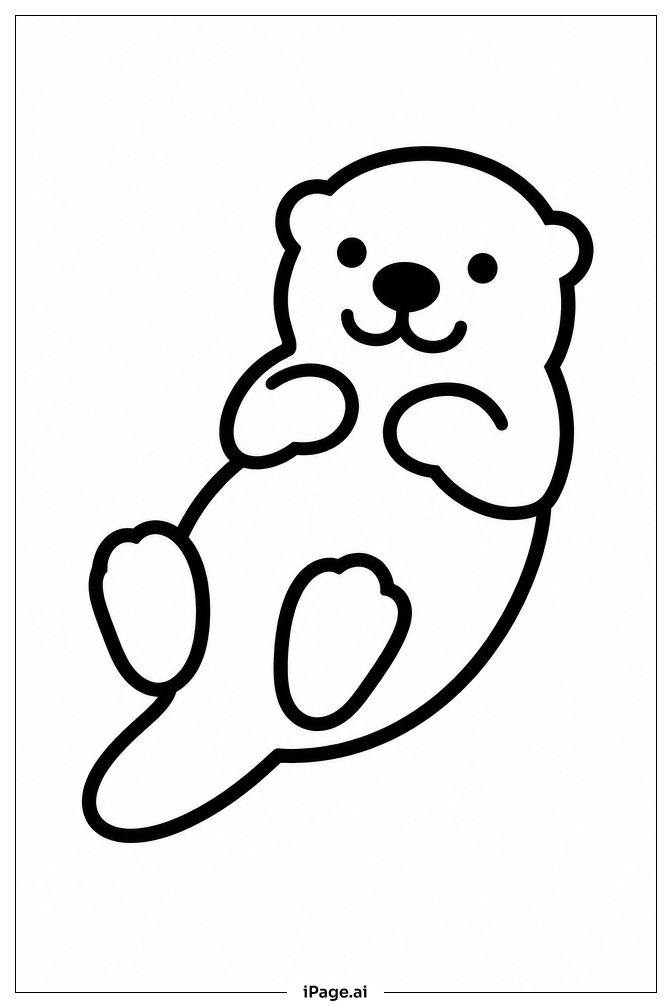
Coloring tips: How to color Sea Otter coloring page well?
Start with the otter's fur. Use warm shades of brown — mix light tan on the chest and face with medium and dark brown on the body to give the fur a soft, layered look. The face can be a lighter cream or beige to make it stand out. Use a dark brown or black for the eyes, and leave a tiny white dot for the shine. The nose can be dark pink or black. For the water, try soft blues and blue-greens. Add touches of white for the foam and bubbles to give the ocean a lively, sparkling feel. If you want to get creative, try a warm golden hour palette — pale orange and pink in the background to suggest a sunset at sea. Keep your strokes light and gentle on the fur areas to build up texture gradually. This image works well with colored pencils, watercolors, or markers.
Coloring challenges: Which parts are difficult to color and need attention for Sea Otter coloring page?
• Fur Texture Detailing: The sea otter's thick fur is made up of many fine lines and layered strokes. Coloring each section to look fluffy and realistic takes patience. You need to follow the direction of the fur lines carefully and build up color in layers, using at least two or three shades of brown to create depth and dimension. Rushing this step can make the fur look flat.
• Facial Expression and Small Features: The otter's face has several small details packed close together — the eyes, nose, whiskers, and the soft fur around the cheeks. These areas require a steady hand and fine-tipped tools. Coloring too heavily in this zone can cause colors to bleed together and lose the otter's cute, expressive look.
• Water and Wave Blending: The rippling water around the otter needs smooth color transitions to feel natural. Blending two or three shades of blue without leaving harsh lines can be tricky, especially for younger colorists. The goal is a gentle gradient that suggests movement without overpowering the otter.
• Contrast Between Otter and Water: One of the bigger challenges is keeping the otter visually separate from the ocean background. Since both the fur and water can include similar mid-tones, you need to be intentional about using contrast — either making the water noticeably cooler in tone or adding a light outline effect along the otter's edges to help it pop off the page.
Benefits of coloring books: Advantages of drawing Sea Otter coloring page
Coloring this sea otter page offers a wonderful range of benefits for kids and anyone who picks up a crayon or pencil. First, it builds fine motor skills. Staying inside the lines and carefully shading small details like whiskers and fur trains hand-eye coordination and strengthens the small muscles used in writing. Second, it encourages creativity. Choosing colors for the fur, water, and background lets colorists make personal artistic choices and experiment freely. There is no single right answer, and that freedom builds confidence. Third, it teaches focus and patience. The fur texture and facial details require slow, mindful work — a great exercise in concentration that carries over into school and daily tasks. Fourth, it sparks curiosity about nature. Sea otters are real, fascinating animals with unique behaviors like floating on their backs and using rocks as tools. Coloring this page can inspire kids to learn more about marine life and ocean ecosystems. Finally, the calm, peaceful scene of an otter drifting on the water has a natural soothing quality. Coloring it can help reduce stress and bring a sense of quiet enjoyment — good for the mind at any age.