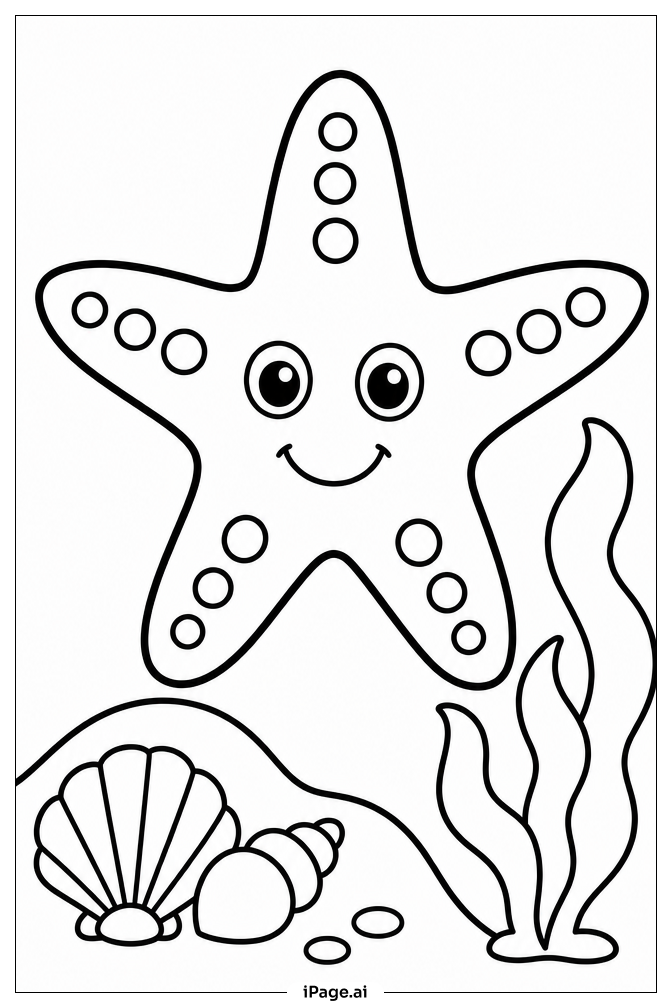
Coloring tips: How to color Sea Animals Sandy Seabed coloring page well?
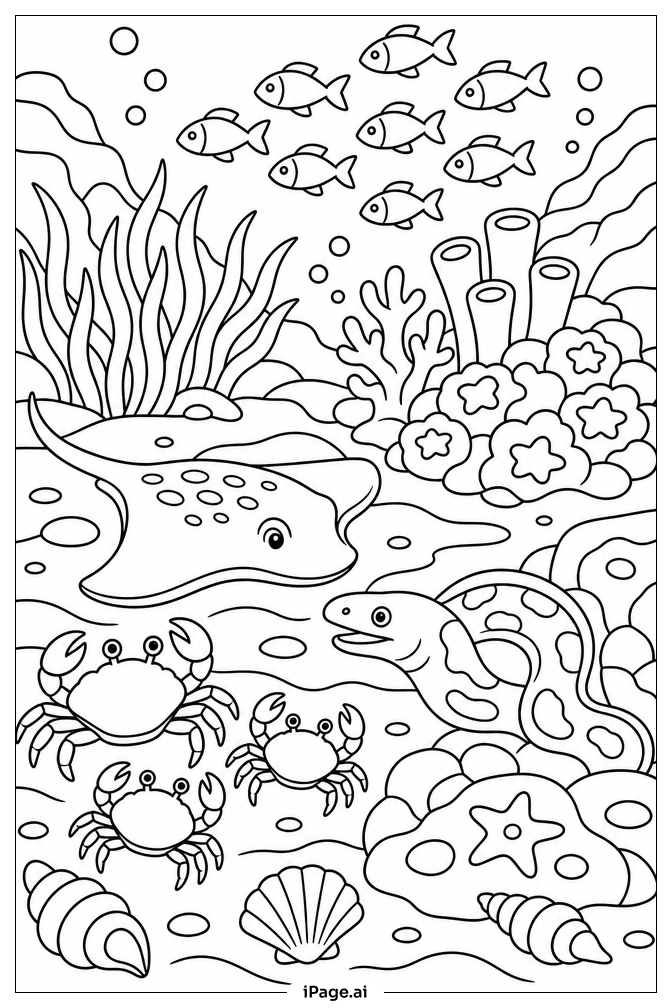
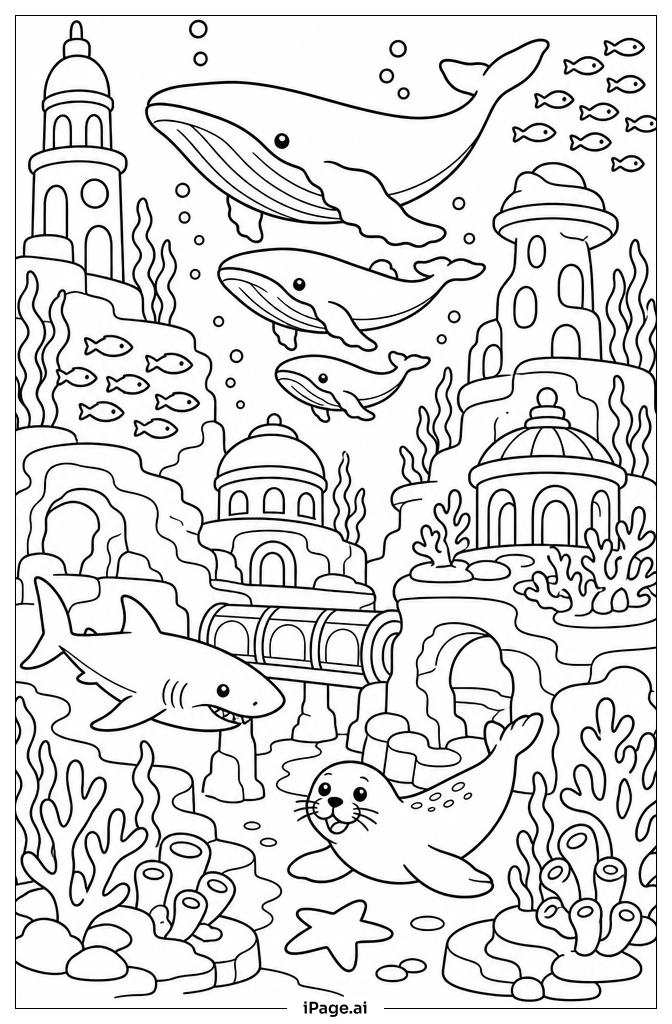
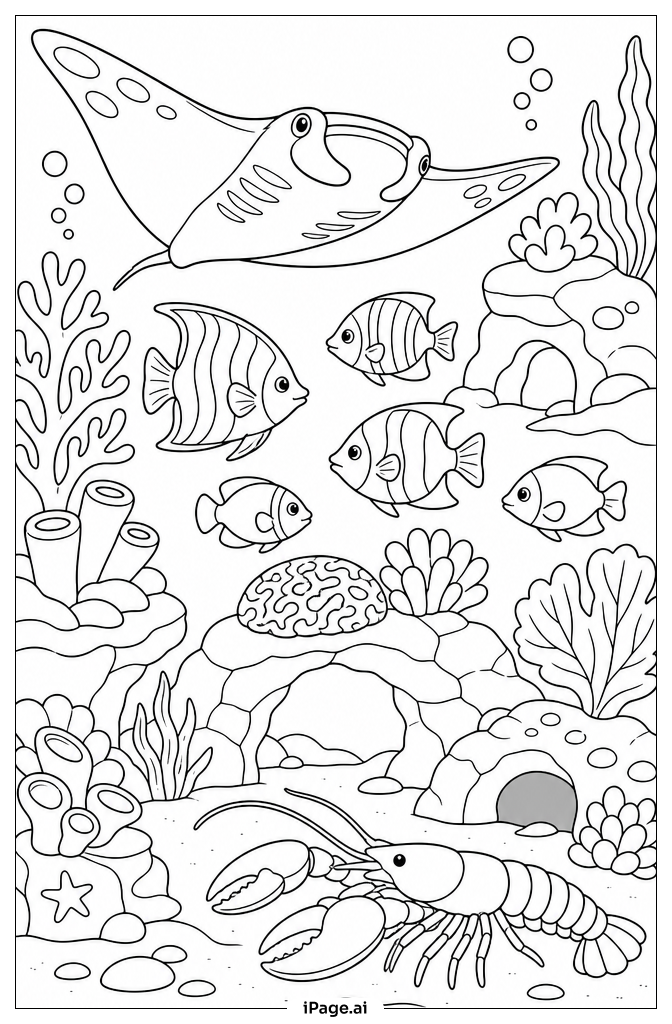
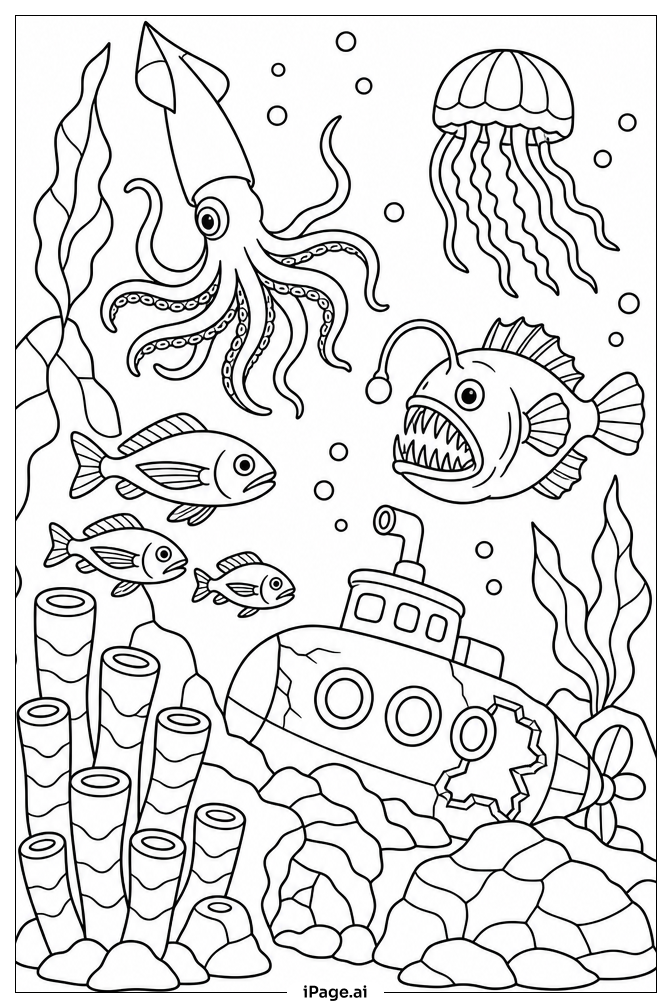
Start with the lightest colors first. Use sandy yellows and soft tans for the ocean floor. Color the fish in bright, bold shades like orange, yellow, and blue — ocean fish are naturally vibrant! Give the octopus a rich purple or red tone. Use warm orange or red for the crab, and a mix of greens and browns for the sea turtle's shell. Sea stars look great in orange or pink. For the coral and seaweed, try greens, pinks, and purples. Use a soft blue or teal for the water in the background. Don't be afraid to mix shades to add depth. Lighter tones near the top of the water and darker tones near the sandy bottom will make the scene feel more realistic. Have fun and make it your own — there are no wrong color choices under the sea!
Coloring challenges: Which parts are difficult to color and need attention for Sea Animals Sandy Seabed coloring page?
Coloring this underwater scene is a joyful challenge. Here are some areas that may need extra care:
• **Small details on sea creatures:** Many animals, like the sea turtle's shell pattern and the octopus's suckers, have tiny intricate details. These require a fine-tipped colored pencil or a thin marker to fill in neatly without going outside the lines. Young colorists should take their time and work slowly in these areas.
• **Layering sand and water backgrounds:** The sandy seabed and the water above it need smooth, even color gradients. Blending from a light tan at the bottom to a deeper blue toward the top takes patience. Using circular strokes with light pressure helps avoid streaky results, especially with colored pencils.
• **Overlapping elements:** Coral, seaweed, rocks, and animals often overlap each other. Coloring overlapping areas without smudging or mixing colors requires careful planning. It helps to color each element one at a time and let each section dry fully before moving on, especially when using markers.
• **Multiple creatures with different color schemes:** Each sea animal has its own natural color palette. Keeping track of which colors belong to which creature can be tricky in a busy scene. Planning your colors in advance — even lightly sketching a color guide — can prevent mistakes and make the final result more satisfying.
• **Shells and small background objects:** Tiny shells and pebbles scattered across the sandy floor are easy to overlook but add a lot of charm. Using a very fine tool to add detail here, such as a gel pen or fine liner, can really make these small accents pop without overpowering the main sea animals.
Benefits of coloring books: Advantages of drawing Sea Animals Sandy Seabed coloring page
Coloring this Sea Animals Sandy Seabed page offers wonderful benefits for children and families alike.
**Builds focus and patience:** Staying inside the lines of detailed sea creatures helps children develop concentration and fine motor control, skills that support writing and everyday tasks.
**Sparks curiosity about nature:** Coloring realistic sea animals like octopuses, crabs, sea turtles, and fish naturally encourages children to ask questions about ocean life. It can be a starting point for learning about marine ecosystems in a fun, hands-on way.
**Encourages creativity:** Choosing colors for each creature invites children to express themselves freely. There are no strict rules — a purple crab or a rainbow fish is just as valid as a realistic one!
**Reduces stress and promotes calm:** The repetitive, focused activity of coloring has a soothing effect on both children and adults. It creates a quiet, screen-free moment of mindfulness.
**Strengthens color recognition and artistic skills:** Working with a complex, multi-element scene helps children learn how to balance colors across a composition, building early artistic thinking and an eye for visual harmony.
This page is a perfect activity for a rainy afternoon, a classroom project, or a creative family session by the sea!