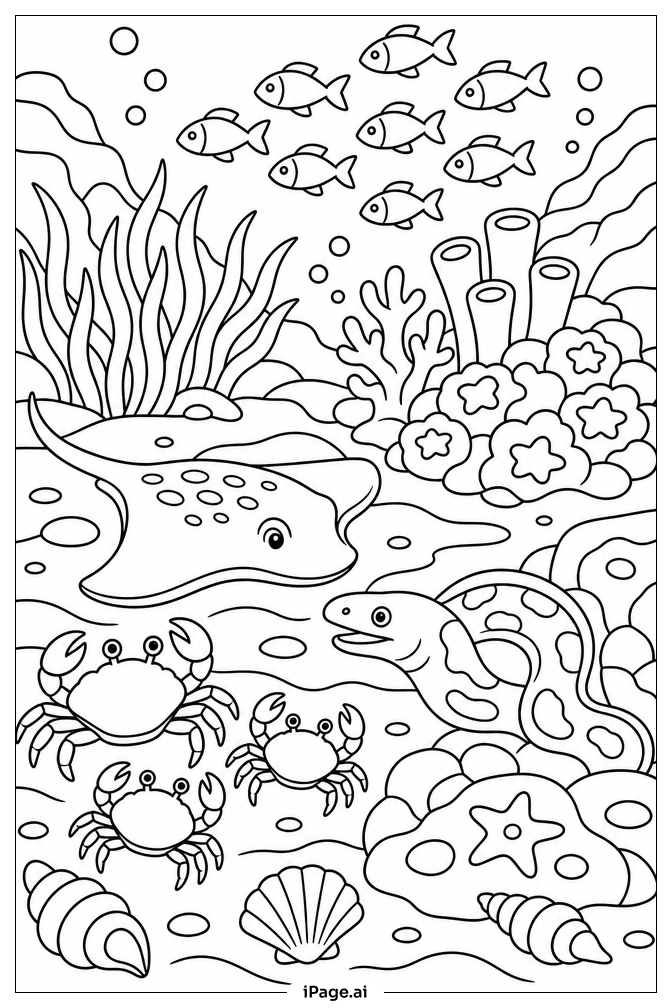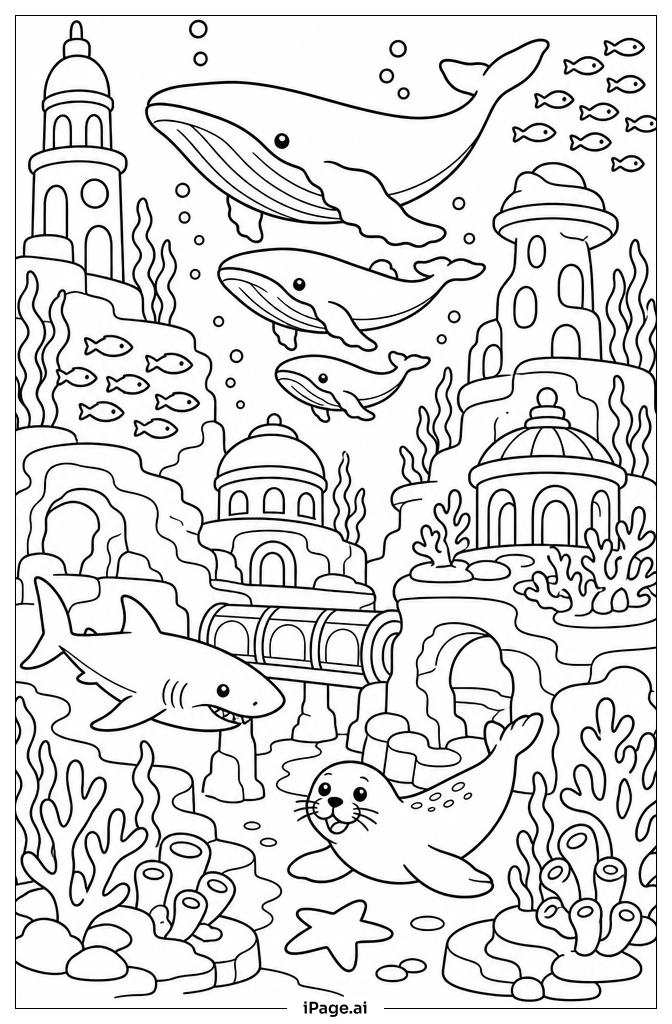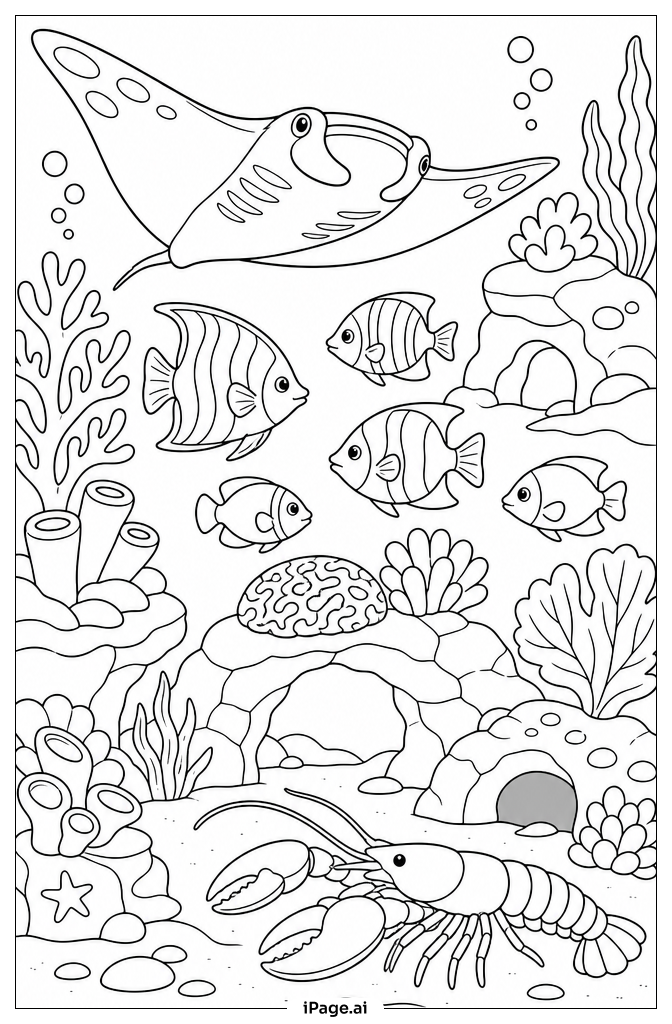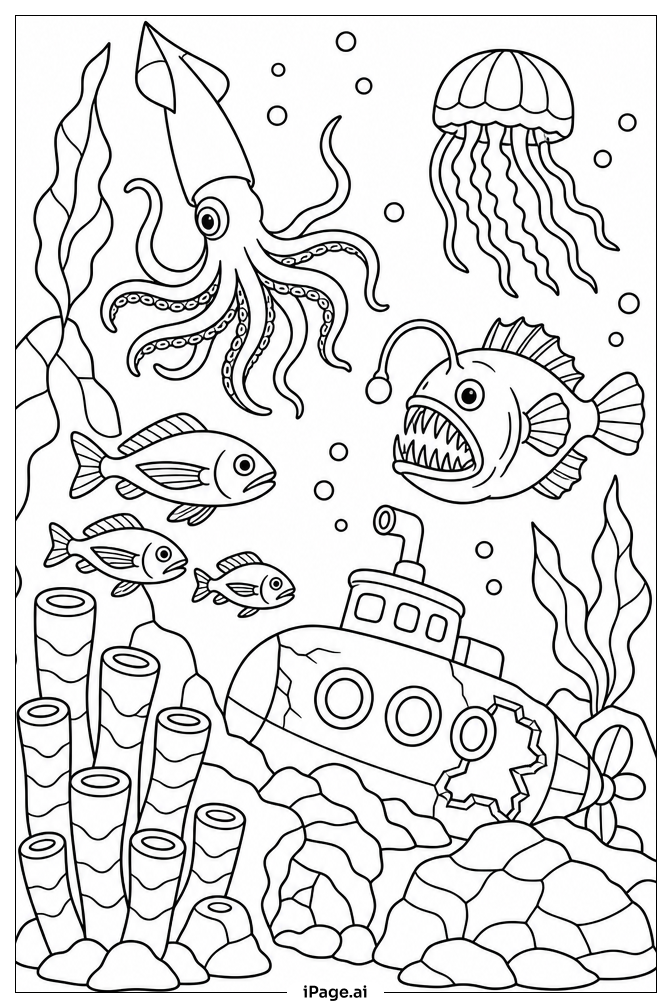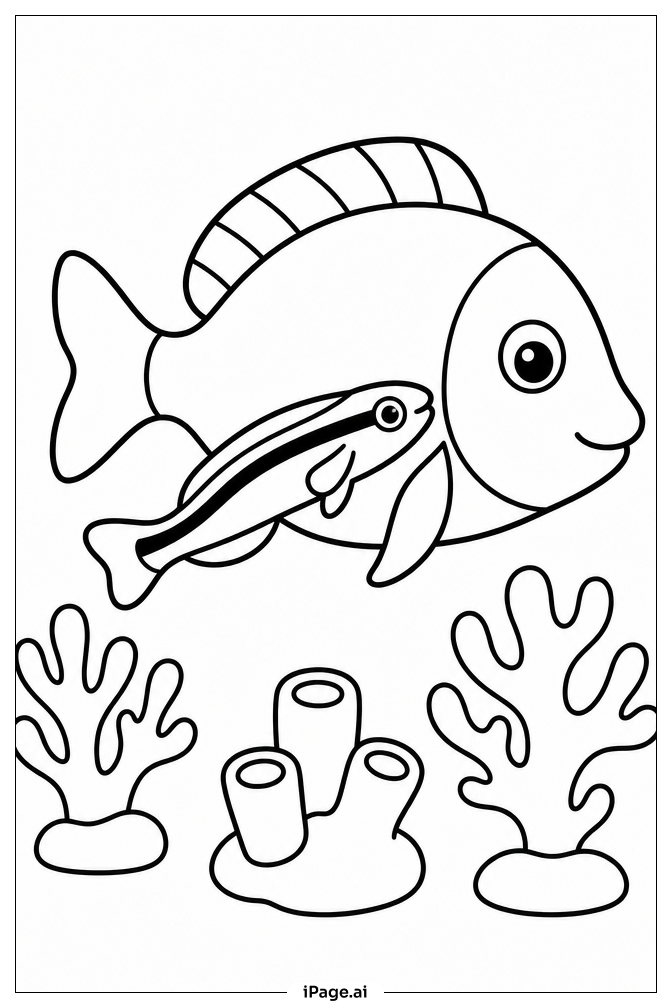
Coloring tips: How to color Sea Animals Reef Cleaning coloring page well?
Start with the background — use deep blues and aqua greens to fill in the water. Add lighter streaks to show sunlight filtering through.
For the coral, try warm colors like orange, red, pink, and purple. Mix different shades to make each coral look unique.
Color the sea turtle with earthy greens and browns on its shell, and a lighter green on its belly.
Use bright orange and white stripes for the clownfish. Give the octopus a fun reddish-orange or even purple tone.
The cleaner shrimp look great in vivid red and white. For the sea anemones, try pink, orange, or yellow tentacles.
Add light yellow or white rays coming from the top of the page to show sunlight. Use sandy beige and tan shades for the ocean floor.
Feel free to mix colors and try bold choices — the ocean is full of amazing colors, so there are no wrong answers here!
Coloring challenges: Which parts are difficult to color and need attention for Sea Animals Reef Cleaning coloring page?
Coloring this reef cleaning scene is a fun challenge, but there are a few tricky parts to watch out for:
• **Overlapping elements:** The reef is packed with sea creatures, coral, plants, and bubbles all layered on top of each other. It can be hard to tell where one shape ends and another begins. Take your time tracing the outlines carefully before filling in each section with color.
• **Small details and fine lines:** The cleaner shrimp, tiny fish scales, coral textures, and bubble outlines are all very small. Using fine-tipped colored pencils or thin markers will help you stay within the lines and bring out those little details without smudging neighboring areas.
• **Color separation:** Many creatures and coral pieces sit right next to each other. If you use similar colors for nearby objects, they can blend together and lose definition. Try to alternate warm and cool colors for adjacent elements to keep each shape visually distinct.
• **Blending water effects:** Creating a realistic water background with smooth color gradients — from deep blue at the bottom to lighter aqua near the top — takes patience. Layering light strokes gradually and blending gently will give the water a natural, flowing look without harsh lines.
• **Balancing the overall color scheme:** With so many different animals, plants, and textures in one scene, it can be easy to make the image look too busy or uneven. Planning your color palette ahead of time and keeping a balance between bright accent colors and softer background tones will help the whole scene feel harmonious and eye-catching.
Benefits of coloring books: Advantages of drawing Sea Animals Reef Cleaning coloring page
Coloring this Sea Animals Reef Cleaning page offers many wonderful benefits for kids and beginners alike.
**Builds focus and patience.** The scene has lots of small details, which encourages children to slow down, pay close attention, and work carefully — great habits both in art and in everyday life.
**Sparks creativity.** With so many sea creatures and coral shapes, kids can experiment with bold and imaginative color combinations. There is no single "right" answer, which builds confidence and creative thinking.
**Teaches about nature.** This scene shows how ocean animals work together to keep the reef healthy. While coloring, children naturally learn about reef ecosystems, symbiosis, and the importance of ocean conservation.
**Improves fine motor skills.** Staying within the lines, coloring small details, and switching between tools all help develop hand-eye coordination and pencil control — skills that support writing and other hands-on tasks.
**Promotes relaxation.** The calm underwater theme, with flowing shapes and gentle curves, creates a soothing coloring experience. It helps reduce stress and gives kids a peaceful, screen-free activity they can enjoy at their own pace.