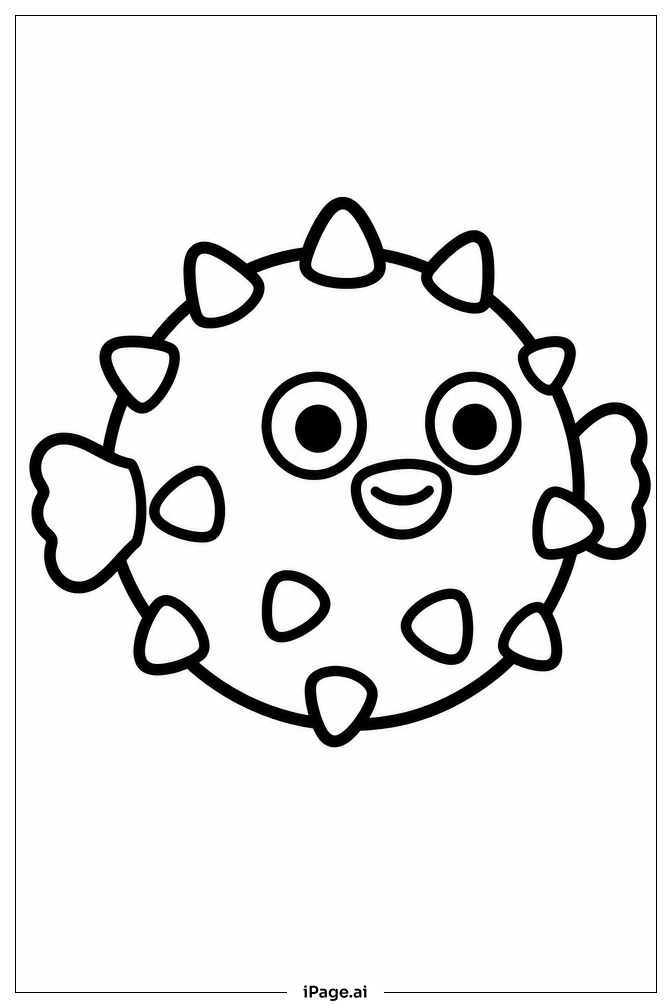
Coloring tips: How to color Sea Animals Pufferfish coloring page well?
Start with the pufferfish's body. Pufferfish are often yellow, orange, or brown in real life, so try a warm golden yellow or a soft orange for the main body. Add dark brown or black spots scattered across the body to make it look realistic. Color the spines a slightly lighter shade than the body.
For the large eyes, use black for the pupil and leave a small white dot to make them look shiny and alive. The fins can be a translucent light yellow or pale blue.
For the background, use deep blues and teals to suggest the ocean. Color the seaweed in shades of green. Use pink, red, or purple for the coral. Make the bubbles light blue or simply leave them white.
Feel free to use your imagination — you can even give the pufferfish a fun, bright color like lime green or sky blue for a creative twist!
Coloring challenges: Which parts are difficult to color and need attention for Sea Animals Pufferfish coloring page?
Coloring this pufferfish page is a fun challenge, but there are a few tricky areas to watch out for:
• **The spines:** The pufferfish is covered in many small, pointy spines spread all over its round body. Each spine is tiny and closely packed together. Carefully coloring each spine without going outside the lines takes patience and a fine-tipped colored pencil or marker. This is one of the most detailed parts of the page.
• **The round, curved body:** Because the body is perfectly round and inflated, adding shading to show its three-dimensional shape can be difficult. To make it look puffy and realistic, try using a lighter color in the center and a darker shade around the edges. Blending these tones smoothly is a challenge, especially for younger colorists.
• **The large expressive eyes:** The eyes are a focal point of the image. They require careful coloring to look bright and lively. Leaving a tiny white highlight spot while coloring the dark pupil takes steady hands and good control.
• **Small background details:** The seaweed, coral, starfish, and bubbles in the background are small and close together. Coloring them neatly without accidentally overlapping colors into the pufferfish or other elements requires focus and precision.
• **Color harmony across the scene:** Choosing colors that look good together for the pufferfish, the plants, and the ocean background can be tricky. Balancing warm colors on the fish with cool blues and greens in the background takes a bit of planning before you start.
Benefits of coloring books: Advantages of drawing Sea Animals Pufferfish coloring page
Coloring this pufferfish page offers many wonderful benefits for kids and beginners alike.
**Builds focus and patience.** The many small details — like the spines and tiny background elements — encourage children to slow down, concentrate, and work carefully. This strengthens attention span over time.
**Improves fine motor skills.** Staying within the lines and coloring small areas like the spines and fins helps develop hand-eye coordination and pencil control, which are important skills for writing and drawing.
**Sparks creativity.** There is no single "right" way to color a pufferfish. Kids are free to choose any colors they like, building confidence in their own creative choices and artistic expression.
**Teaches about ocean life.** Coloring a pufferfish is also a gentle introduction to marine biology. Children can learn about this fascinating sea creature — how it puffs up for defense and where it lives — making the activity both fun and educational.
**Promotes relaxation and well-being.** The calm, repetitive motion of coloring is known to reduce stress and anxiety. It gives children a peaceful, screen-free activity that helps them unwind and feel accomplished when they finish.