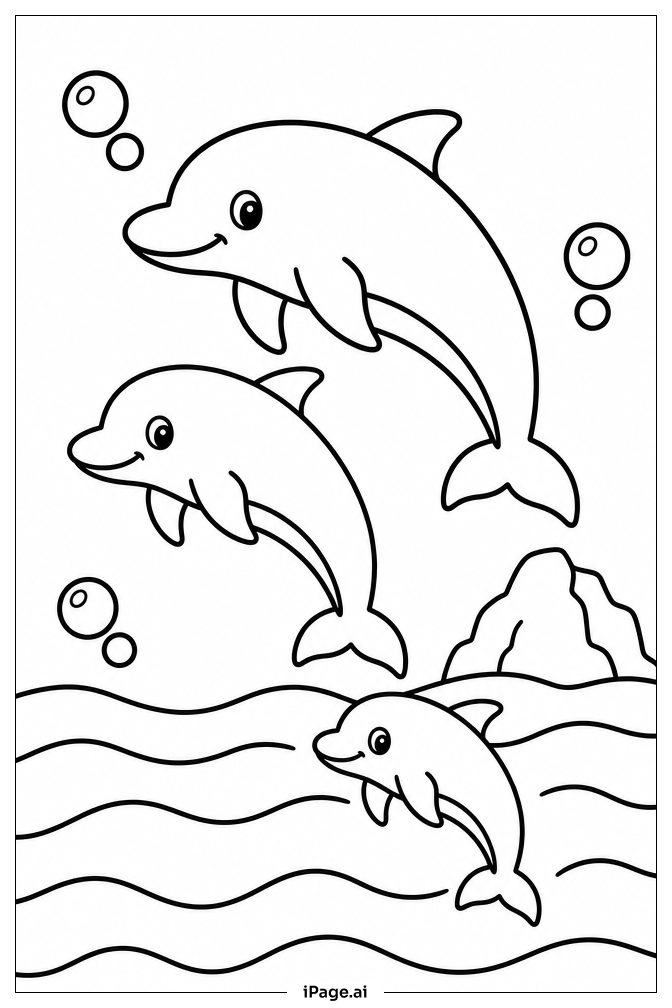
Coloring tips: How to color Sea Animals Playful Pod coloring page well?
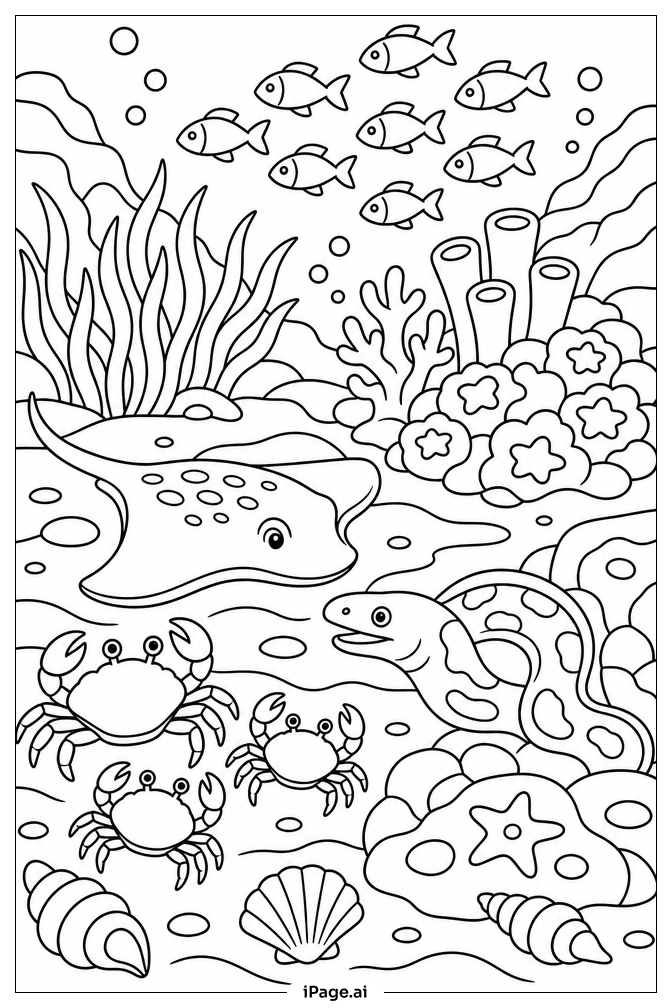
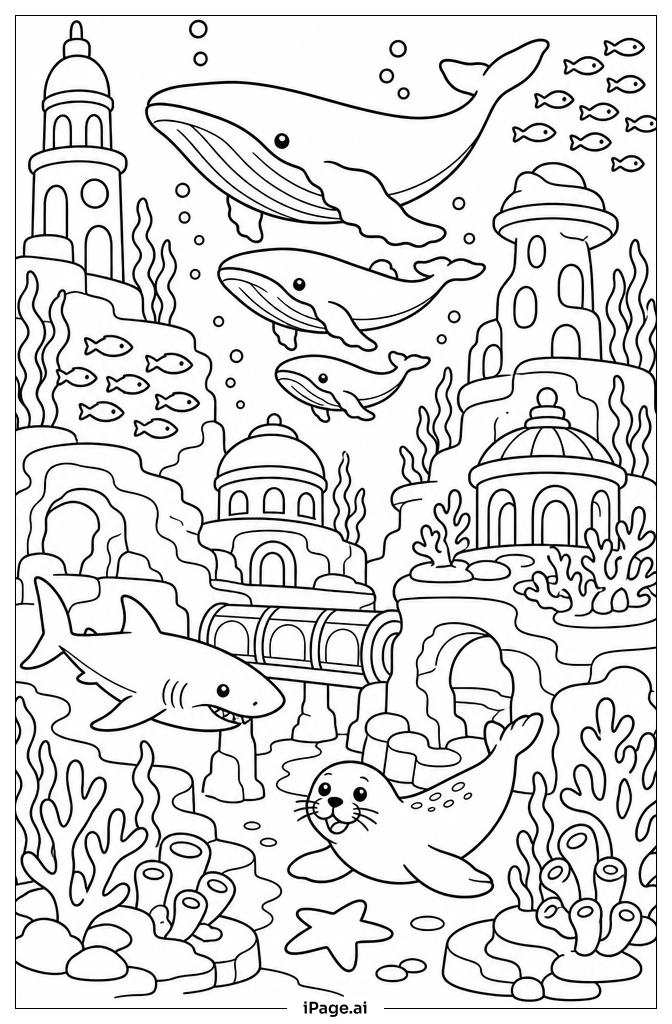
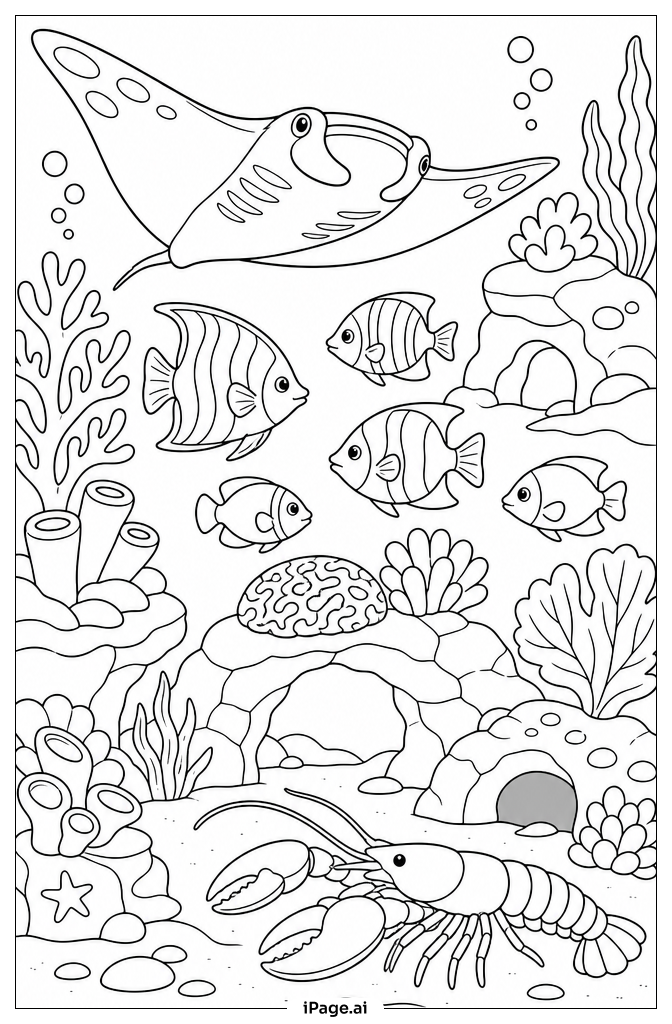
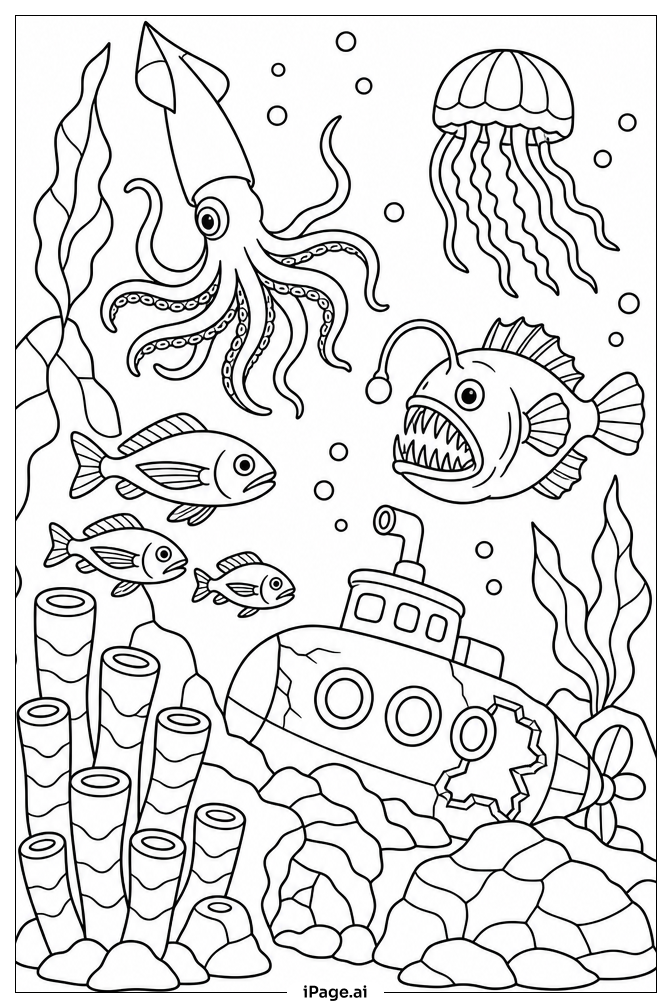
Start with the larger animals first. Use sky blue or turquoise for the dolphin and soft gray-blue for the whale. Give the fish bright, bold colors — orange, yellow, red, and purple all work great. Try mixing colors on each fish to make them stand out from one another. Color the octopus in a warm pink or deep magenta. Use different shades of green for the seaweed and kelp. For the coral, go with coral pink, orange, or red. The starfish looks great in orange or sandy yellow. Use a light blue or aqua wash for the water background. Add darker blue tones toward the bottom to show depth. Keep the bubbles white or very light blue. Feel free to use your imagination — there are no wrong color choices in the ocean!
Coloring challenges: Which parts are difficult to color and need attention for Sea Animals Playful Pod coloring page?
• **Staying within fine outlines:** Many of the sea animals, especially the fish and octopus tentacles, have small, curved, and detailed outlines. It can be tricky to color neatly inside these thin lines, especially for younger children. Using a sharp colored pencil tip or a fine-point marker can help a lot.
• **Layering water and background colors:** Creating a convincing underwater look means blending multiple shades of blue without making everything look flat or muddy. Transitioning smoothly from lighter blue near the surface to deeper, darker tones at the bottom takes patience and careful layering of color.
• **Differentiating overlapping elements:** In a scene this full of life, many elements — fish, seaweed, coral, and bubbles — overlap each other. Choosing colors that contrast well with neighboring elements is important so each creature and plant stands out clearly instead of blending together.
• **Coloring the octopus tentacles:** The octopus has long, curling tentacles that weave through the scene. Each tentacle is narrow and rounded, making it challenging to apply even color without going outside the lines. Working slowly with a thin tool and following the curve of each tentacle gives the best results.
• **Balancing detail and simplicity:** The scene includes both large open areas (like the whale's body) and tiny intricate details (like scales on fish or texture on coral). Switching between broad strokes for large areas and careful, small strokes for details requires focus and adaptability, which can be a fun challenge for more experienced young artists.
Benefits of coloring books: Advantages of drawing Sea Animals Playful Pod coloring page
Coloring this Sea Animals Playful Pod page offers wonderful benefits for kids of all ages. First, it builds fine motor skills. Carefully coloring inside the outlines of tentacles, fins, and coral strengthens hand muscles and improves pencil control — skills that help with writing too. Second, it sparks creativity. Choosing colors for dolphins, fish, and seaweed encourages children to think imaginatively and make their own artistic decisions. There are no wrong answers, and that freedom builds confidence. Third, it teaches focus and patience. A detailed scene like this one asks kids to slow down, pay attention, and work through each section thoughtfully. This kind of calm, focused activity is a great break from screens. Fourth, it introduces ocean life. As children color each creature, they naturally become curious about dolphins, whales, octopuses, and starfish, opening the door to learning about marine biology in a fun, relaxed way. Finally, finishing the page gives kids a real sense of accomplishment and pride in their work.