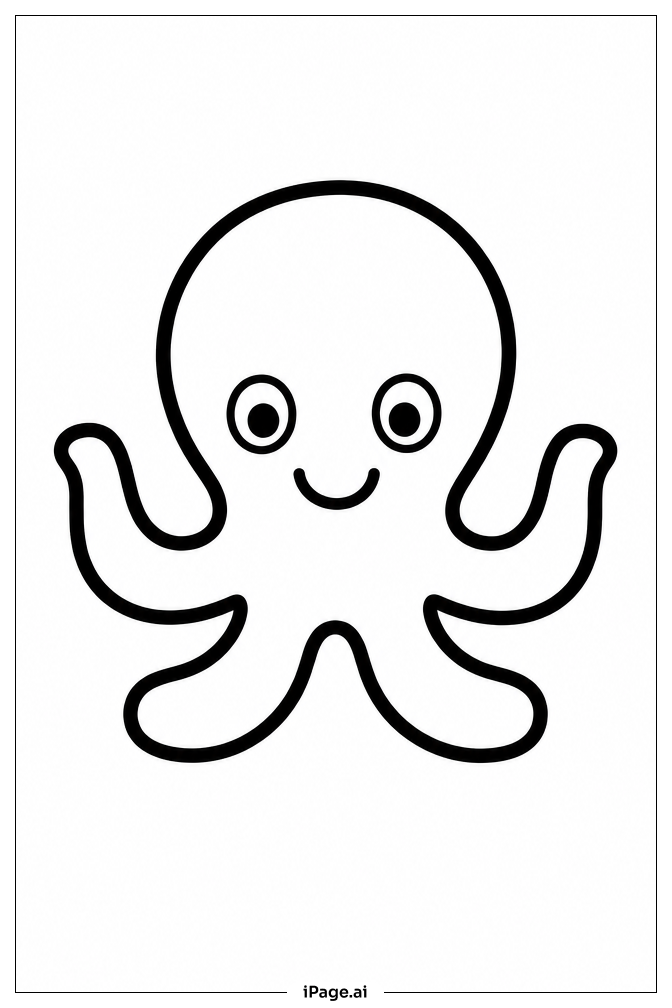
Coloring tips: How to color Sea Animals Octopus coloring page well?
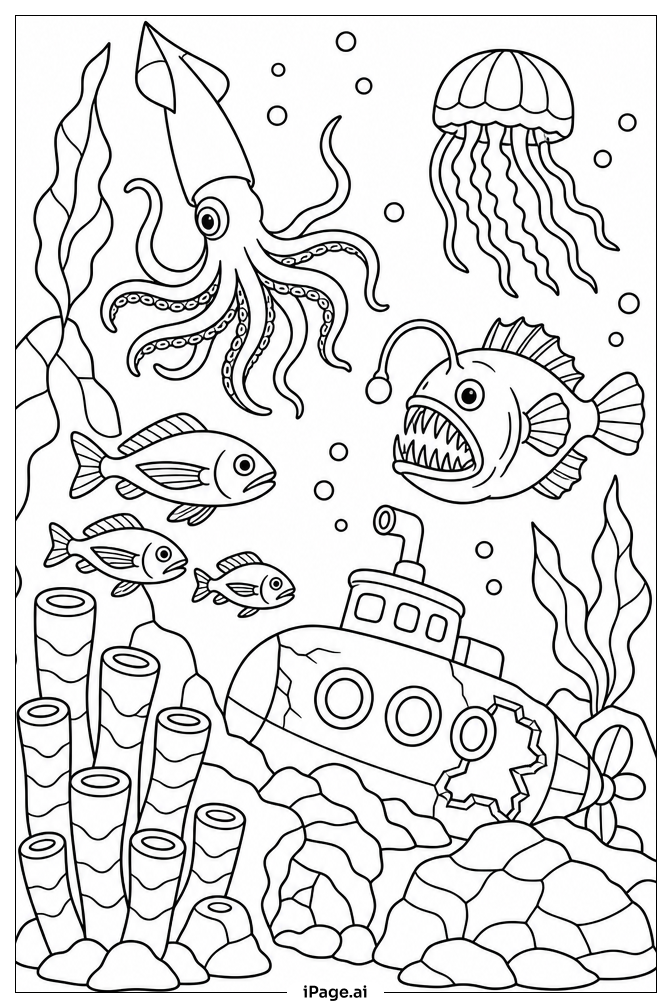
Start with the octopus's body by picking a fun main color. Real octopuses can be orange, red, purple, or even blue — so feel free to choose your favorite! Use a slightly darker shade of the same color on the edges of the head and along the tentacles to add depth and dimension. Color the suction cups in a lighter tone, like pale yellow or cream, to make them stand out. For the eyes, use bright colors like golden yellow or green to make them pop. Fill in the background bubbles with soft blues or light purples. You can even mix colors across the tentacles for a magical, rainbow effect — octopuses can change color in real life, so anything goes! Use colored pencils for fine details on the suction cups, and markers or crayons for filling in larger areas quickly.
Coloring challenges: Which parts are difficult to color and need attention for Sea Animals Octopus coloring page?
Coloring this octopus image comes with a few fun challenges to watch out for:\n\n• **Eight Tentacles with Consistent Color Flow:** The octopus has eight long, curling tentacles that twist in different directions. Keeping a consistent color scheme across all of them without losing track can be tricky, especially where the tentacles overlap or cross each other. Take your time and work on one tentacle at a time.\n\n• **Suction Cup Details:** Each tentacle is lined with small circular suction cups. These tiny shapes require careful, precise coloring to stay within the lines. Using a fine-tipped colored pencil or a thin marker is recommended to color each cup neatly without bleeding into the surrounding tentacle color.\n\n• **Overlapping Lines and Negative Space:** Where the tentacles curl and intertwine, there are areas of overlapping lines that create small pockets of negative space. Deciding which sections belong to which tentacle and keeping colors separated in these tight zones can be confusing and requires close attention.\n\n• **Creating Depth and Dimension:** The octopus's rounded body and tube-like tentacles are three-dimensional forms. Achieving a sense of depth using only flat color can be challenging. Blending two shades of the same color — a lighter tone in the center and a darker tone along the edges — helps create a more realistic, rounded look.\n\n• **Background Balance:** The floating bubbles and open background space need to complement the octopus without overwhelming it. Choosing colors that are soft enough to stay in the background while still looking interesting requires thoughtful color selection and a light hand.
Benefits of coloring books: Advantages of drawing Sea Animals Octopus coloring page
Coloring this octopus page offers a wonderful range of benefits for kids and beginners alike. Working through the eight detailed tentacles and tiny suction cups helps build fine motor skills and hand-eye coordination, as children practice staying within small, curved lines. This kind of focused activity also strengthens concentration and patience — both valuable skills in and out of the classroom. Choosing colors for the octopus sparks creativity and imaginative thinking. Since octopuses are known for their remarkable ability to change color, there are no wrong choices here, giving children the freedom to experiment confidently. Learning about the octopus while coloring also introduces fun ocean science in a relaxed, playful way. The process of completing the image gives a real sense of achievement and pride, boosting self-confidence. Overall, this page makes coloring both an educational and deeply enjoyable experience.