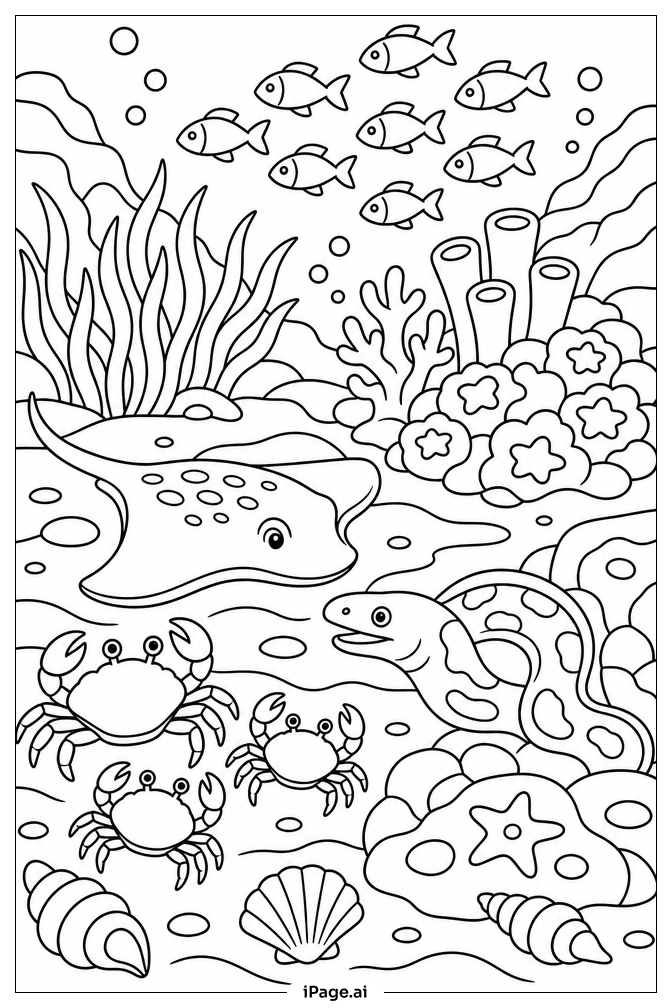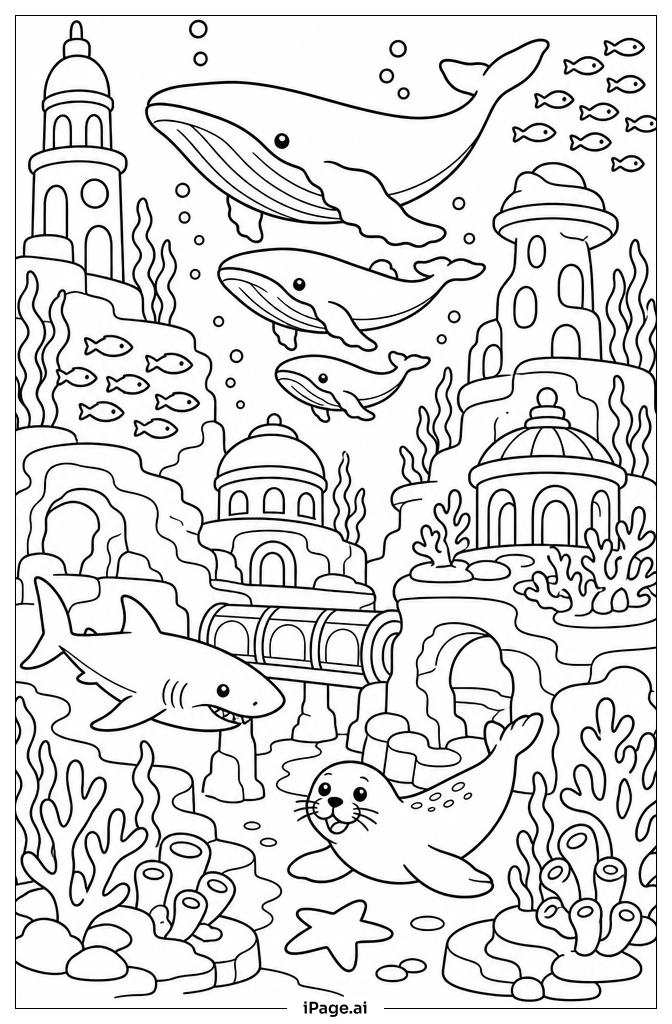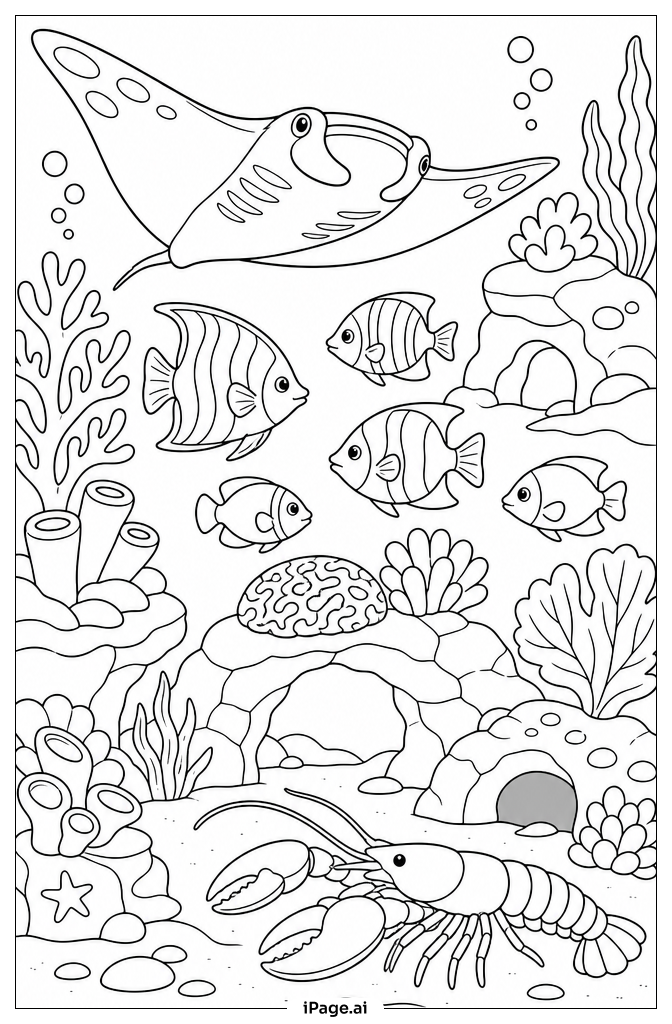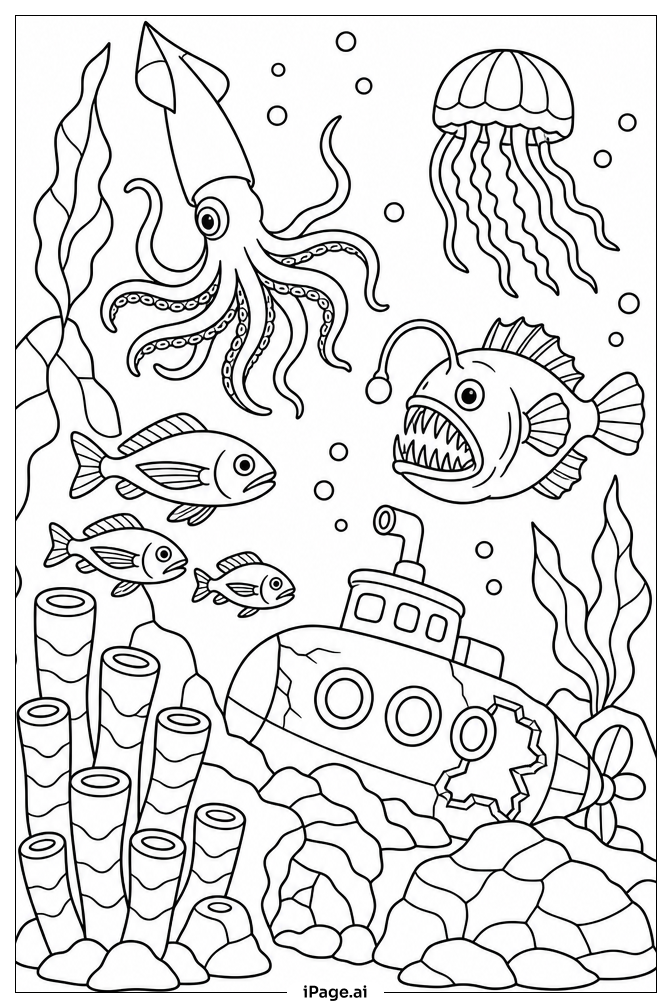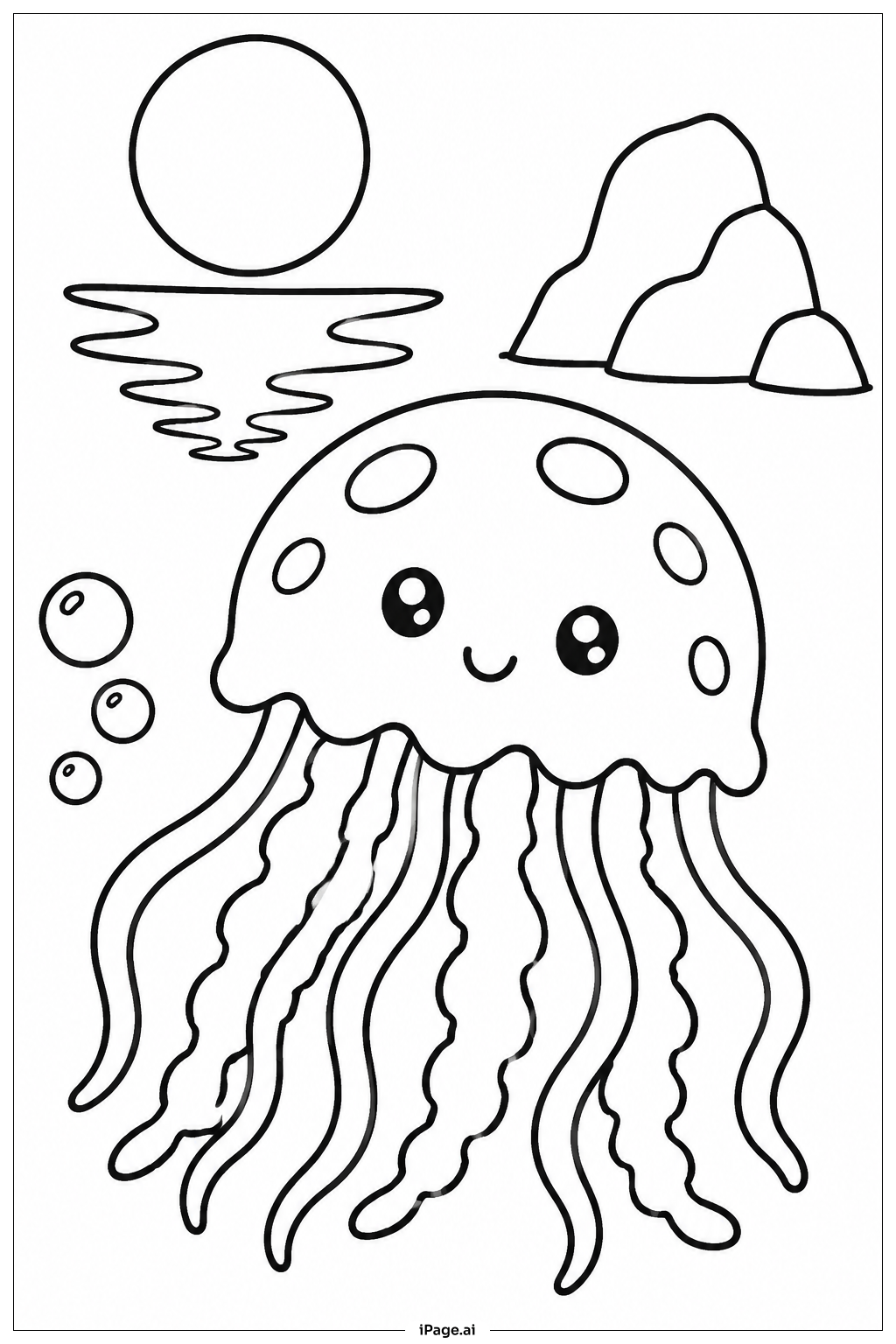
Coloring tips: How to color Sea Animals Night Swim coloring page well?
Start with the background to set the mood. Use deep blues, navy, and dark purples to create a rich night ocean feel. Add touches of black in the deeper areas for depth.
For the sea animals, try these colors:
- Octopus: orange, red, or purple
- Sea turtle: green and brown
- Dolphin: gray or light blue
- Jellyfish: soft pink, lavender, or light yellow
- Fish: bright colors like yellow, orange, red, and green — mix and match!
- Starfish: orange or sandy yellow
- Coral and seaweed: greens, pinks, and reds
To make the night glow effect stand out, use light yellow or white for the bioluminescent spots and bubble outlines. Coloring the creatures with bright, vivid colors against the dark background will make them really pop. Metallic or glitter gel pens work great for adding starry sparkle to this nighttime scene.
Coloring challenges: Which parts are difficult to color and need attention for Sea Animals Night Swim coloring page?
Coloring this nighttime ocean scene comes with several unique challenges to keep in mind:
• **Layering the dark background without muddying the animals:** Achieving a deep, rich nighttime ocean background requires careful layering of dark blues and purples. If you color the background after the animals, you risk smudging lighter colors into the dark shades. It is often better to plan your coloring order carefully — work from background to foreground, or use a light pencil sketch to mark boundaries before applying color.
• **Creating a glow effect around bioluminescent details:** Many sea creatures in a night swim scene emit soft, glowing light. Capturing this effect with standard colored pencils or crayons is tricky. A good technique is to color the glow areas with white or a very pale yellow first, then blend slightly darker shades outward. Leaving some areas lightly colored rather than heavily saturated also helps simulate a natural glow.
• **Coloring intricate details like tentacles and coral:** The octopus tentacles, jellyfish trails, and coral branches are thin and closely spaced. Staying within the lines in these areas requires a sharp pencil tip and a steady hand. Younger children may find it easier to use broader strokes and embrace a more free-form style in these sections.
• **Balancing bright animal colors against a dark background:** Bright creature colors can look flat or get lost if the contrast with the background is not strong enough. Using bold, saturated colors for the animals and ensuring the surrounding background is consistently dark will help each creature stand out clearly and bring the scene to life.
Benefits of coloring books: Advantages of drawing Sea Animals Night Swim coloring page
Coloring this Sea Animals Night Swim scene offers many wonderful benefits for kids and beginners alike.
**Builds focus and patience.** The detailed tentacles, coral, and bubble patterns encourage children to slow down, concentrate, and work carefully — skills that help in school and everyday life.
**Sparks curiosity about the ocean.** As kids color each creature, they naturally become curious about real sea animals — what they eat, how they swim, and why some glow in the dark. This can inspire learning beyond the page.
**Develops fine motor skills.** Staying within the lines of small details like jellyfish tentacles and starfish arms strengthens hand-eye coordination and pencil control, which supports handwriting development.
**Encourages creative thinking.** There are no wrong color choices here! Kids can make a rainbow octopus or a golden sea turtle, freely experimenting with color combinations and building confidence in their own creative decisions.
**Provides calming, screen-free time.** The peaceful underwater night setting makes this a relaxing activity. Focusing on coloring can reduce stress and provide a gentle, mindful break from screens and busy routines.
Whether coloring alone or with family, this page is a fun way to explore imagination while building real skills.