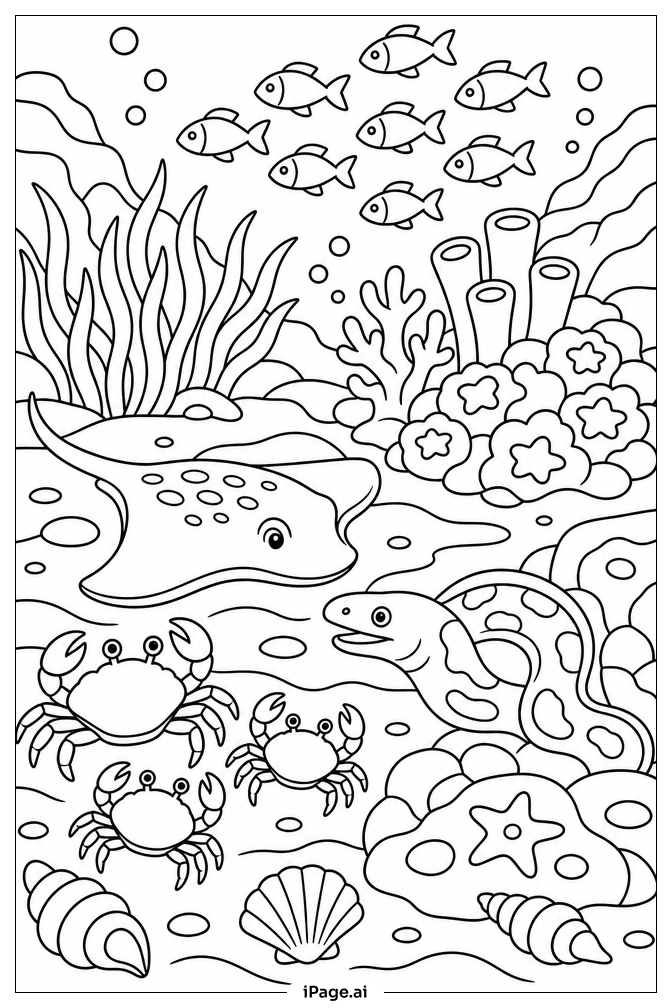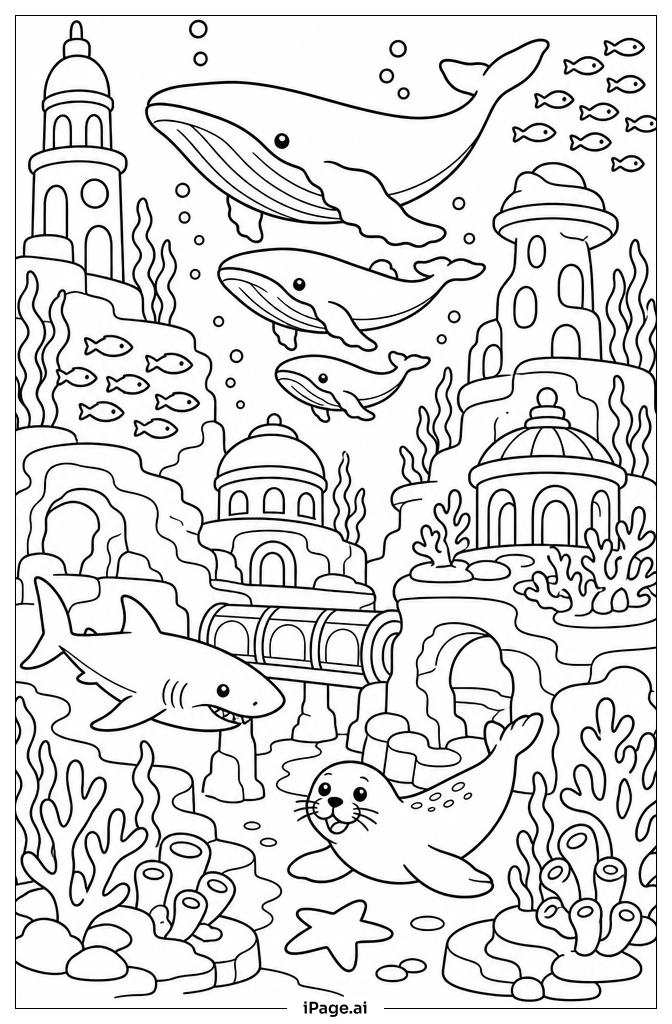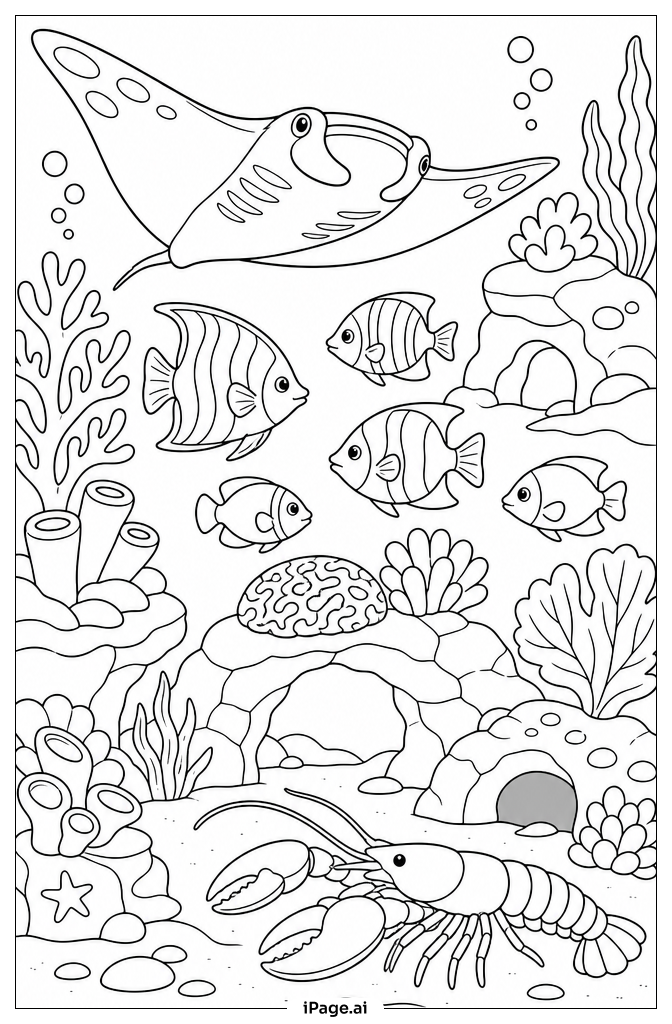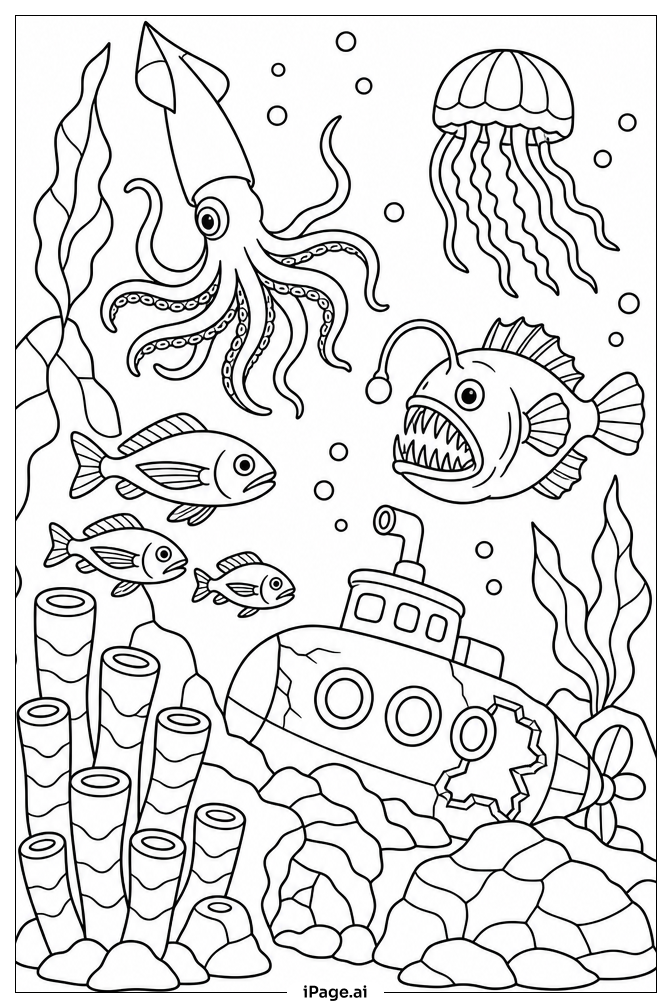
Coloring tips: How to color Sea Animals Migration Path coloring page well?
Start with the largest animals first. Color the humpback whale in shades of deep blue, gray, or even dark navy. Use lighter blues and grays on the belly to show its round shape.
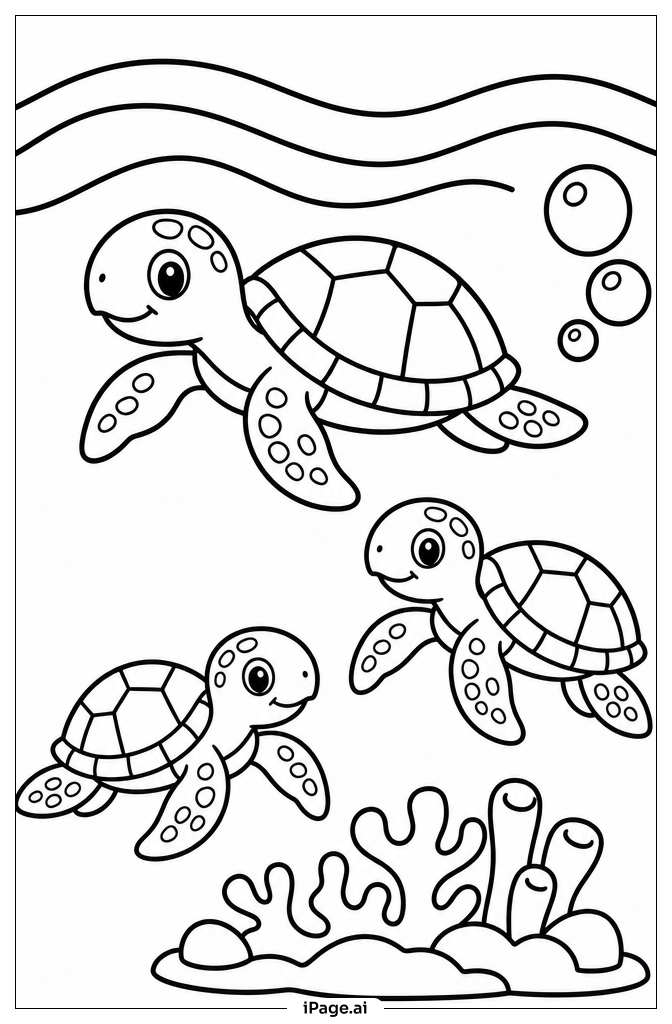
For the dolphins, try silver-gray on top and soft white or pale yellow on the belly. The sea turtles look great in greens and browns — mix both for a natural look.
Paint the manta ray in dark gray or black on top with a white underside. For the schools of fish, have fun with bright colors like orange, yellow, and red to make them pop.
Use different shades of blue and teal for the ocean water and currents. The swirling current lines can be a slightly lighter or darker blue than the background to create a sense of movement.
Add life to the coral and seaweed with greens, pinks, purples, and reds. Bubbles can be left light with just a thin outline.
Color the migration path with a soft, glowing color like warm gold or light aqua to make it stand out. This creates a visual story that guides the eye through the whole scene.
Coloring challenges: Which parts are difficult to color and need attention for Sea Animals Migration Path coloring page?
Coloring this migration scene comes with several challenges worth keeping in mind:
• **Large Animal Bodies with Gradients:** The whale and manta ray have large surface areas that benefit from gradient shading — darker on top and lighter on the belly. Blending colors smoothly across these big shapes can be tricky, especially for younger colorists. Using colored pencils or blending markers works best for this effect.
• **Tiny Details in the Background:** The coral, seaweed, bubbles, and current swirls are small and closely packed. Coloring within these tight spaces requires a sharp-tipped pencil or a fine marker to avoid going outside the lines. This level of detail demands patience and a steady hand.
• **Overlapping Animal Groups:** The schools of fish swim in layered formations that overlap with each other and with the background ocean. Choosing colors that are similar yet distinct enough to tell one group from another is a real challenge — too similar and they blend together; too different and the scene looks chaotic.
• **Creating a Sense of Depth:** The ocean has foreground, midground, and background layers. Making the scene feel three-dimensional requires using lighter, cooler colors for distant elements and darker, richer colors for closer ones. This concept of atmospheric perspective can be difficult for beginners to apply consistently.
• **Coloring the Migration Path:** The flowing current lines that mark the migration route need to stand out without overpowering the animals. Finding the right balance — a color that guides the eye but still looks natural underwater — requires thoughtful color selection and a light touch.
Benefits of coloring books: Advantages of drawing Sea Animals Migration Path coloring page
Coloring this Sea Animals Migration Path page offers wonderful benefits for kids and adults alike.
**Builds Ocean Awareness:** As children color each animal, they naturally learn about the different creatures that migrate through the ocean. It sparks curiosity about why animals travel and where they go.
**Develops Fine Motor Skills:** Carefully coloring the small fish, coral details, and swirling currents strengthens hand control and pencil grip — important skills for writing and drawing.
**Encourages Creative Thinking:** Choosing colors for each animal and deciding how to make the scene look like a real underwater world builds creative decision-making and confidence.
**Improves Focus and Patience:** A detailed scene like this one asks colorists to slow down, concentrate, and work through one section at a time — a great mindfulness exercise for busy minds.
**Teaches Color Theory Basics:** Blending blues for the ocean, shading the whale's belly, and choosing contrast colors for the fish introduces kids to real art concepts in a fun, low-pressure way.
**Promotes Emotional Calm:** The gentle, flowing nature of an underwater scene is naturally soothing. Coloring it can reduce stress and create a sense of peace — making it a perfect quiet-time activity for all ages.