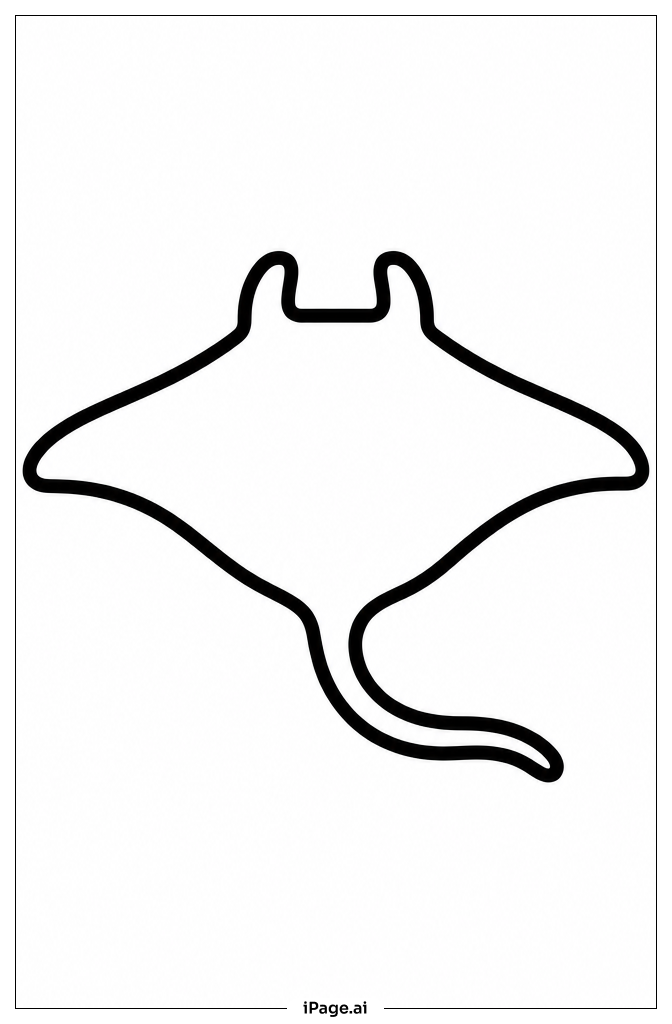
Coloring tips: How to color Sea Animals Manta Ray coloring page well?
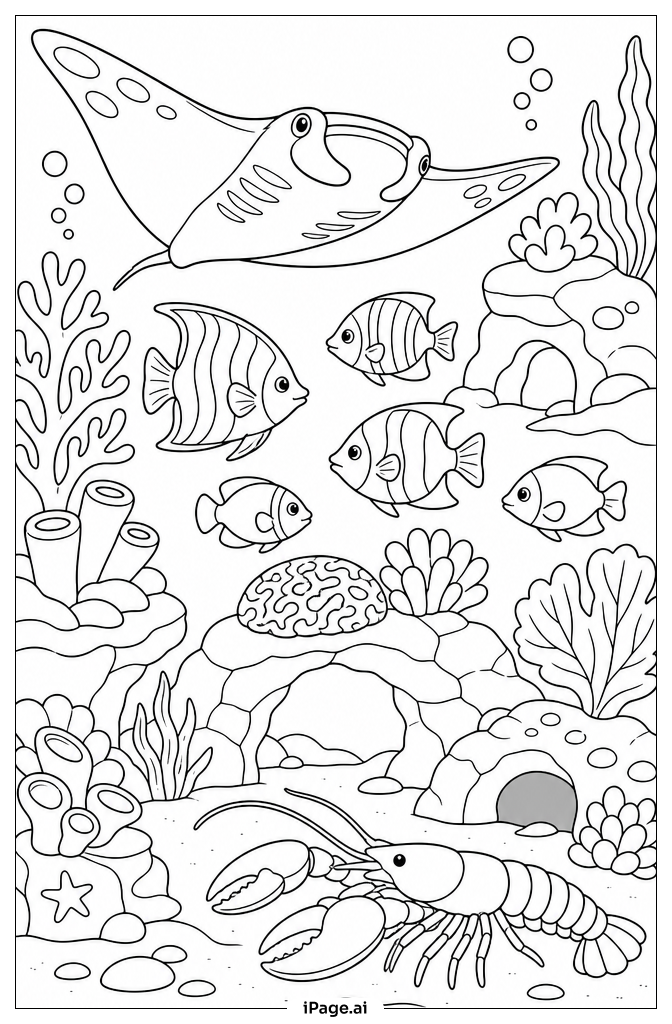
Start with the manta ray's body. Use dark blue or deep navy for the top side of its wings and a lighter gray or white for the underside. This contrast makes the ray look realistic and three-dimensional. For the background water, try shades of blue and teal. Lighter blues near the surface and darker blues deeper down will create a sense of depth. Color the seaweed and coral in greens, oranges, and pinks to bring the ocean floor to life. Use yellow or silver for the small fish swimming nearby. Add light purple or blue bubbles to fill empty spaces and make the scene feel lively. Don't worry about staying perfectly inside the lines — layering colors softly can create a beautiful underwater glow effect.
Coloring challenges: Which parts are difficult to color and need attention for Sea Animals Manta Ray coloring page?
• Wide Wing Surface Area: The manta ray's large, flat pectoral fins cover a big portion of the page. Coloring such a wide, open space evenly without streaks or blotches can be tricky, especially with crayons or markers. Take your time and use long, smooth strokes in the same direction to keep the color consistent across the whole wing surface.
• Gradient Shading on the Body: A real manta ray has a darker top and a lighter belly. Recreating this gradual color shift from dark to light requires careful blending. If you use colored pencils, try layering a dark blue first and then gently blending a lighter shade over it. This helps show the ray's natural coloring and gives it a rounded, three-dimensional look.
• Small Background Details: The bubbles, tiny fish, and flowing seaweed in the background are small and closely packed together. Coloring these tiny elements neatly without accidentally going outside their lines requires a fine-tipped tool, like a sharp colored pencil or a thin marker. A steady hand and patience are key here.
• Coral and Plant Variety: The coral and sea plants around the scene come in many different shapes. Choosing colors that are distinct enough from each other — while still looking like they belong in the same underwater world — takes some planning. Try laying out your color choices before you start to make sure they work well together.
• Tail Details: The long, thin tail of the manta ray is a narrow feature that can be easy to accidentally color over. Use a fine pencil or thin marker to carefully fill it in and outline it cleanly from the surrounding water background.
Benefits of coloring books: Advantages of drawing Sea Animals Manta Ray coloring page
Coloring this manta ray page offers a wonderful mix of fun and learning. Kids can discover facts about ocean life while they color, sparking curiosity about marine animals and underwater ecosystems. Choosing colors for the sea, coral, and the ray itself encourages creative thinking and artistic expression. The wide, flowing shapes of the manta ray's wings are satisfying to fill in and help build brush or pencil control, which is great for developing fine motor skills. Focusing on staying within the lines — or deciding when not to — helps children practice concentration and patience. The calming, ocean-themed scene also has a relaxing effect, making it a great activity for winding down after a busy day. For older kids and Adults, the shading and blending challenges offer a more advanced artistic exercise that builds confidence and skill. Overall, this page is a joyful way for Boys and Girls of all ages to connect with nature, express themselves, and enjoy a screen-free creative experience.