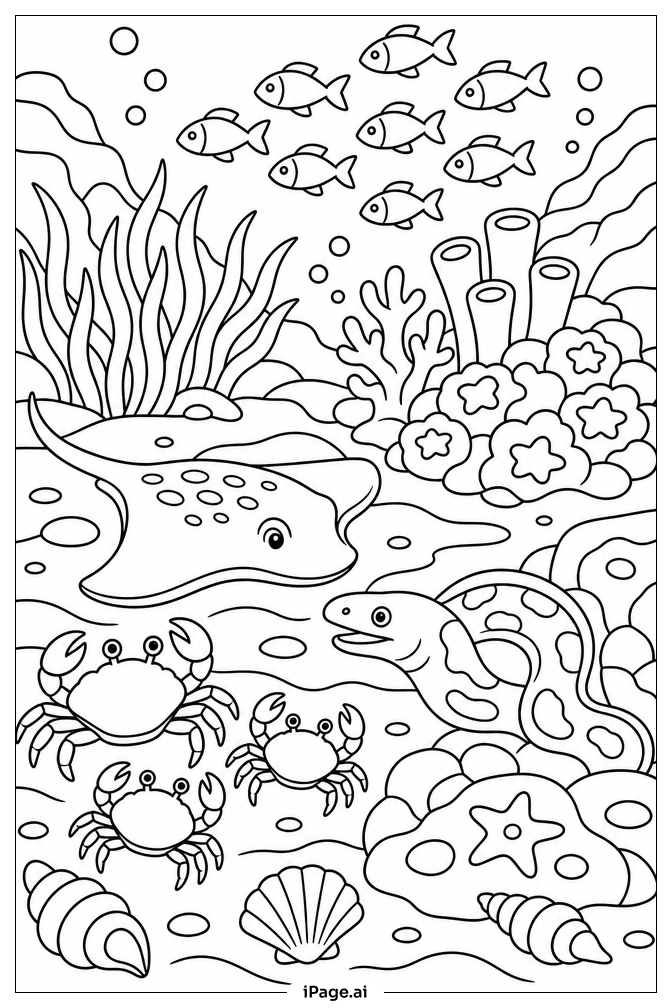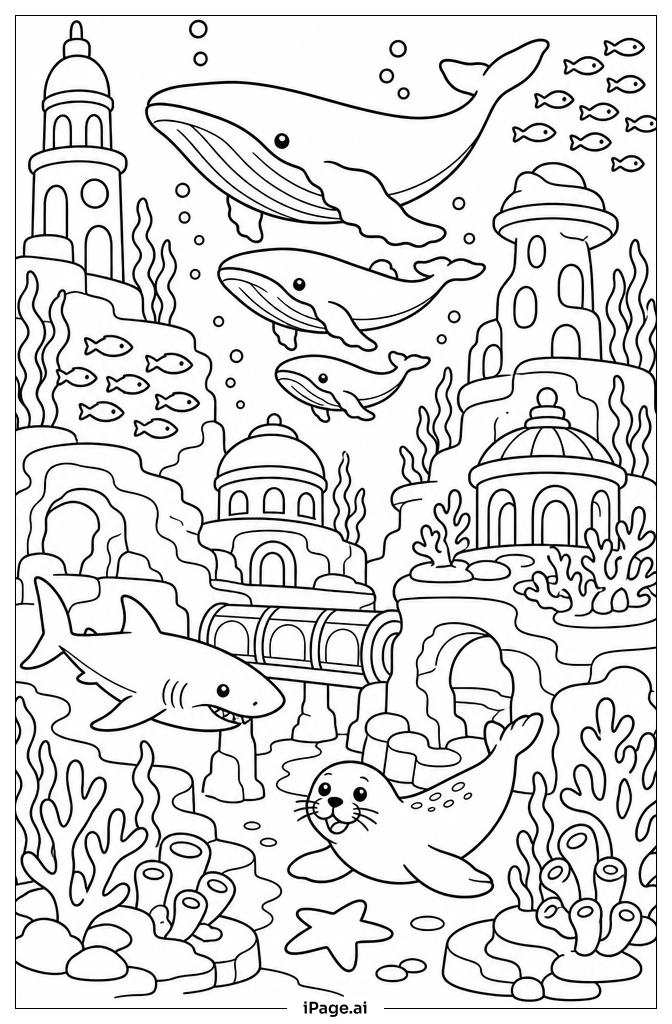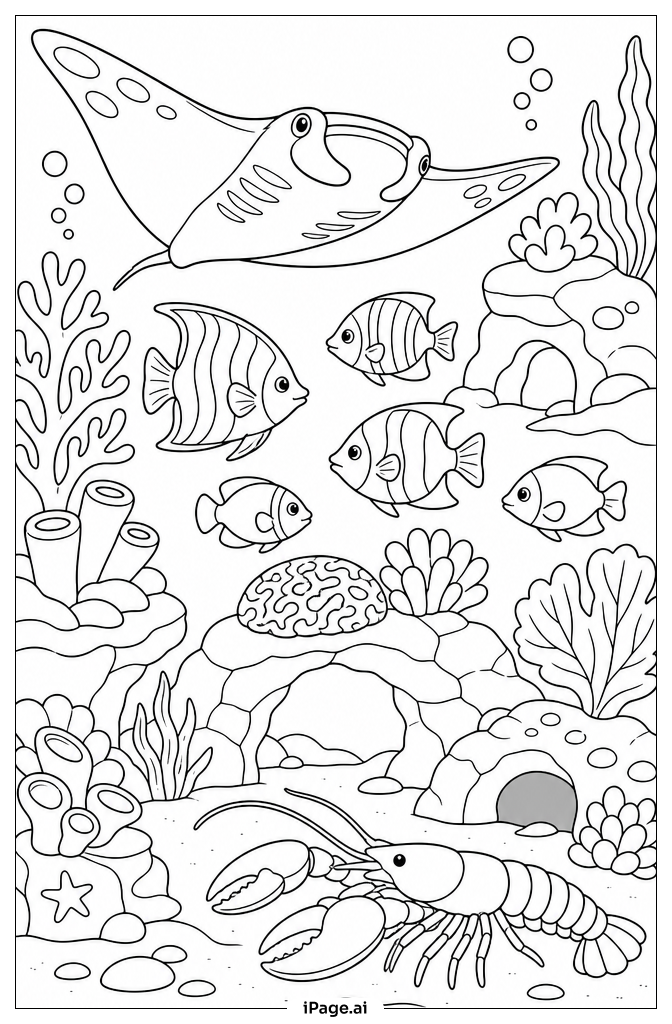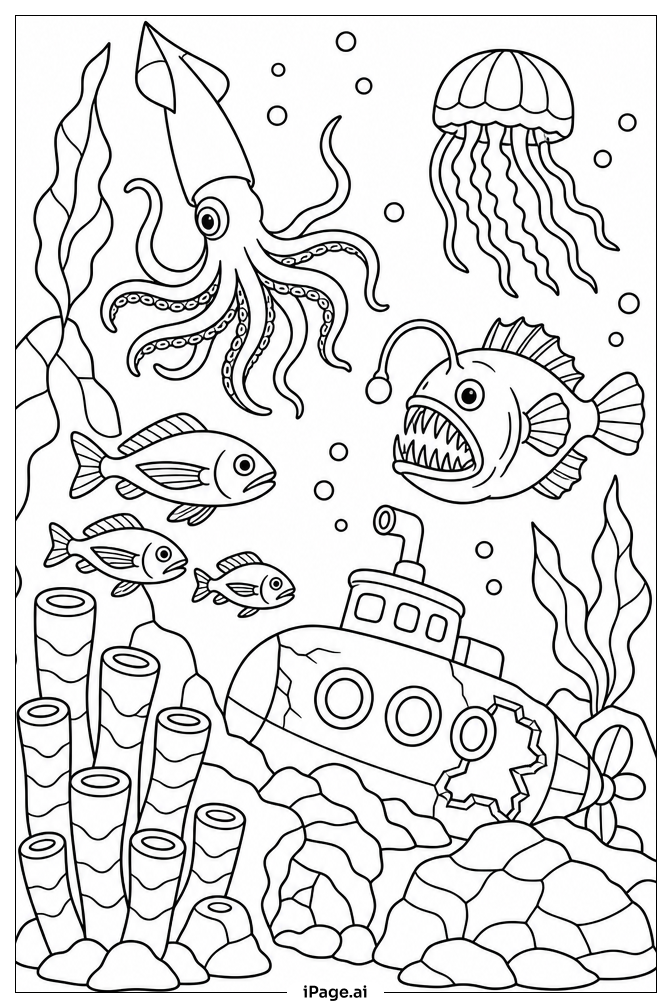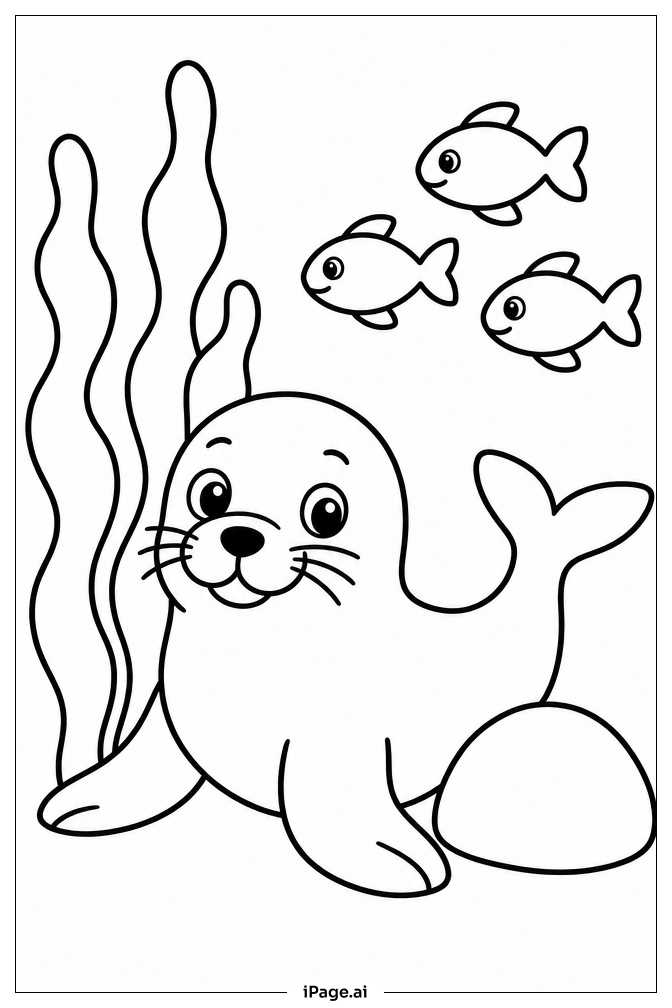
Coloring tips: How to color Sea Animals Kelp Forest coloring page well?
Start with the kelp — use shades of green and yellow-green to make it look alive and lush. Try darker green at the base and lighter green toward the tips. For the fish, go bold and bright! Use oranges, yellows, blues, and reds to make them pop against the kelp. Sea otters look great in warm browns. Color starfish in orange or red. Give crabs a reddish-orange tone. Sea urchins can be deep purple or dark red. For the ocean background, use light blue or aqua, and layer darker blue near the bottom to show depth. Jellyfish look magical in soft pinks, purples, or pale blues. Don't forget to add sandy tan or beige to the ocean floor. Feel free to mix and blend colors to make your underwater world feel rich and alive!
Coloring challenges: Which parts are difficult to color and need attention for Sea Animals Kelp Forest coloring page?
Coloring this kelp forest scene comes with several creative challenges that make it both exciting and rewarding:
• **Layering the kelp and background:** The kelp stalks and leaves overlap with the background and the animals. It can be tricky to color each element separately without muddying the colors. Working from the background forward — coloring the water first, then the kelp, then the animals — helps keep things neat and clear.
• **Small and intricate details:** The image includes fine details like fish scales, kelp frond textures, spines on sea urchins, and the delicate patterns on starfish. These tiny areas require a sharp pencil or a fine-tipped coloring tool to fill in accurately without going outside the lines.
• **Creating depth and dimension:** A kelp forest naturally has a sense of depth, with some creatures appearing closer and others farther away. Achieving this with color means using lighter shades for background elements and richer, more saturated tones for foreground animals — a technique that takes some practice.
• **Balancing multiple colors:** With so many different sea creatures, each needing its own distinct color scheme, it can be hard to make the page feel cohesive. Repeating one or two accent colors throughout the scene — like a warm orange used on starfish and crab claws — helps tie everything together visually.
• **Blending smooth color gradients:** Areas like the open water background or the jellyfish bodies look best with smooth color transitions. Achieving a clean gradient from light to dark blue, or a soft glow on a jellyfish, requires patience and a gentle, layered coloring approach.
Benefits of coloring books: Advantages of drawing Sea Animals Kelp Forest coloring page
Coloring this kelp forest scene offers wonderful benefits for children and adults alike. For kids, it sparks curiosity about the ocean and the amazing creatures that live beneath the waves. Learning the names and colors of animals like sea otters, starfish, and sea urchins makes coloring an educational experience, not just a fun one. The detailed scene encourages focus and patience as colorists work through each element carefully. Fine motor skills improve as children navigate small details like fish scales and kelp fronds. For older kids and adults, the complexity of the scene offers a satisfying creative challenge. Choosing a color palette, blending tones, and building depth all engage creative thinking and artistic problem-solving. Coloring also has well-known calming effects — the repetitive, focused nature of the activity reduces stress and promotes mindfulness. Completing a full, richly colored ocean scene builds a sense of accomplishment and pride. Sharing the finished artwork with friends or family makes it a social, joyful experience too. Overall, this kelp forest Coloring Pages page is a fantastic blend of fun, learning, and relaxation.