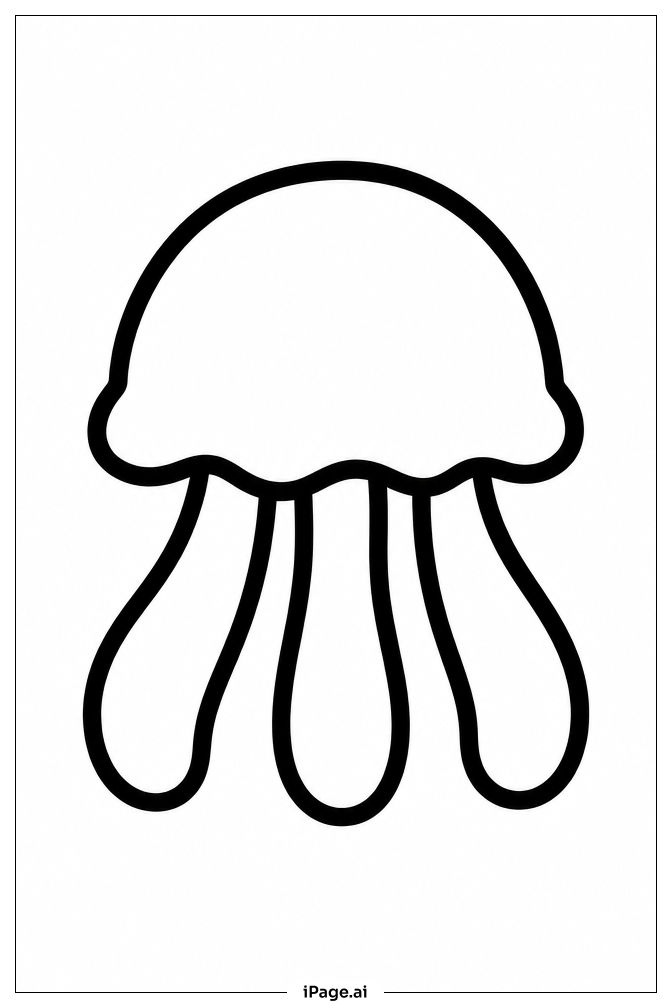
Coloring tips: How to color Sea Animals Jellyfish coloring page well?
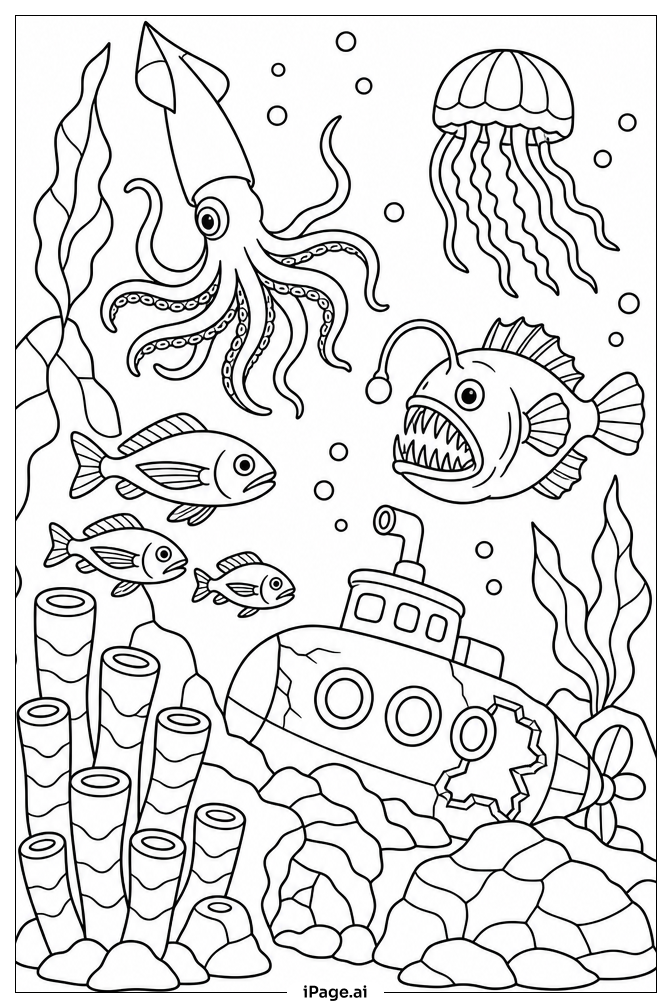
Start with the bell at the top of the jellyfish. Jellyfish come in many beautiful colors, so you have lots of creative freedom! Try soft pinks, light purples, or sky blues for the bell to give it a glowing, translucent look. You can use a slightly darker shade around the edges and a lighter color in the center to create depth.
For the tentacles, use a similar color family but go a shade or two lighter or more transparent-looking. This helps the tentacles feel delicate and wispy. Try blending two colors together for a gradient effect.
Add a soft blue or teal background to suggest the ocean around the jellyfish. You can leave the center of the bell lighter to mimic the way light shines through a real jellyfish in the water.
Use white or very light yellow for the dot and swirl details on the bell to make them pop. This small touch brings the patterns to life. Most importantly, have fun and experiment with your favorite colors!
Coloring challenges: Which parts are difficult to color and need attention for Sea Animals Jellyfish coloring page?
Coloring a jellyfish can be a fun and rewarding challenge, but there are a few tricky areas to watch out for. Here are the main coloring challenges you may encounter:
• Bell Shading and Transparency: One of the trickiest parts is making the dome-shaped bell look soft and see-through, like a real jellyfish. Real jellyfish are translucent, which means light passes through them. To capture this, you need to blend colors carefully, using lighter shades in the center and gradually darkening toward the edges. This gradient effect takes patience and a steady hand, especially for younger colorists.
• Tentacle Details: The long, flowing tentacles can be difficult to color because they are thin and curvy. Staying inside the lines on such narrow shapes requires focus and a fine-tipped coloring tool. If your coloring tool is too thick, it is easy to go outside the lines or cover up the delicate curl details.
• Decorative Patterns on the Bell: The small dots, swirls, and scalloped edges inside and around the bell are tiny and closely spaced. Coloring each one neatly without smudging nearby areas can be challenging, especially for younger children. Using a sharp colored pencil or a fine marker works best here.
• Color Consistency: Keeping a consistent color theme across the whole jellyfish, from the bell to the tentacles, can be hard to plan ahead. Choosing your color palette before you start will help everything look balanced and harmonious.
• Background Integration: Deciding how to color the background so it complements the jellyfish without overpowering it takes some thought. A background that is too dark or too bright can make the jellyfish hard to see.
Benefits of coloring books: Advantages of drawing Sea Animals Jellyfish coloring page
Coloring this jellyfish page offers many wonderful benefits for children and adults alike.
For kids, it is a great way to build fine motor skills. Carefully coloring the thin tentacles and tiny swirl patterns helps strengthen hand muscles and improve pencil control, which supports handwriting development too.
It also encourages creativity and imagination. Since jellyfish come in so many stunning colors in real life, there are no strict rules. Kids can explore color mixing, try gradient effects, and express themselves freely.
Focusing on the detailed patterns of the jellyfish bell helps build concentration and patience. Staying within the lines and planning a color scheme requires thoughtful attention, which is excellent practice for school-age children.
For older children and Adults, this page offers a calming, meditative experience. The soft, flowing shapes of the jellyfish are naturally soothing to look at and color, making it a wonderful way to unwind and reduce stress.
Finally, this page can spark curiosity about ocean life. After coloring, kids may want to learn more about real jellyfish, how they move, what they eat, and where they live. That curiosity is the beginning of a love for nature and science.