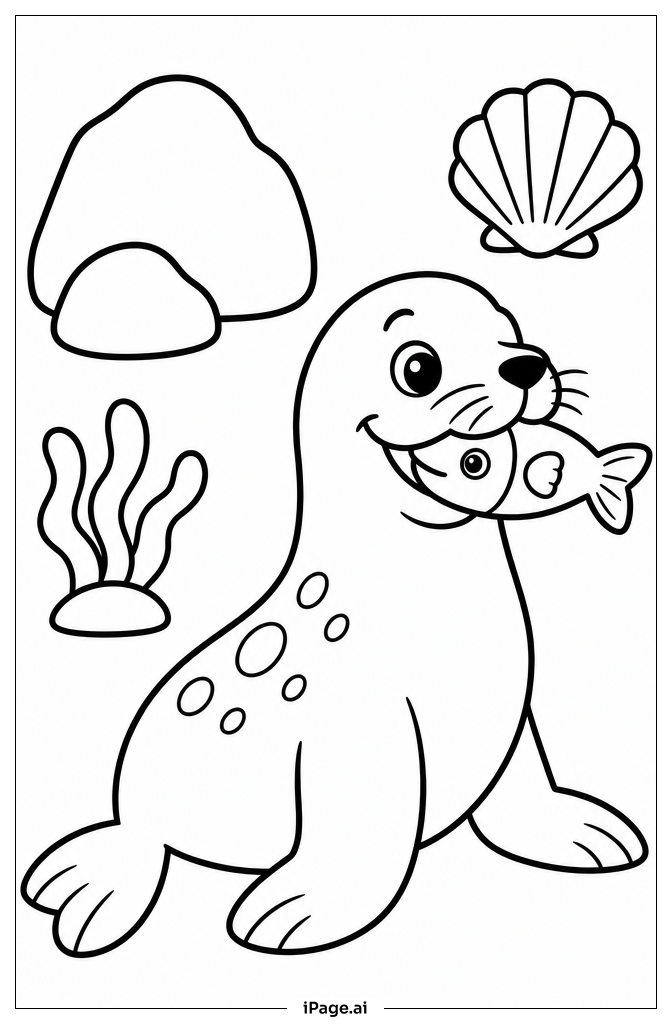
Coloring tips: How to color Sea Animals Feeding Time coloring page well?
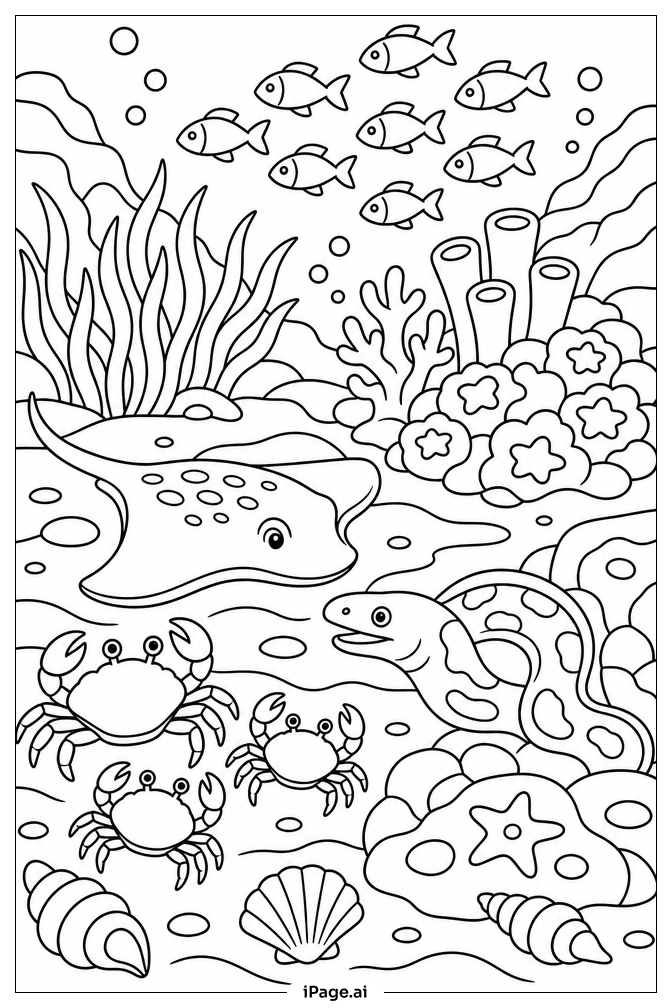
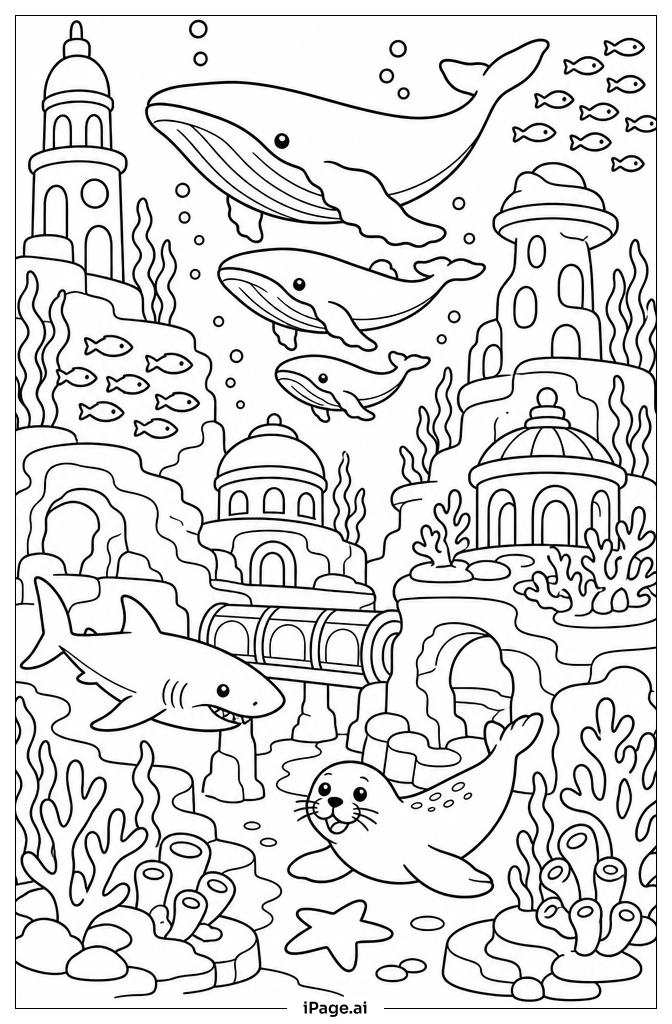
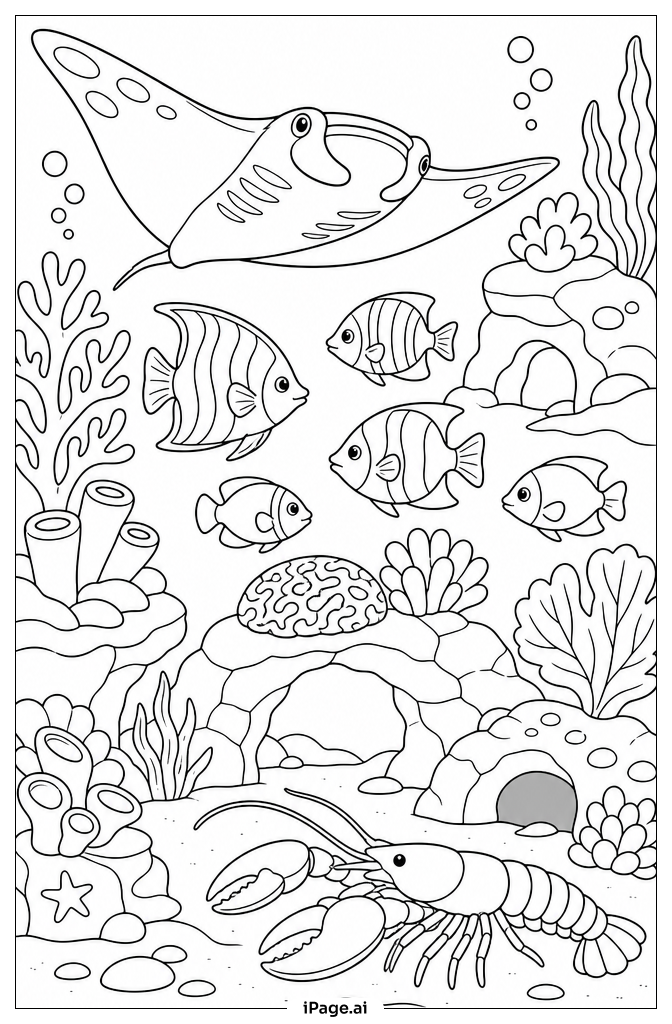
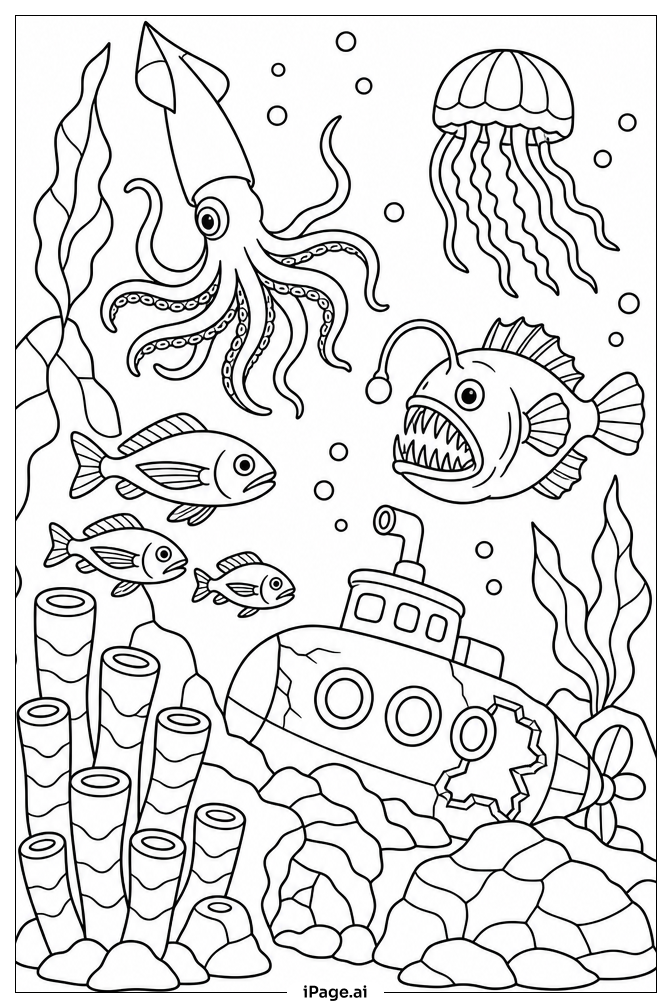
Start with the background water using soft shades of blue and turquoise to set a calm ocean mood. Use a deeper navy blue for shadowed areas near the ocean floor. Color the whale in cool blue-gray tones with a pale belly. Give the octopus warm orange or purple hues to make it stand out. Use bright, cheerful colors for the fish — yellow, red, orange, and green all work great. The sea turtle looks beautiful in earthy greens and browns. Color the crabs in classic red or orange. Add light yellow or white highlights to the bubbles to make them look round and shiny. Use soft greens for the sea plants and coral. Feel free to mix bold and pastel colors to create a fun, vibrant underwater world. There are no wrong color choices — let your imagination dive in!
Coloring challenges: Which parts are difficult to color and need attention for Sea Animals Feeding Time coloring page?
Coloring this image comes with several fun challenges to watch out for:
• **Small, detailed fish scales and textures:** Many of the sea creatures have tiny scales, patterns, and surface details. Staying inside these small shapes requires a sharp-tipped colored pencil or fine marker. Young colorists may find this tricky and should take their time with each section.
• **Overlapping animals and background:** Several creatures overlap each other and the water background, making it hard to tell where one creature ends and another begins. It helps to color each animal one at a time and let each section dry before moving to the next, especially when using markers or watercolors.
• **The octopus tentacles:** The curling, twisting tentacles of the octopus wrap across a large area of the page. Keeping a consistent color throughout all the tentacles without bleeding into nearby fish or bubbles can be difficult. Work slowly and use the tip of your coloring tool for the thinner curved parts.
• **Balancing colors across many characters:** With so many different animals on one page, choosing colors that look good together is a real creative challenge. If too many bright colors sit side by side, the image can feel overwhelming. Try alternating bold colors with softer ones to keep the scene balanced and easy on the eyes.
• **The ocean floor details:** Small crabs, pebbles, and sea plants near the bottom of the page are packed tightly together. Using different shades of the same color family (light green, medium green, dark green) helps separate these elements without making the area look too busy.
Benefits of coloring books: Advantages of drawing Sea Animals Feeding Time coloring page
Coloring this Sea Animals Feeding Time page offers wonderful benefits for kids and families alike.
**Builds focus and patience:** Staying inside the lines of detailed ocean creatures trains the brain to slow down and concentrate — a skill that helps in school and everyday life.
**Sparks curiosity about nature:** As children color each animal, they naturally wonder what real octopuses, whales, and sea turtles look like. This page is a great starting point for learning about ocean life and what different sea animals eat.
**Develops fine motor skills:** Guiding a crayon or colored pencil through small spaces, curves, and detailed patterns strengthens hand muscles and improves coordination — especially important for younger children.
**Encourages creativity and self-expression:** Choosing colors, mixing shades, and deciding how to make each animal look unique helps children express themselves in a pressure-free, joyful way.
**Promotes relaxation:** The rhythmic motion of coloring is calming and meditative. It gives kids a healthy way to unwind after a busy day at school.
**Great for family bonding:** Parents and children can work on this page together, sharing color ideas and talking about the ocean world — making it a fun and educational activity for everyone.