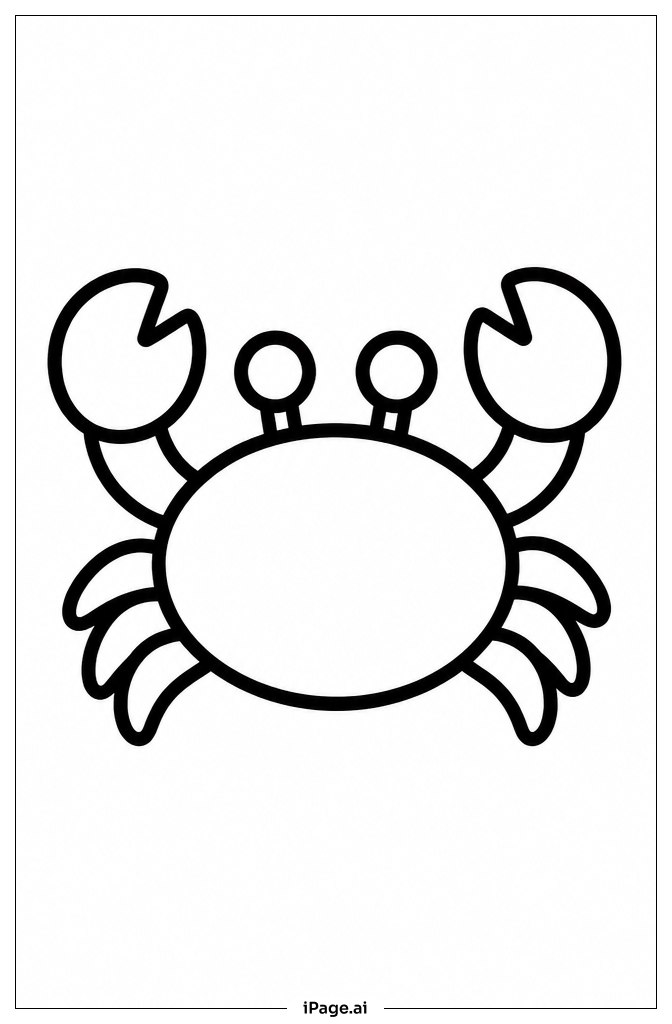
Coloring tips: How to color Sea Animals Crab coloring page well?
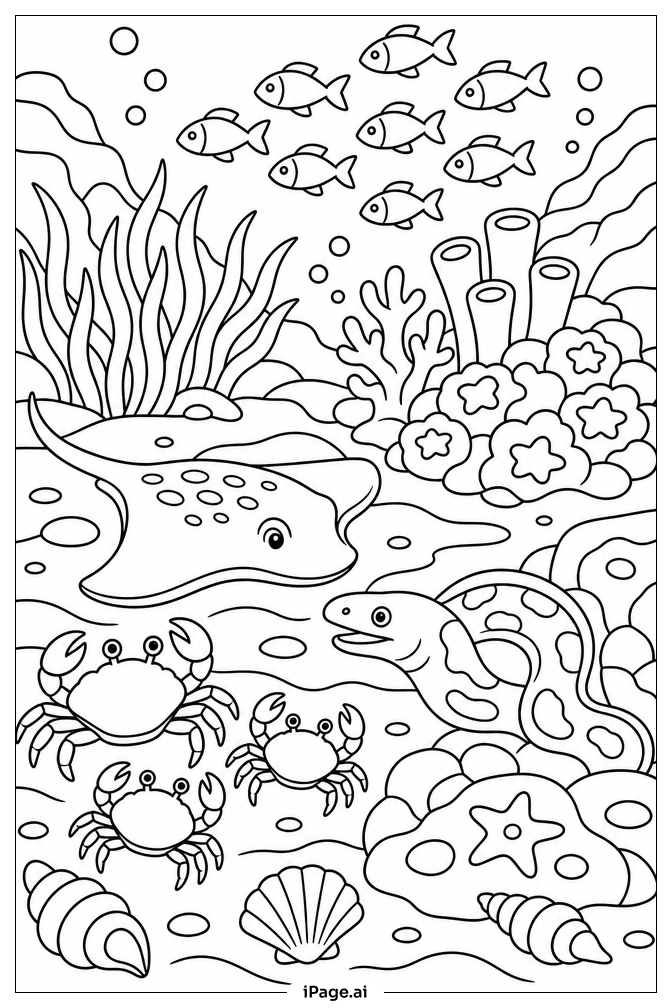
Start with the crab's body and claws using classic orange or reddish-orange tones — these are the most iconic crab colors! You can also try bright red or a warm coral shade for a more vibrant look. Use a slightly darker shade of the same color to add depth to the shell's edges and claw tips. For the eyes, try black with a tiny white dot to make them pop. The legs can be colored in a lighter orange or tan to contrast with the body. For the background, use sandy yellow for the ocean floor and soft blue for the water. Feel free to mix colors creatively — purple, pink, or even a rainbow crab can look amazing too!
Coloring challenges: Which parts are difficult to color and need attention for Sea Animals Crab coloring page?
Coloring this crab image comes with a few fun challenges to keep in mind:
• **Small, detailed legs and joints:** The crab has multiple legs with narrow segments and joints. Staying within the lines in these tight areas can be tricky, especially for younger children. Using a fine-tipped colored pencil or a thin marker works best here.
• **Consistent shading on the rounded shell:** The crab's domed body has a curved surface. Achieving smooth, even shading that suggests roundness requires blending skills. Try applying a lighter base color first, then layering a darker shade around the edges to create a natural-looking curve.
• **Keeping the claws balanced:** The two front claws are large and prominent. Coloring both claws with the same color intensity and shading is harder than it looks — it's easy for one to end up darker or more detailed than the other. Take your time and compare them as you go.
• **Background elements without overpowering the crab:** If the image includes water, sand, or sea plants in the background, blending these into a cohesive scene while keeping the crab as the clear focal point requires careful color choices. Use lighter, softer tones for the background so the brightly colored crab stands out.
• **Eye and face details:** The small eyes on stalks have very little space for coloring. A single dot of black or dark brown with a tiny white highlight is the best approach, but precision is key to making the face look expressive and lively.
Benefits of coloring books: Advantages of drawing Sea Animals Crab coloring page
Coloring this fun crab page offers a wonderful range of benefits for kids and beginners alike:
**Builds fine motor skills:** Carefully coloring the crab's legs, claws, and shell details strengthens hand-eye coordination and pencil control — skills that support writing and everyday tasks.
**Sparks creativity:** Choosing colors for the crab encourages imaginative thinking. There are no wrong answers — a purple crab or a rainbow shell is just as wonderful as an orange one!
**Introduces ocean science:** While coloring, kids naturally become curious about crabs — what they eat, where they live, and how they move. This page can be a fun starting point for learning about marine life and sea ecosystems.
**Encourages focus and patience:** Staying within the lines and blending colors mindfully helps children practice concentration and patience in a relaxed, enjoyable way.
**Boosts confidence:** Completing a colorful piece of artwork gives young colorists a real sense of accomplishment and pride, building their self-esteem one page at a time.
Coloring Pages like this one are a simple, screen-free activity that can be enjoyed solo or with friends and family — making learning about Sea Animals both creative and memorable.