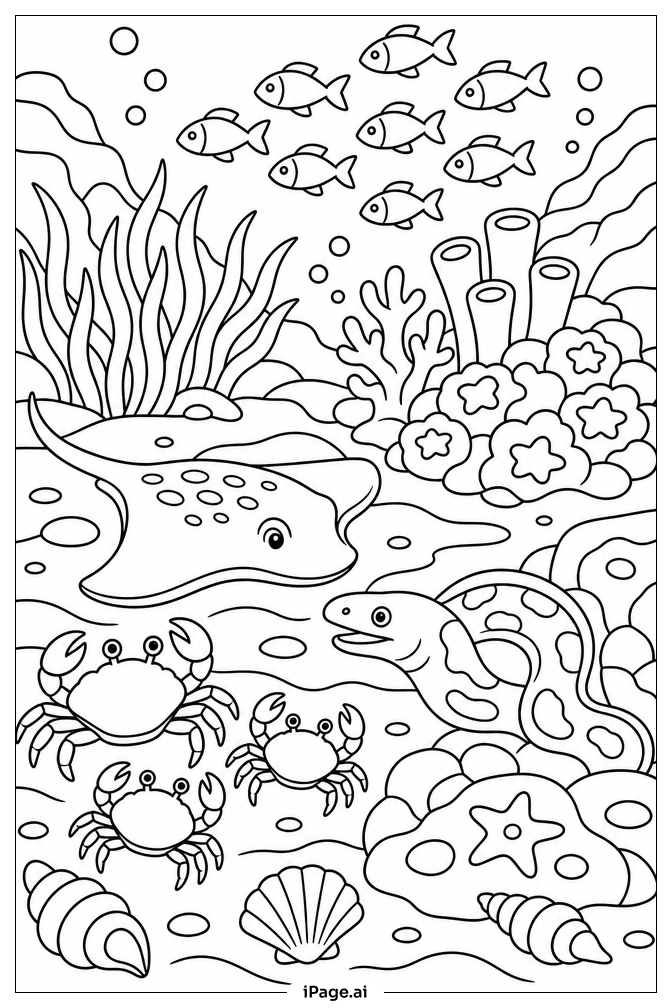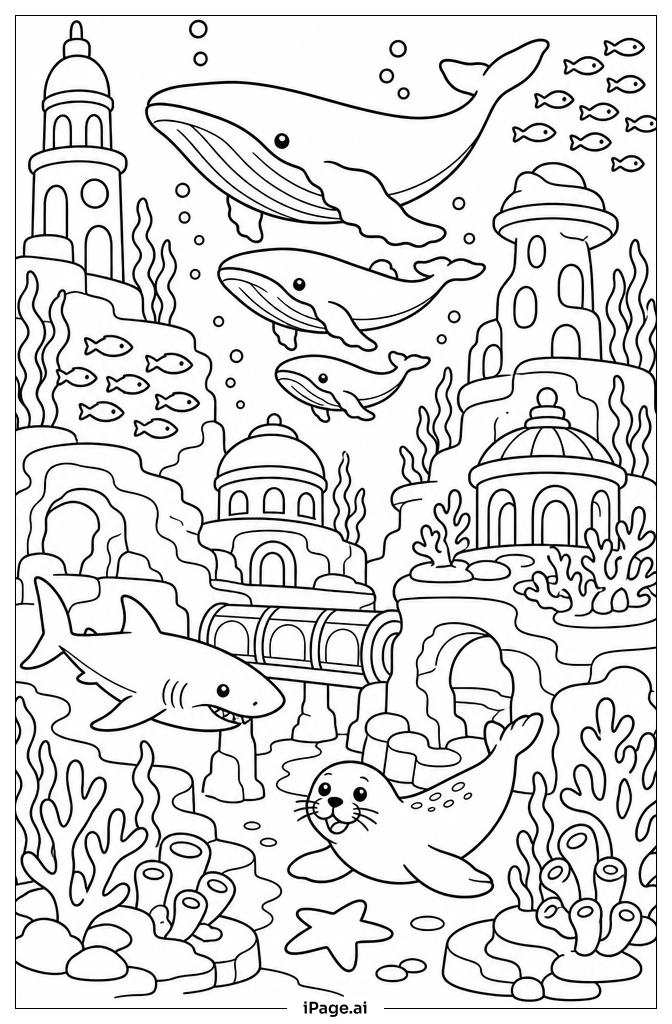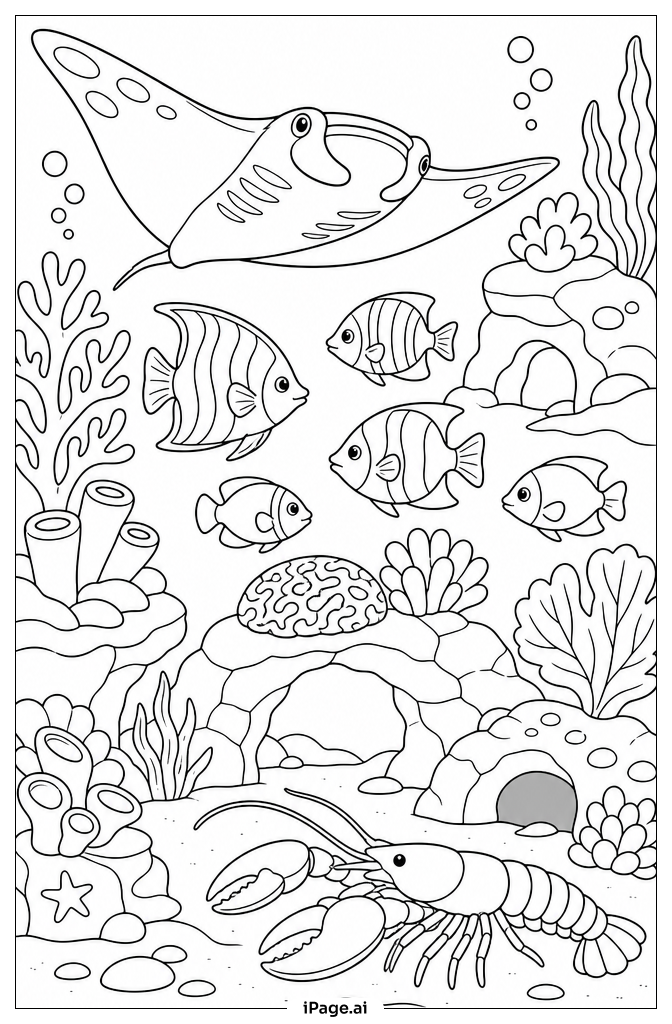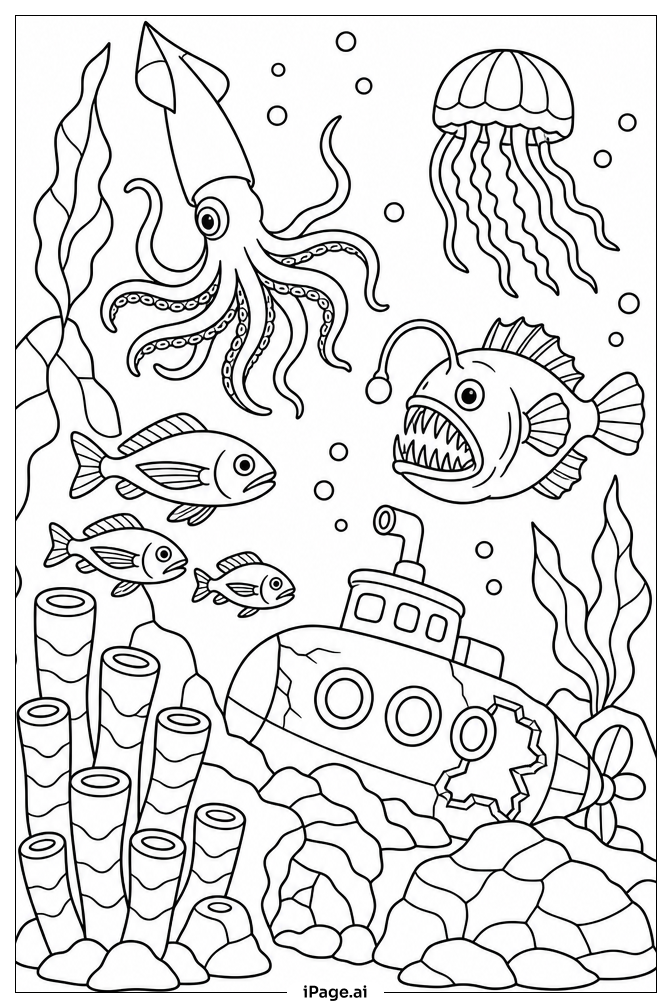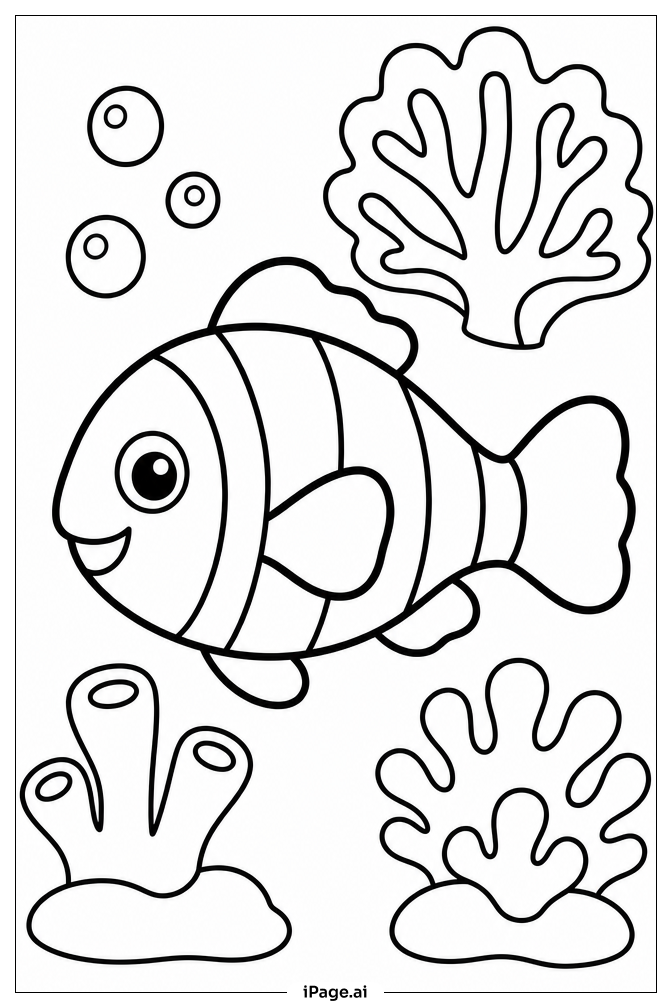
Coloring tips: How to color Sea Animals Coral Reef coloring page well?
Start with the background — use deep blues and teals for the ocean water to set the underwater mood. For the coral, try warm colors like orange, pink, red, and purple to make the reef look alive and vibrant. Color the fish in bright, bold shades — yellows, blues, greens, and oranges work great. Give the sea turtle a mix of dark green and brown on its shell, with a lighter yellow-green on its belly. Use soft pink or lavender for the sea anemones. The starfish can be bright orange or red. Color the octopus in shades of purple or reddish-brown. Use tan or light yellow for the sandy ocean floor, and add some light blue or white highlights to the bubbles to make them look transparent and bubbly. Don't be afraid to mix colors and experiment — the ocean is full of surprises!
Coloring challenges: Which parts are difficult to color and need attention for Sea Animals Coral Reef coloring page?
Coloring this Sea Animals Coral Reef scene is a fun but detailed challenge. Here are some key difficulties to keep in mind:
• **Complex coral structures:** The coral formations include many small, overlapping shapes and fine details. Staying inside the lines while switching between colors can be tricky, especially in tight spaces. Using fine-tipped colored pencils or thin markers will help you add detail without going outside the outlines.
• **Layering and blending ocean water:** Creating a realistic underwater look requires blending multiple shades of blue and teal smoothly. Flat, single-color water can look dull, so try layering light and dark blues to give the water depth and a glowing underwater feel.
• **Coloring small details:** Elements like the tiny bubbles, the texture on the sea turtle's shell, the suction cups on the octopus, and the patterns on the fish scales are very small and detailed. These require a steady hand and patience to color neatly without smudging.
• **Color variety and balance:** With so many different animals and plants in one scene, choosing colors that look good together without clashing is a real creative challenge. It helps to plan your color palette before you begin, making sure the fish, coral, and background all complement each other.
• **Differentiating overlapping elements:** Some animals and coral pieces overlap in the scene. Deciding which colors to use on each layer so that every element stands out clearly takes careful thought and skillful shading.
Benefits of coloring books: Advantages of drawing Sea Animals Coral Reef coloring page
Coloring this Sea Animals Coral Reef page offers wonderful benefits for kids and adults alike.
**Creativity and imagination:** Choosing colors for the fish, coral, and ocean helps children express their creativity freely. There are no wrong answers — every colorful choice makes the scene uniquely theirs.
**Learning about nature:** As kids color each sea creature, they naturally become curious about real ocean animals. This sparks interest in marine biology and builds early science awareness in a fun, engaging way.
**Focus and patience:** The detailed coral reef scene encourages children to slow down, concentrate, and work carefully. Completing a complex image builds patience and the ability to stay focused on a task from start to finish.
**Fine motor skills:** Holding crayons or colored pencils and staying within the lines strengthens hand muscles and improves hand-eye coordination — important skills for writing and everyday activities.
**Stress relief and relaxation:** The calm, flowing shapes of the underwater world have a soothing effect. Coloring this scene helps kids and adults alike feel calm, reduce anxiety, and enjoy a peaceful creative break.
**Sense of accomplishment:** Finishing a detailed, beautiful coloring page builds confidence and gives colorists of all ages a great sense of pride in their completed work.