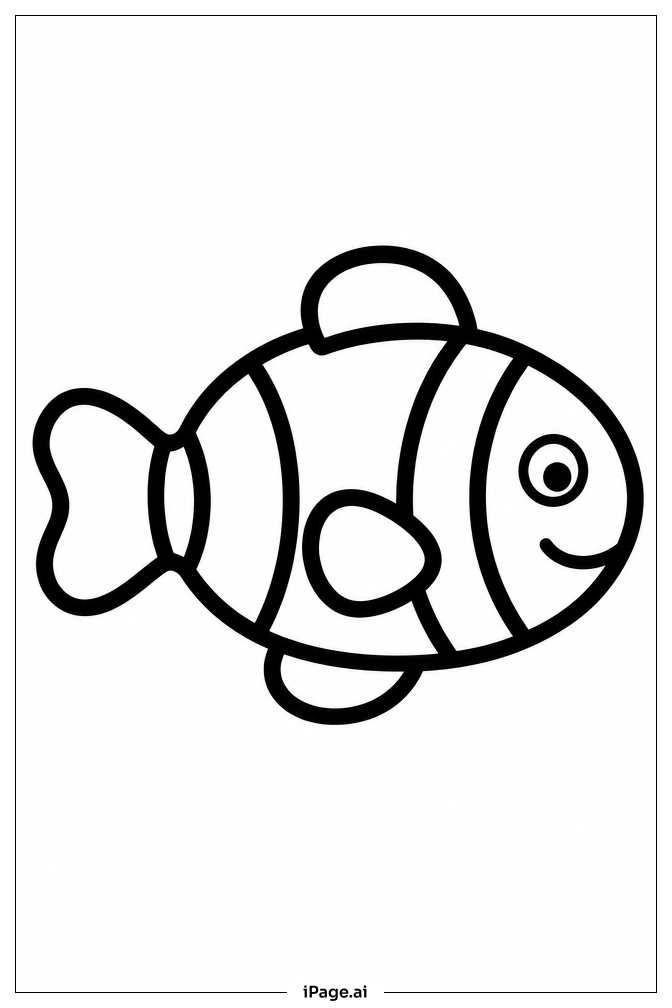
Coloring tips: How to color Sea Animals Clownfish coloring page well?
Start with the clownfish itself. Use bright orange for most of the body, leaving the bold stripe areas white or very light. Add black outlines along the stripe edges to make them pop. For the fins, try a slightly darker orange or reddish-orange to add contrast.
Next, color the anemone tentacles. They look great in shades of pink, purple, or soft green. You can blend two colors on each tentacle to make them look more natural and wavy.
For the background water, use light blue or aqua. Soft gradients from lighter at the top to deeper blue at the bottom give a real underwater feel.
Color the bubbles light blue or leave them white with a thin blue outline. Add small highlights to make them look round and shiny.
Finally, use warm yellows, corals, and greens for any reef details in the background. This keeps the whole scene feeling lively and full of ocean color!
Coloring challenges: Which parts are difficult to color and need attention for Sea Animals Clownfish coloring page?
Coloring this clownfish scene comes with a few fun challenges to watch out for:
• **Staying inside the stripe lines:** The clownfish has bold, curved white stripes that divide the body into sections. Keeping the orange and white areas separate without bleeding into each other requires a steady hand and a fine-tipped marker or colored pencil. Take your time and work slowly along each stripe edge.
• **Shading the anemone tentacles:** Each tentacle is long, thin, and slightly curved. Applying smooth color gradients along their length — without pressing too hard and breaking the fine lines — can be tricky. Using light pressure and layering colors gradually works best here.
• **Creating depth in the background water:** A flat single-color background can make the scene look dull. Blending multiple shades of blue and aqua smoothly, especially around the fish and anemones, takes patience. Watercolor pencils or soft pastel-style pencils help achieve this effect nicely.
• **Coloring the small bubbles:** Bubbles are tiny circular shapes scattered throughout the page. Coloring them carefully without filling them in too darkly is important — they should look light and translucent, not solid. Using a very light touch or leaving the center white makes them look realistic.
• **Balancing the overall color contrast:** With so many elements — fish, tentacles, bubbles, and reef — it's easy for the scene to look too busy or muddy. Choosing a consistent color palette and making sure the bright clownfish stands out against a softer background keeps the composition clear and visually appealing.
Benefits of coloring books: Advantages of drawing Sea Animals Clownfish coloring page
Coloring this clownfish page is a wonderful activity for kids and young learners. Here are some of the great benefits:
**Builds focus and patience.** The detailed stripes and tentacles encourage children to slow down, concentrate, and work carefully — skills that help in school and everyday life.
**Sparks creativity.** There is no single "right" way to color this page. Kids can choose their own color combinations, experiment with shading, and make the ocean scene truly their own.
**Teaches about ocean life.** Clownfish and sea anemones share a special partnership in real ocean reefs. Coloring this scene naturally opens up conversations about marine biology and nature, making learning fun and visual.
**Improves fine motor skills.** Guiding a pencil or marker along curved lines and small details strengthens hand muscles and improves hand-eye coordination — important for writing and other activities.
**Reduces stress and encourages calm.** The rhythmic, focused nature of coloring has a soothing effect. It gives children a healthy creative outlet and a quiet moment to relax and unwind.
Whether enjoyed solo or as a group activity, this clownfish coloring page offers a rewarding and enriching experience for young colorists of all skill levels.