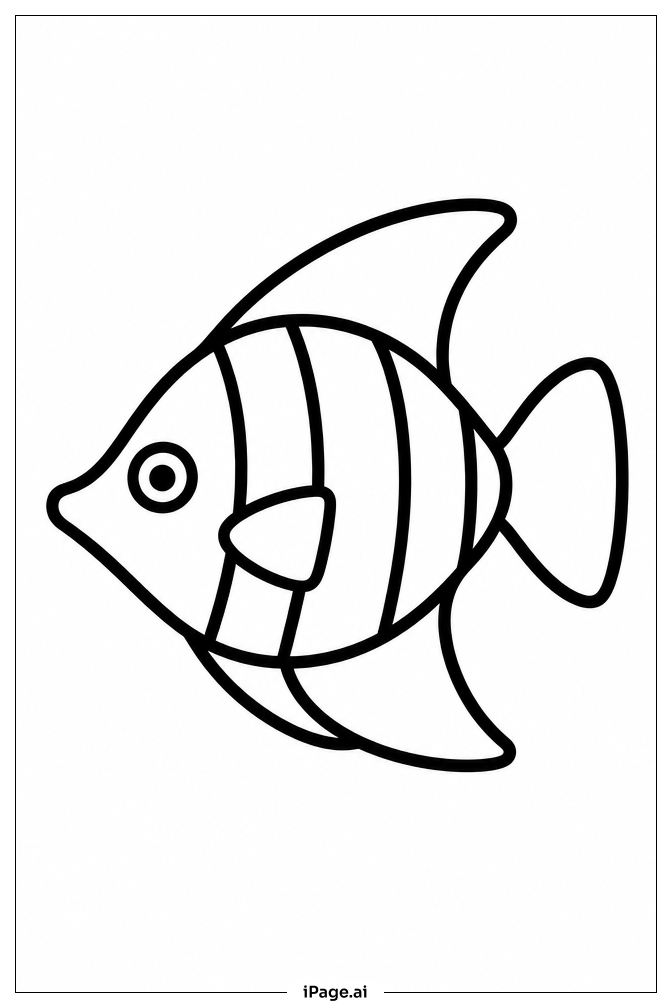
Coloring tips: How to color Sea Animals Angelfish coloring page well?
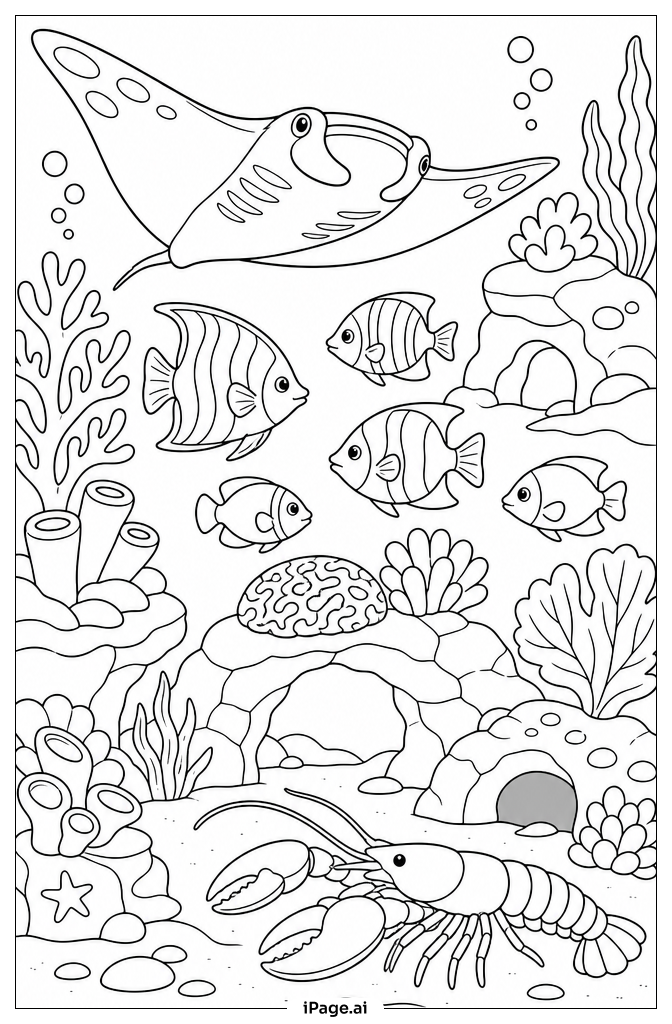
Start by choosing bright, vivid colors to make the angelfish stand out. Angelfish in nature come in many stunning color combinations — try yellow and black stripes, orange and white bands, or blue and silver patterns. Use a bold color like golden yellow or bright orange for the body, then add deep black or dark brown for the stripe markings. The long, flowing fins look great in a lighter shade of the same body color. For the eye, use a dark brown or black center with a yellow ring around it. Color the coral in warm shades like red, pink, and orange. Paint the sea plants in different greens to add depth. Use light blue or aqua for the water background to make everything feel like a real ocean. Don't be afraid to blend colors or add gradients — it makes the fish look more alive and three-dimensional!
Coloring challenges: Which parts are difficult to color and need attention for Sea Animals Angelfish coloring page?
Coloring this angelfish scene comes with a few fun challenges to keep in mind:
• **Intricate Stripe Patterns:** The angelfish has detailed, closely spaced stripes running across its body. Staying neatly within each stripe requires a fine-tipped colored pencil or marker. Young colorists may find it tricky to switch colors precisely without going over the lines, so taking it slow and using a sharp pencil tip is key.
• **Long, Flowing Fins:** The angelfish's delicate fins have thin, feathery lines that spread outward. These narrow sections are difficult to color without accidentally bleeding into neighboring areas. Using a lighter touch and a fine brush or pencil tip works best here to preserve the airy, wispy feel of the fins.
• **Layered Underwater Elements:** The scene includes multiple overlapping elements — the fish, coral, and sea plants. Deciding which element sits in front and which is behind can be confusing. Coloring background elements (water, distant coral) first, then working toward the foreground (the fish last) helps create a convincing sense of depth.
• **Small Details Around the Eye and Face:** The angelfish's eye and facial area contain small, delicate features. Coloring such a tiny space neatly is one of the hardest parts of this page. Use a very sharp pencil or a fine-point marker, and consider outlining the eye in dark ink before filling it in.
• **Balancing the Color Palette:** With so many elements on the page, it can be hard to choose colors that work well together without making the image look too busy. Sticking to two or three main colors with a few accent shades helps keep the overall look harmonious and visually pleasing.
Benefits of coloring books: Advantages of drawing Sea Animals Angelfish coloring page
Coloring this angelfish page offers many wonderful benefits for young artists of all ages.
**Builds Focus and Patience:** Carefully coloring the fine stripes and delicate fins trains kids to slow down, concentrate, and work with precision — skills that are valuable in school and everyday life.
**Sparks Creativity:** Choosing colors for the fish, coral, and background encourages creative thinking. There are no wrong answers — kids can follow nature or dream up their own fantasy fish!
**Teaches Ocean Awareness:** Angelfish are real sea creatures found in tropical oceans and rivers around the world. Coloring this page is a fun, hands-on way to learn about marine life and spark curiosity about nature.
**Improves Fine Motor Skills:** Holding colored pencils, staying within lines, and controlling brush or marker pressure all help develop hand strength and coordination — great preparation for writing and other detailed tasks.
**Promotes Relaxation:** The calm, flowing shapes of the underwater scene have a soothing effect. Coloring is a great mindfulness activity that helps children (and adults!) unwind, reduce stress, and feel a sense of accomplishment when they finish their masterpiece.