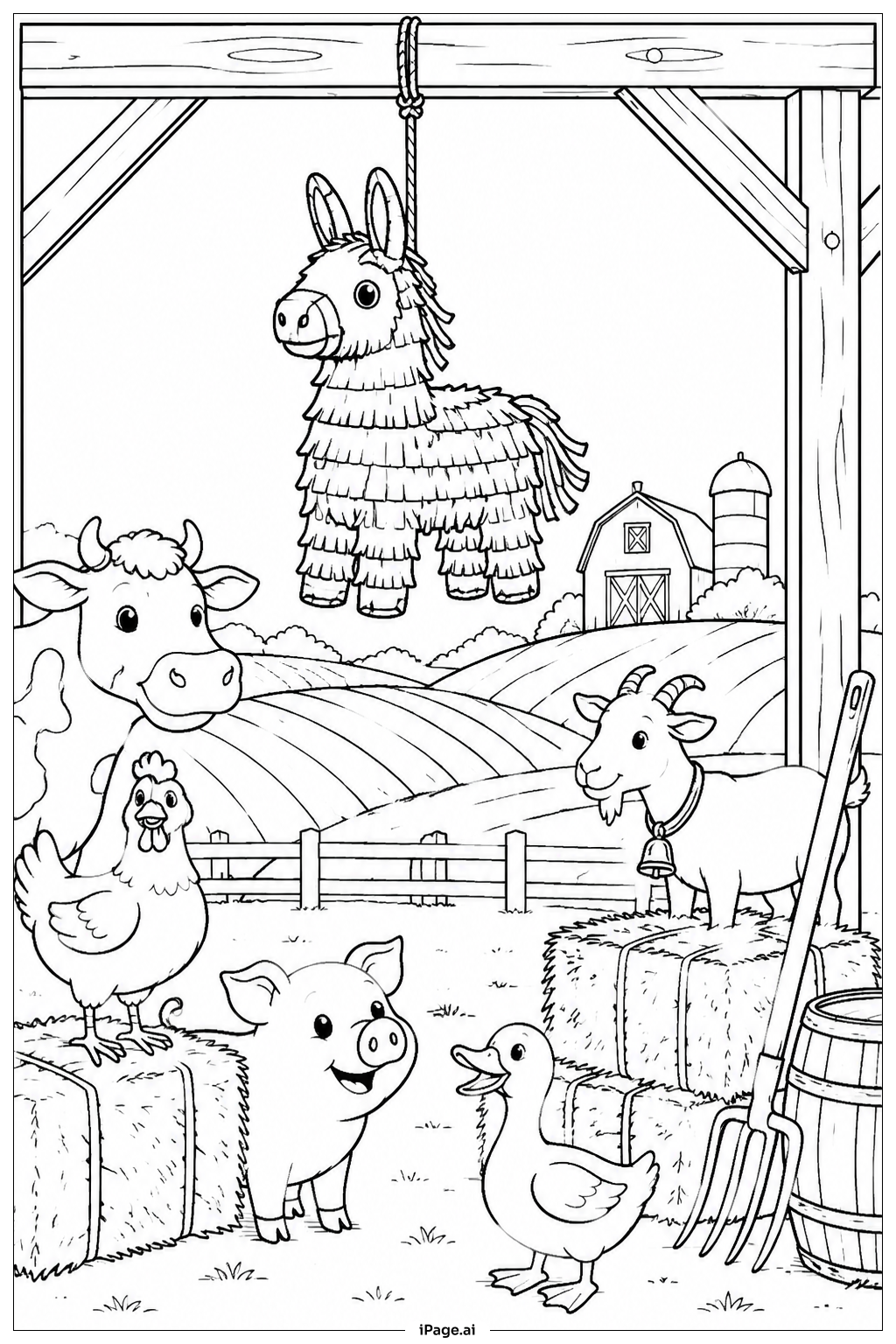
Coloring tips: How to color Farmyard Pinata Harvest coloring page well?
Start with the pinata donkey as your focal point. Use bright, festive colors like hot pink, orange, yellow, and turquoise for the pinata's decorative patterns to capture that party spirit. Color the fringe with alternating bright colors to create movement. For the face, use warm browns or grays, keeping the eyes dark and expressive. The saddle blanket can feature bold geometric patterns in contrasting colors like red, blue, and green. Paint the barn in classic red with white trim, and use brown for the wooden door. Make the windmill gray or white. Color the pumpkins in various shades of orange, adding yellow highlights. Use golden yellows and browns for corn stalks. Fill the sky with soft blue and keep clouds white or light gray. Add green grass to ground the scene.
Coloring challenges: Which parts are difficult to color and need attention for Farmyard Pinata Harvest coloring page?
• Intricate Pinata Patterns: The donkey pinata is covered with detailed geometric designs including zigzags, diamonds, stripes, and crosshatch patterns. Each section requires careful attention to stay within the lines. Young children may find it challenging to color these small repeating shapes neatly, while older kids can experiment with different color combinations for each pattern section to create visual interest.
• Fringe Details: The hanging fringe decorations along the pinata's belly and legs consist of many thin, parallel lines that hang downward. Coloring each individual strand requires patience and fine motor control. Children might choose to alternate colors to create a rainbow effect, but keeping the color within each narrow strip without bleeding into adjacent ones can be tricky.
• Overlapping Elements: The composition includes multiple overlapping objects like the pinata standing in front of the barn, pumpkins near the corn stalks, and the windmill behind other structures. Distinguishing where one object ends and another begins requires careful observation. Deciding which elements to color first and maintaining color boundaries where objects overlap demands planning and precision.
• Varied Textures: This image contains many different textures to represent, from the smooth surface of pumpkins to the rough wooden barn boards, fluffy clouds, papery corn husks, and the fabric-like quality of the pinata. Creating visual distinction between these different materials through color choices and shading techniques adds complexity but also provides opportunities for creative expression and learning about how colors convey texture.
Benefits of coloring books: Advantages of drawing Farmyard Pinata Harvest coloring page
Coloring this Farmyard Pinata Harvest page offers wonderful developmental benefits for children. The intricate patterns on the pinata help improve fine motor skills and hand-eye coordination as children carefully fill small spaces. The geometric designs introduce pattern recognition and encourage planning as kids decide on color schemes. The festive theme combined with farm elements teaches cultural awareness, showing how celebrations connect with seasonal harvests. Children practice decision-making by choosing which colors work well together. The varied elements from barn to pumpkins to clouds allow kids to explore nature and farm life while expressing creativity. The cheerful scene promotes positive emotions and can spark conversations about parties, farms, and autumn traditions. Completing this detailed page builds patience, focus, and confidence. The mix of large areas like the barn and tiny details like fringe offers challenge levels suitable for different ages and skill levels.