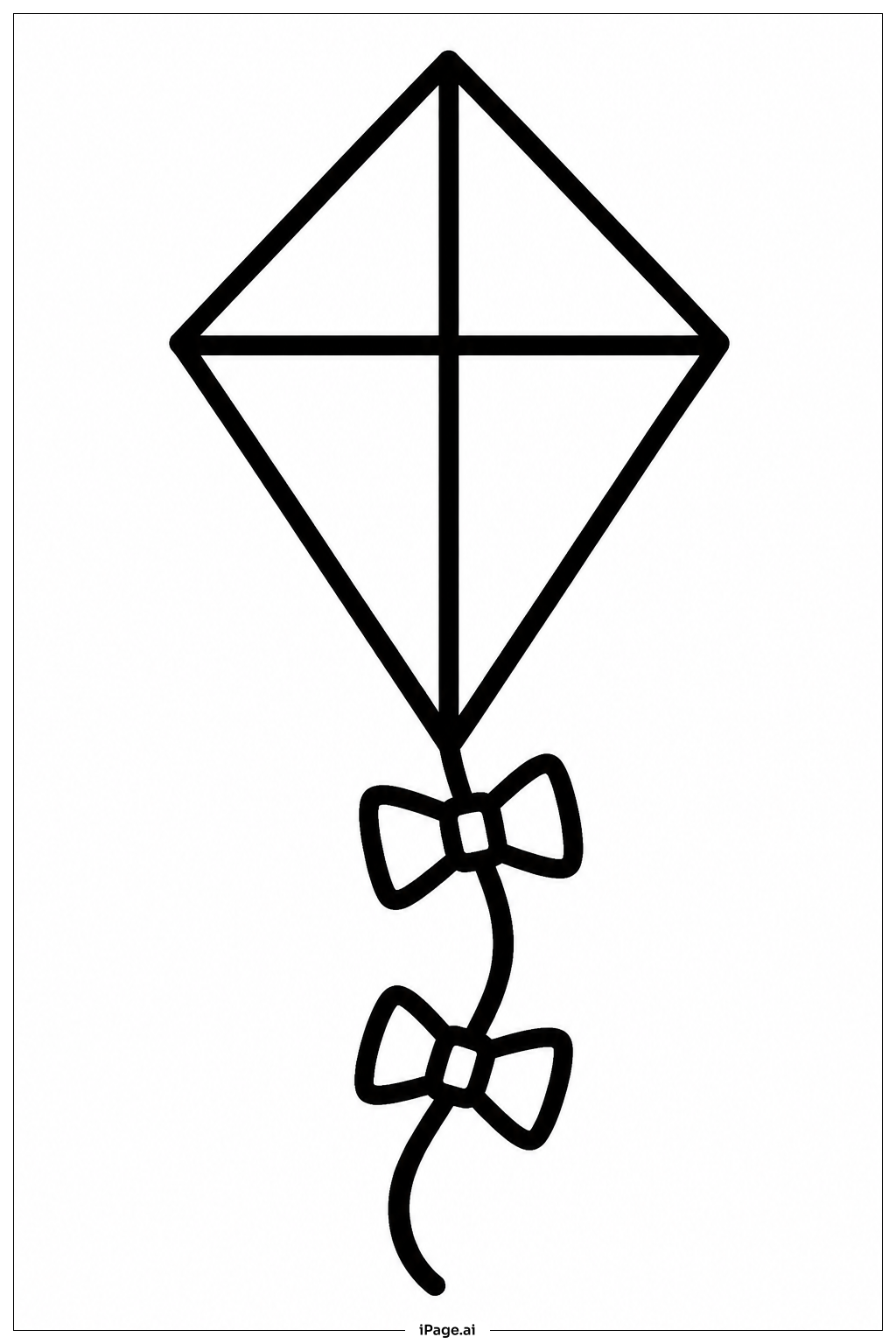
Coloring tips: How to color June Kite coloring page well?
For this picture, you can use bright and lively colors to bring the kite and the scene to life. Try coloring the kite in vibrant reds, blues, or yellows to make it stand out against the sky. The tail can have alternating colors to add some playful stripes or patterns. Use soft blues and whites for the sky and clouds. The child’s clothes could be colored with warm tones like orange or green to reflect the warmth of June. The grass and flowers should be green and lively, maybe adding spots of pink, purple, or yellow for the flowers. Don’t be afraid to mix different shades to make the picture feel like a sunny, windy summer day.
Coloring challenges: Which parts are difficult to color and need attention for June Kite coloring page?
• The kite has several small sections and patterns that require careful coloring to keep the colors inside the lines, which can be tricky for younger children.
• The child’s hands holding the kite string are delicate and need attention to detail to color neatly.
• The background contains soft clouds and rounded hills that might require gentle blending to keep the natural look without heavy lines.
• Creating a smooth and natural gradient for the sky while still allowing the kite to stand out can be a challenge.
• Coloring the grass and flowers needs attention to keep the shapes clear and vibrant without mixing colors too much, especially in small flower details.
Benefits of coloring books: Advantages of drawing June Kite coloring page
Coloring this June Kite image helps develop fine motor skills as children focus on staying within the lines of the kite’s detailed patterns and the child’s figure. It encourages creativity by letting them experiment with bright, summer-inspired colors. This activity can improve concentration and patience, especially when handling the sky’s open space and the small floral elements. The scene also promotes appreciation for nature and outdoor activities, inspiring children to connect with the joys of a breezy June day. Overall, it’s a fun way to combine artistic skills and summer themes for learners aged 4 to 16.