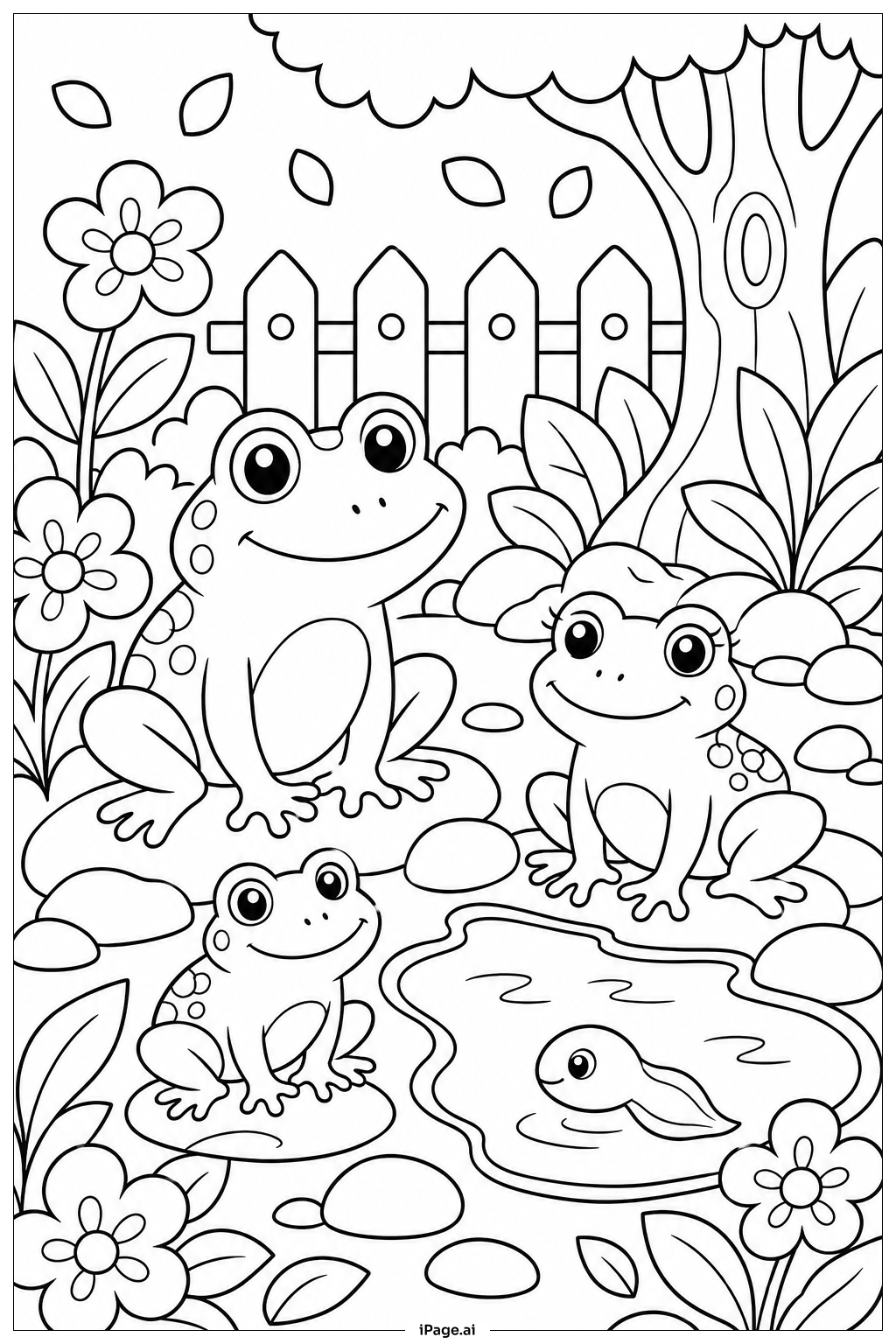
Coloring tips: How to color Frog Family In Garden coloring page well?
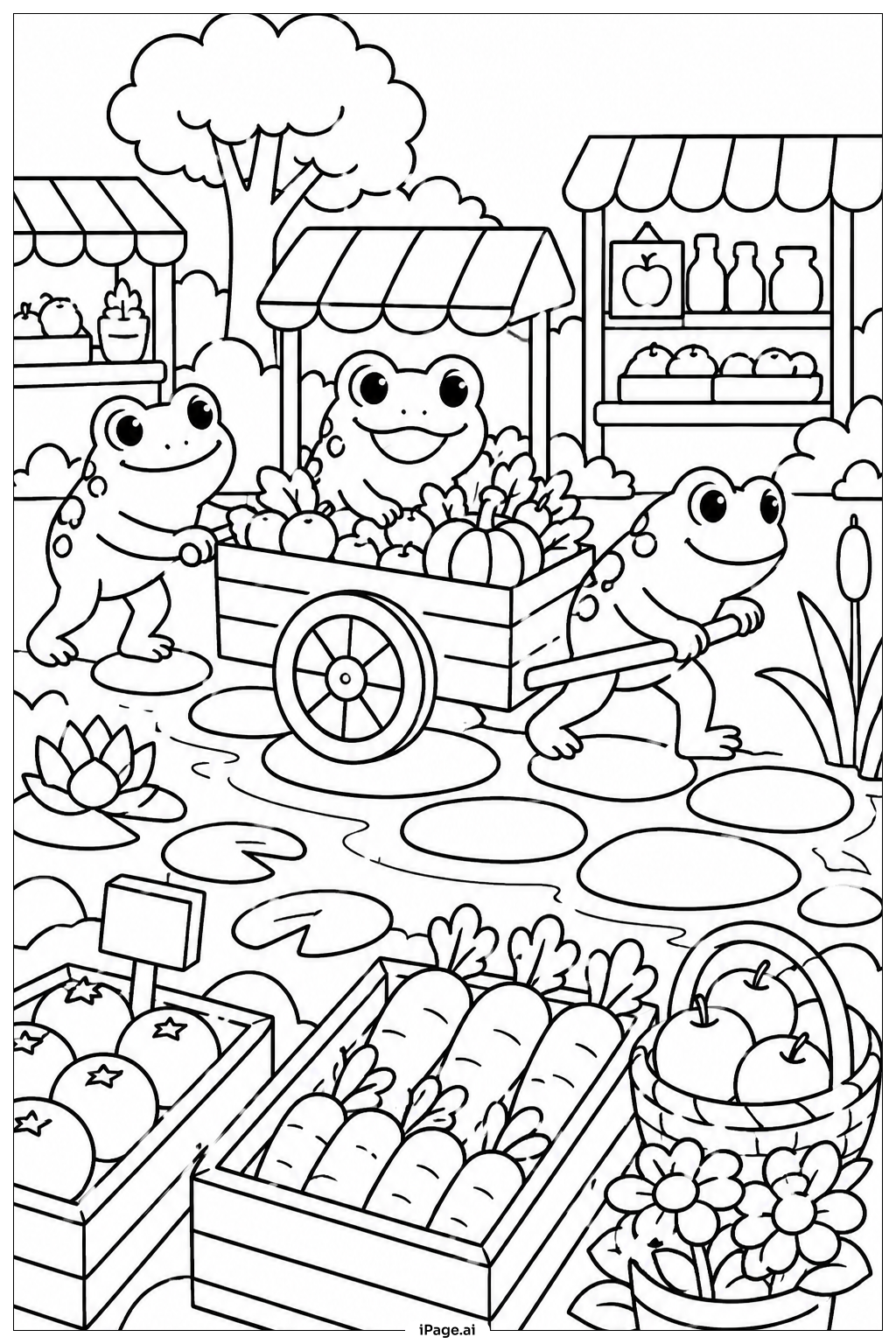
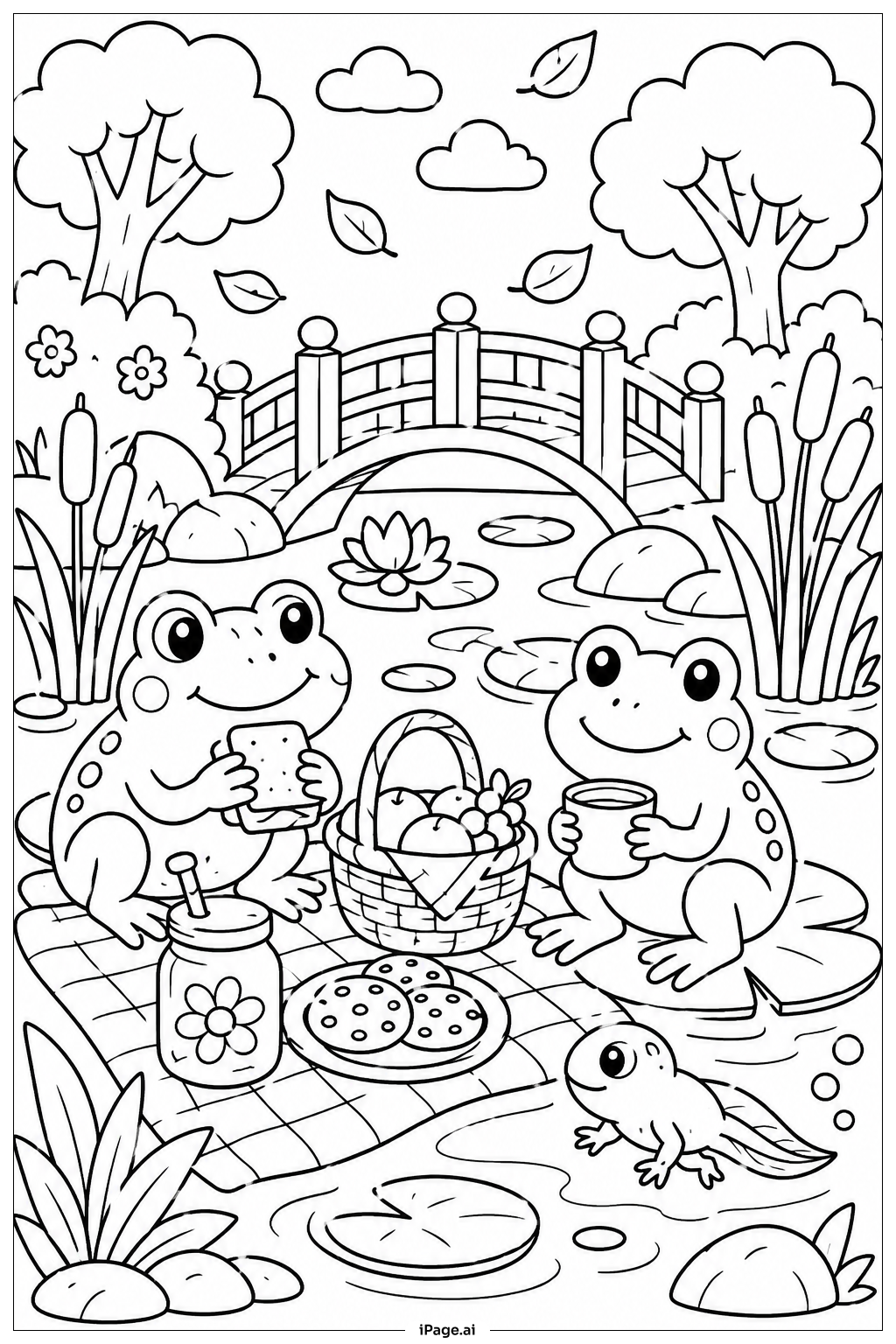
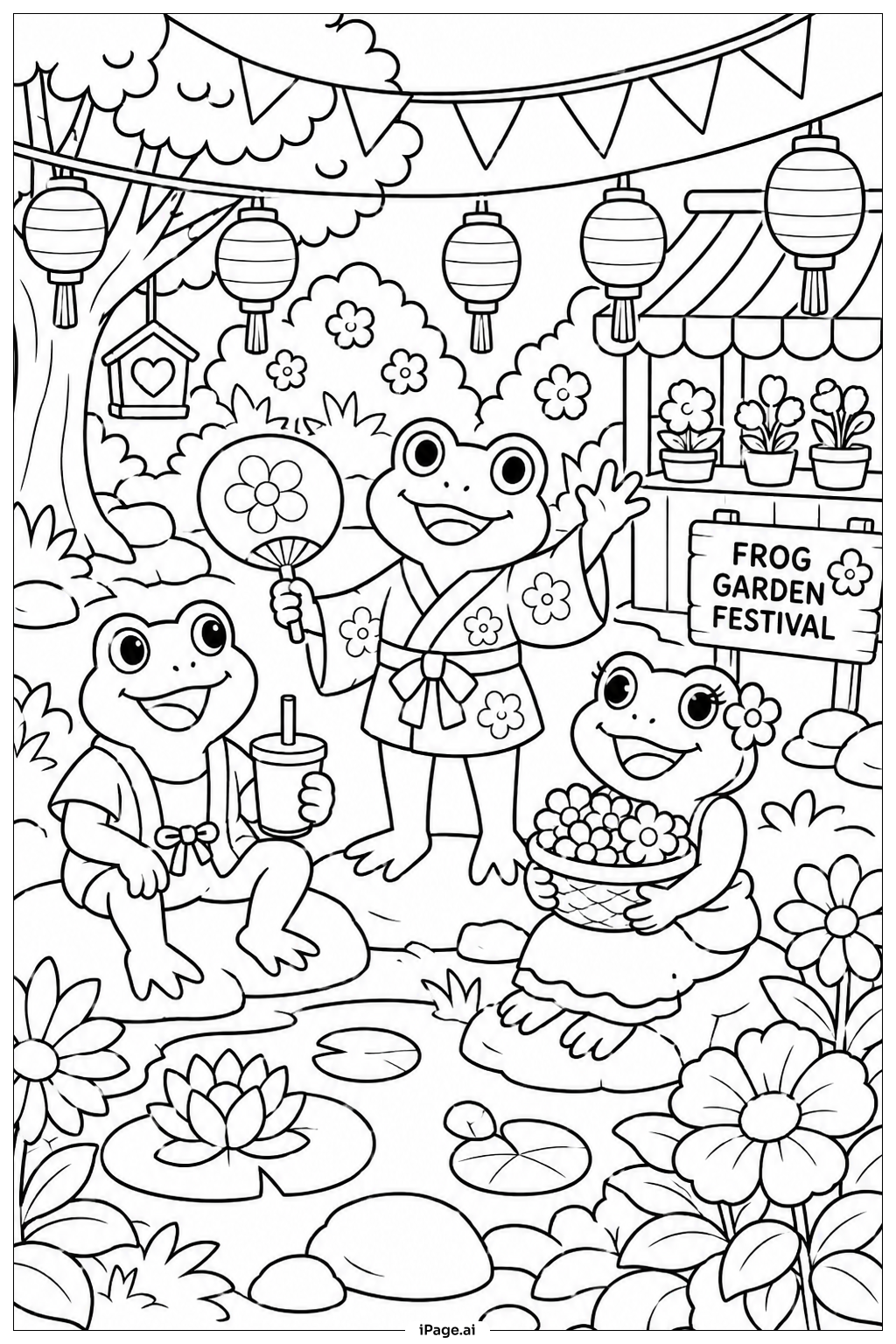
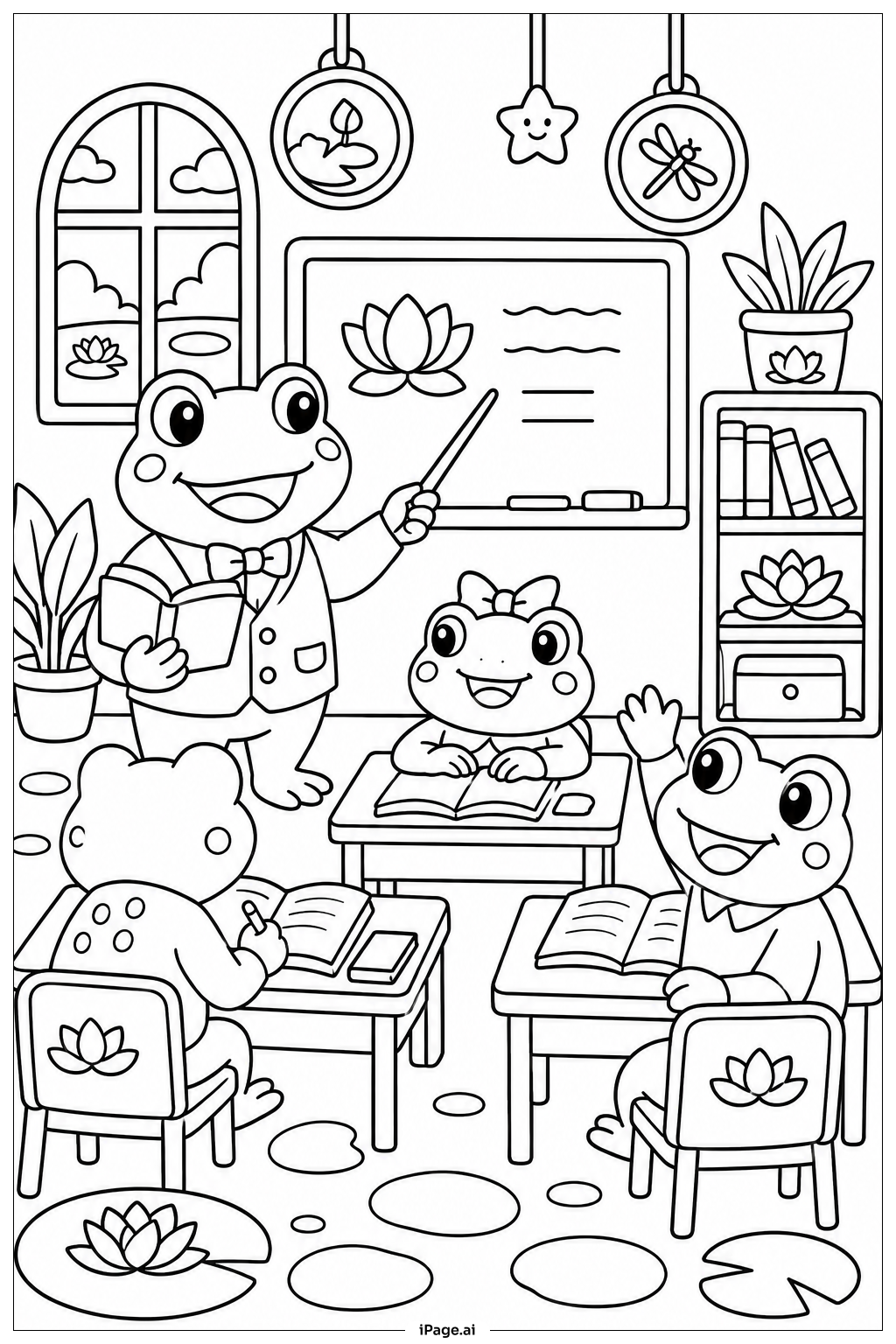
Start with the frogs themselves. Use bright greens for their bodies — mix a lighter green on the belly and a deeper green on the back to add dimension. Add small brown or orange spots for detail. For the garden background, use a variety of greens for the leaves and lily pads. Make the flowers pop with bold colors like yellow, pink, purple, and red. The mushrooms look great in red with white dots, or try orange and brown for a natural look. Use light blue for any water surfaces or dewdrops. Color the dragonflies and butterflies in bright, fun shades like teal, violet, or gold. The stones can be soft gray or warm tan. Don't be afraid to mix colors and try new combinations — this garden scene is a perfect place to get creative and have fun!
Coloring challenges: Which parts are difficult to color and need attention for Frog Family In Garden coloring page?
• Frog Body Shading: The frogs have rounded, curved bodies that can be tricky to shade. Getting a smooth gradient from light belly to dark back takes patience. Try using two shades of green and blending gently at the edges to make the frogs look round and three-dimensional instead of flat.
• Small Baby Frogs: The tiny baby frogs scattered around the scene have very little surface area to work with. Using a fine-tipped colored pencil or marker is important here. Filling in such small shapes neatly without going outside the lines requires steady hands and a slow, careful approach.
• Overlapping Plants and Leaves: The garden background is dense with leaves, lily pads, flowers, and reeds all layered on top of each other. It can be hard to tell where one plant ends and another begins. Take time to trace each outline carefully before choosing colors, and use different shades of green to help separate nearby leaves from one another.
• Butterfly and Dragonfly Wings: The wings of the butterflies and dragonflies are delicate and contain fine inner patterns. Coloring inside these tiny sections without smudging or going over the lines is a real challenge. Thin tools and a light touch work best for these areas.
• Background Depth: Creating a sense of depth in the background — making far-away plants look further back than closer ones — is an advanced technique. Using lighter, cooler colors for distant elements and richer, warmer colors for foreground details can help bring the whole garden scene to life.
Benefits of coloring books: Advantages of drawing Frog Family In Garden coloring page
Coloring this Frog Family In Garden scene offers a wide range of benefits for children and young artists. First, it helps build fine motor skills. Carefully filling in the small frog bodies, delicate wings, and detailed flower petals trains hand muscles and improves pencil control — skills that also help with writing and drawing. Second, it encourages creativity. With so many elements — frogs, flowers, mushrooms, butterflies, and more — kids get to make lots of color choices and experiment freely. This builds confidence and self-expression. Third, the calming, repetitive motion of coloring helps reduce stress and improve focus. It gives children a quiet, screen-free activity that keeps the mind engaged in a gentle way. Fourth, working through a complex scene with many overlapping details teaches patience and attention to detail. Kids learn to slow down, plan ahead, and take pride in finishing a task. Finally, the friendly frog family theme sparks curiosity about nature, gardens, and the animals that live in them — making coloring both a creative and a learning experience.