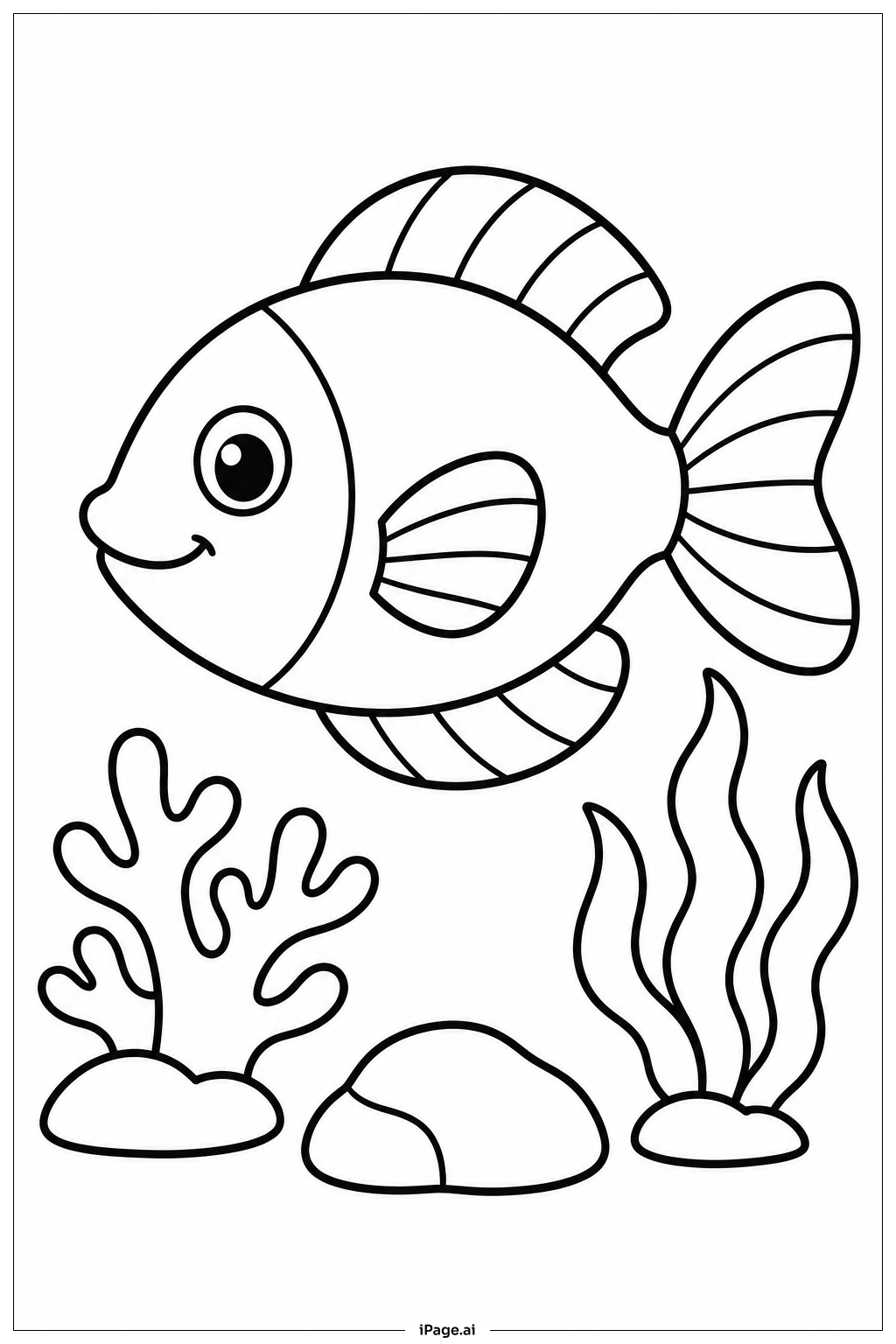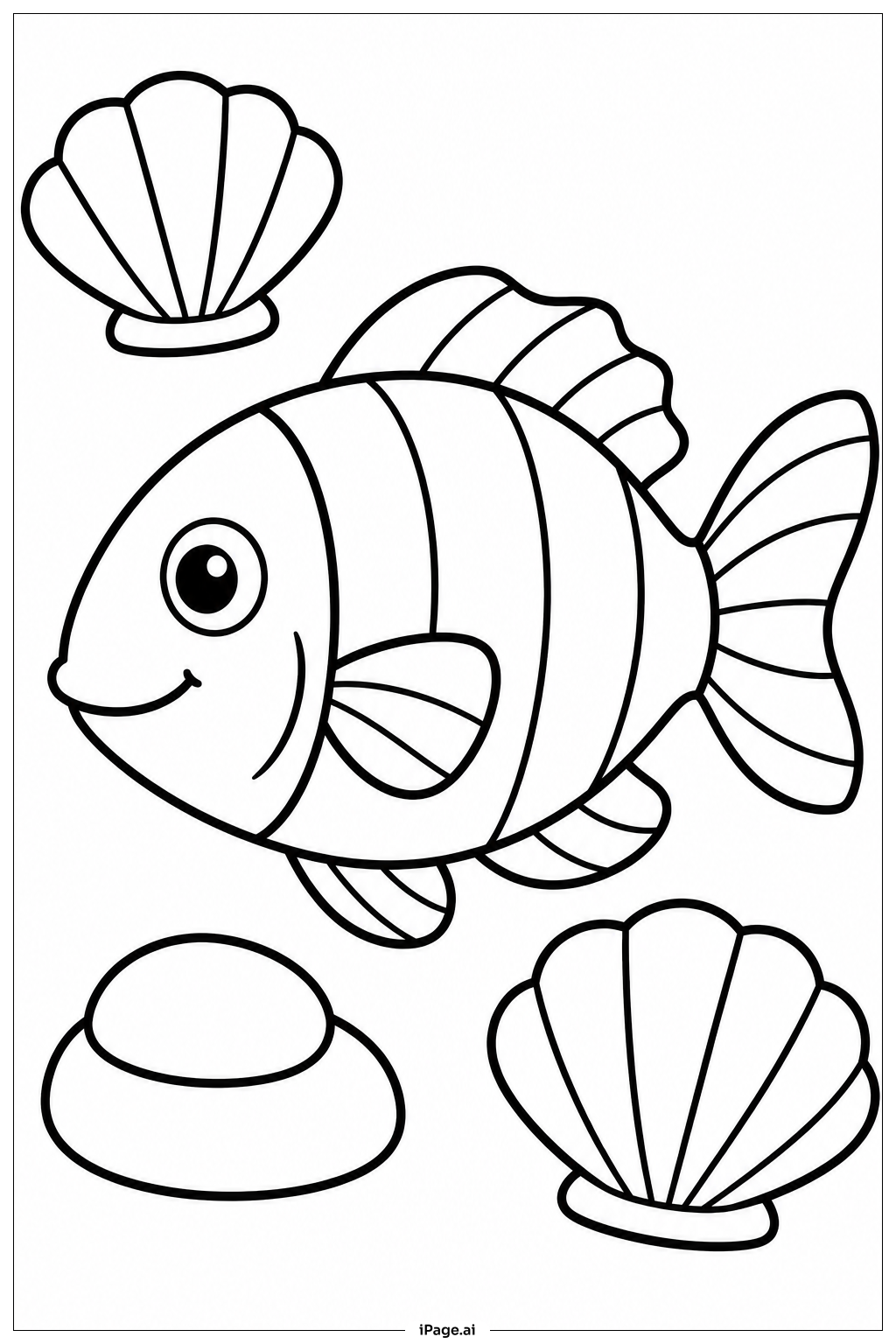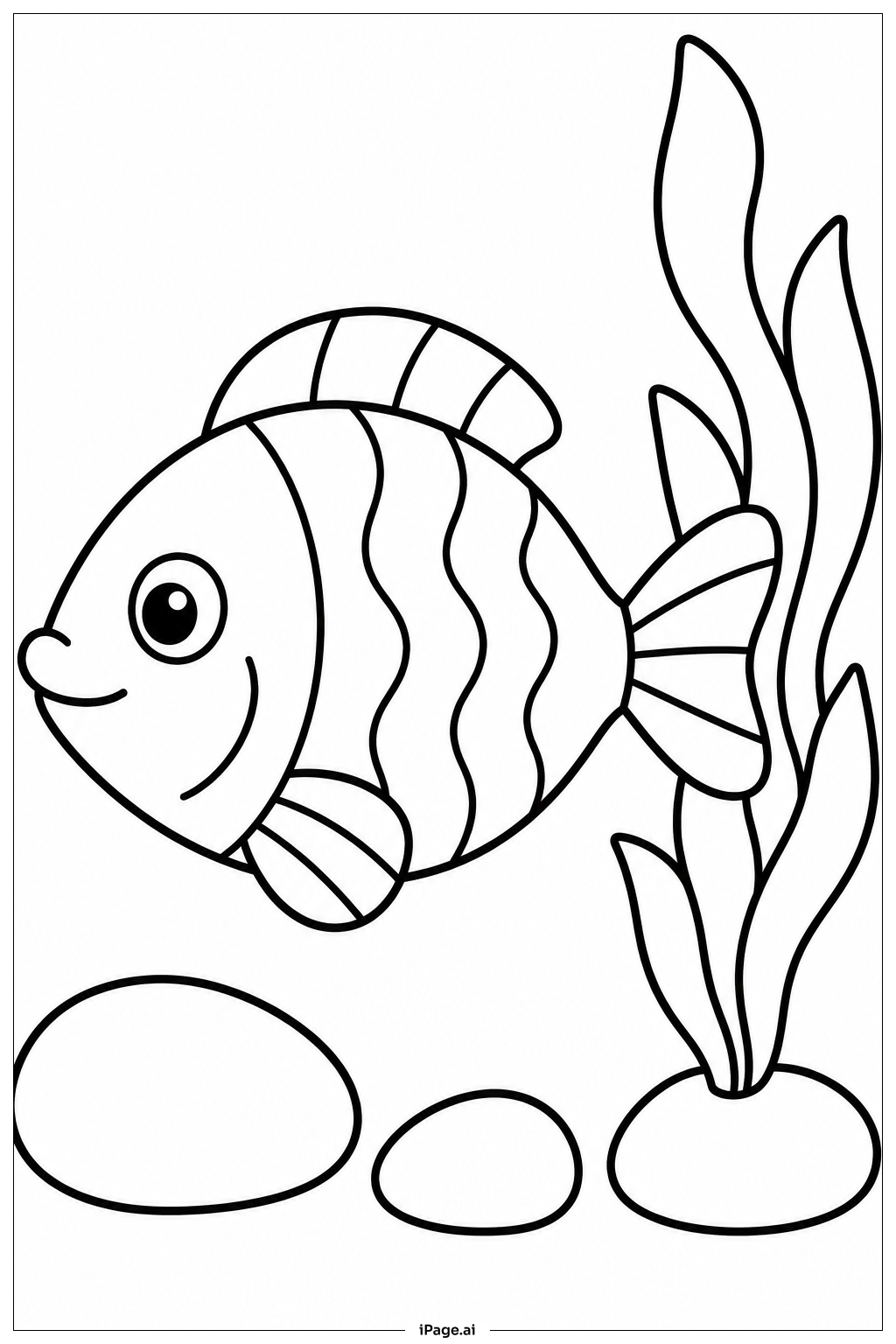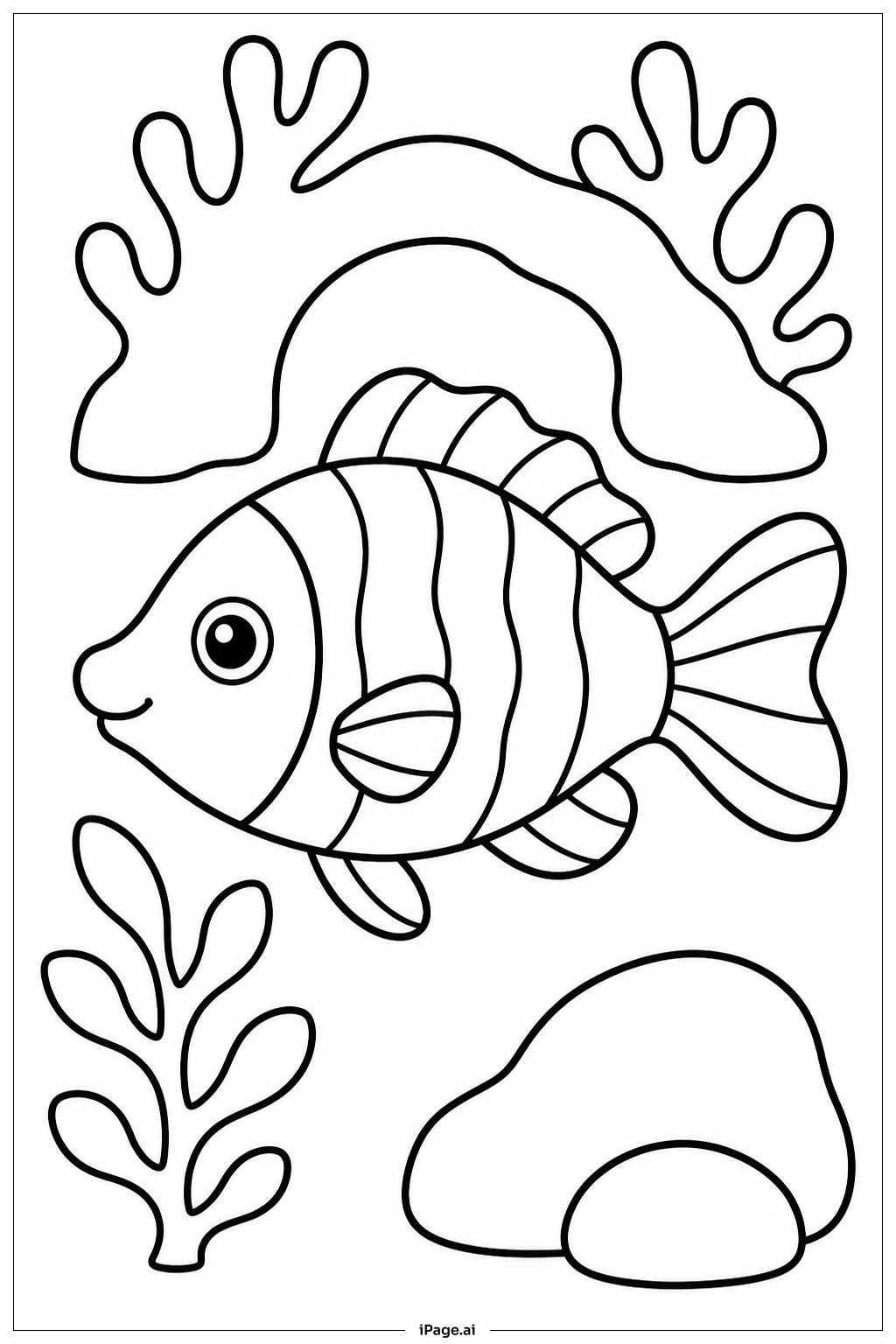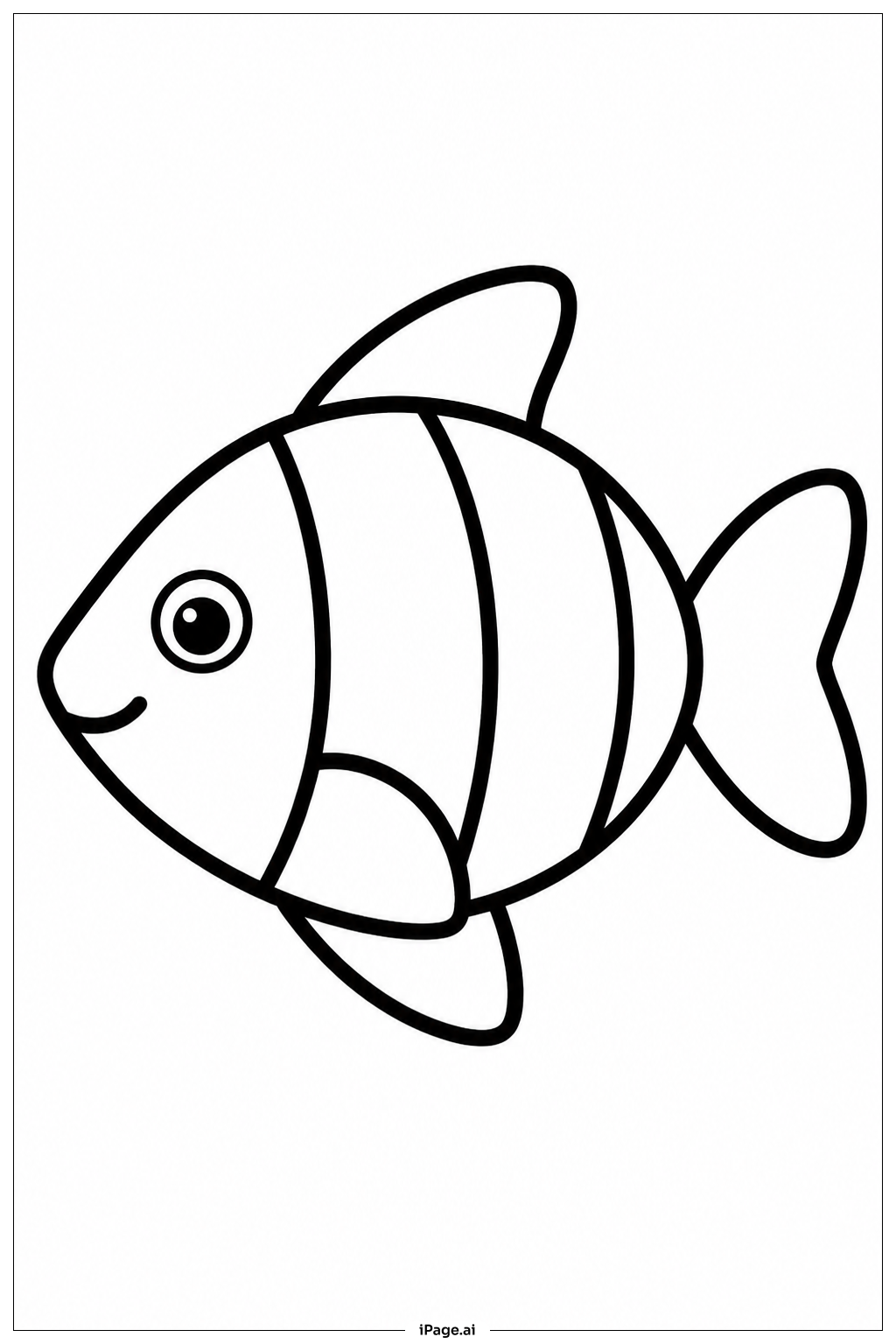
Coloring tips: How to color Striped Fish coloring page well?
Start with the fish's body by choosing bright, cheerful colors like orange, yellow, or blue. Use a darker shade of the same color for the stripes to make them stand out. For the fins and tail, try a lighter or complementary color such as light pink, soft green, or pale gold to create contrast. Color the large eye with a dark pupil and a bright highlight dot to make it look lively. Use shades of blue and teal for the water background. Add green and brown tones for the seaweed and coral. Color the bubbles with a light blue or leave them white for a realistic water effect. Feel free to mix warm and cool colors to make the whole scene pop. There are no wrong choices — let your imagination guide you and have fun making this fish your own!
Coloring challenges: Which parts are difficult to color and need attention for Striped Fish coloring page?
• Coloring the Stripes Evenly: The fish has multiple stripes running across its body in different directions. Staying within the lines of each stripe and keeping the colors consistent from one end to the other can be tricky, especially where the stripes curve around the body shape. Take your time and use a fine-tipped coloring tool for the edges.
• Shading the Rounded Body: The fish has a full, rounded form. Giving it a three-dimensional look by adding lighter tones in the center and darker tones near the edges requires some practice. Without shading, the fish may look flat, so try blending two shades of the same color to add depth.
• Detailing the Fins and Tail: The fins and tail have many fine lines and curved edges close together. Coloring neatly inside these small sections without going over the lines takes steady hands and patience. A sharp colored pencil or a thin marker works best for these areas.
• Balancing the Background Elements: The coral, seaweed, and bubbles in the background all compete for attention. Choosing colors that are slightly less bright than the fish will help the fish stand out as the main focus. Keeping the background cooler and softer in tone compared to the warm, bold colors of the fish creates a pleasing visual balance.
• Coloring the Eye: The eye is a small but important detail. It needs at least two or three colors — a dark outer ring, a colored iris, and a tiny white highlight — to look realistic and expressive. Working carefully in such a small space can be challenging but very rewarding.
Benefits of coloring books: Advantages of drawing Striped Fish coloring page
Coloring this Striped Fish page offers many wonderful benefits for children and young learners. First, it helps improve fine motor skills. Carefully coloring inside the stripes and small fin details trains hand muscles and builds control, which is useful for writing and other daily tasks. Second, it encourages creativity. Choosing colors for the fish, background, and coral allows children to express themselves freely and build confidence in their artistic choices. Third, it supports focus and concentration. Staying attentive to details like the stripes, eye, and bubbles helps children practice patience and sustained attention. Fourth, it introduces basic color theory in a fun way. Experimenting with warm and cool colors, light and dark shades, and complementary combinations teaches children how colors work together. Fifth, it sparks curiosity about the natural world. A colorful ocean scene with fish, coral, and seaweed can inspire interest in marine life and nature. Finally, completing a finished, colorful artwork gives children a sense of pride and accomplishment, boosting their self-esteem and motivation to keep creating.