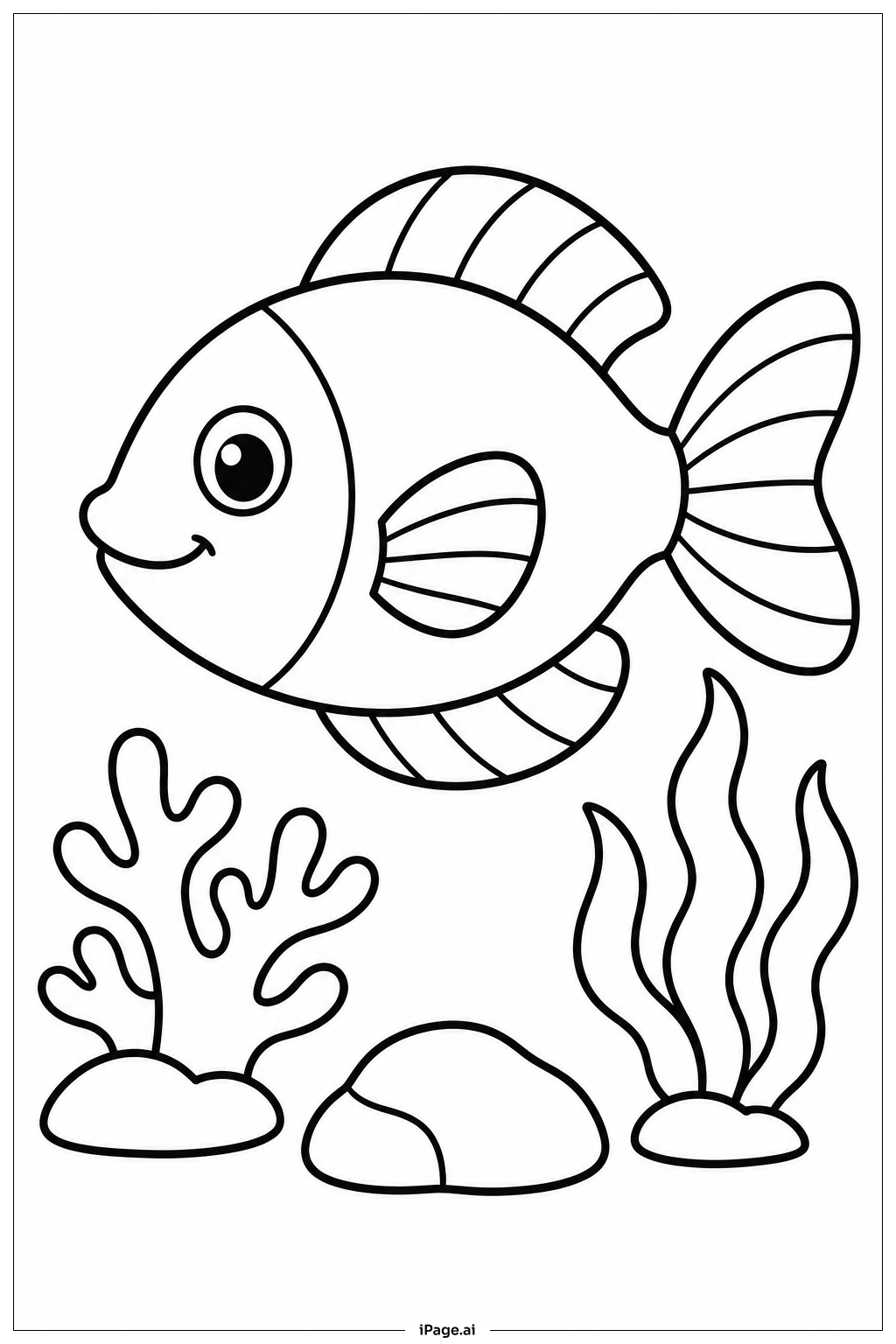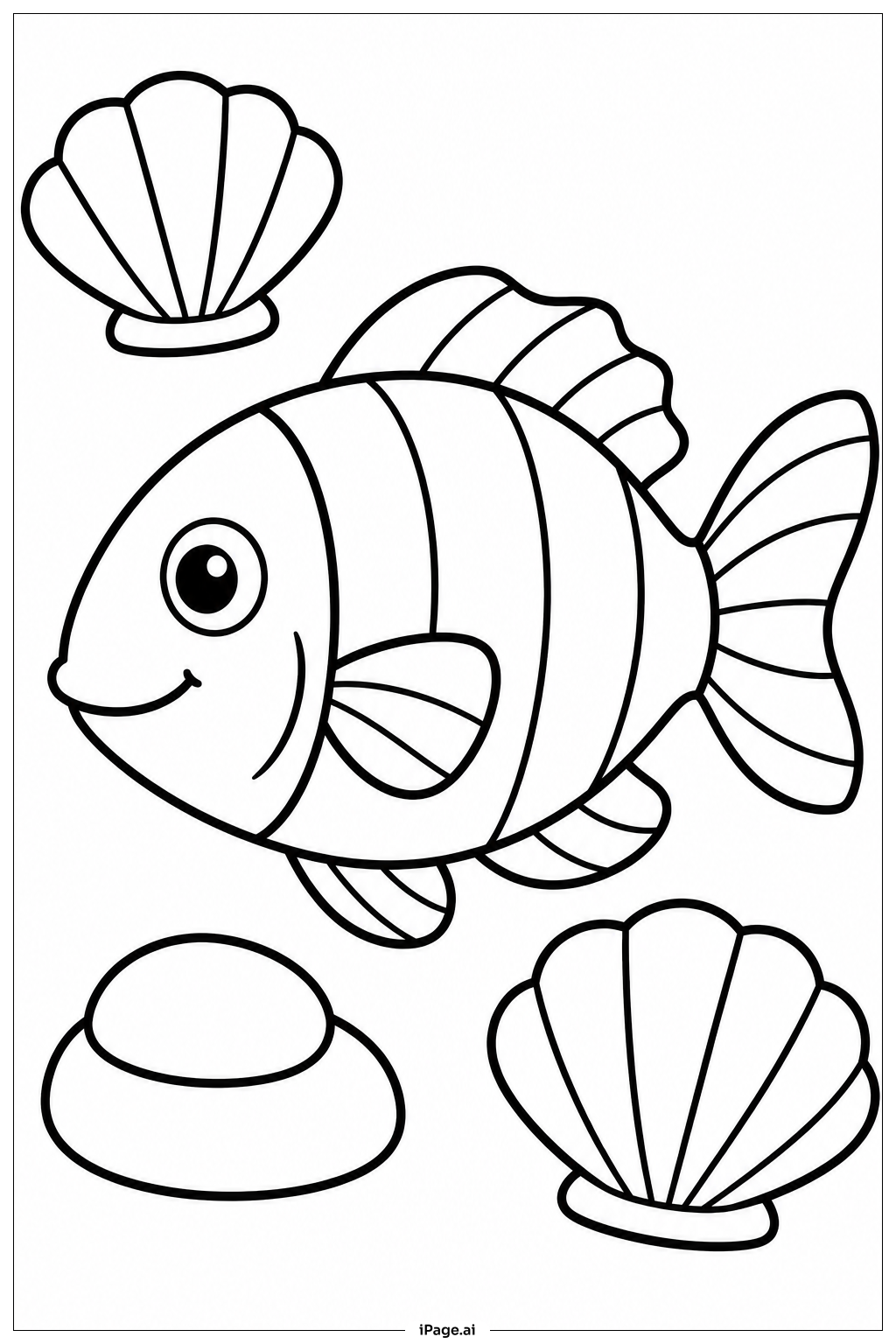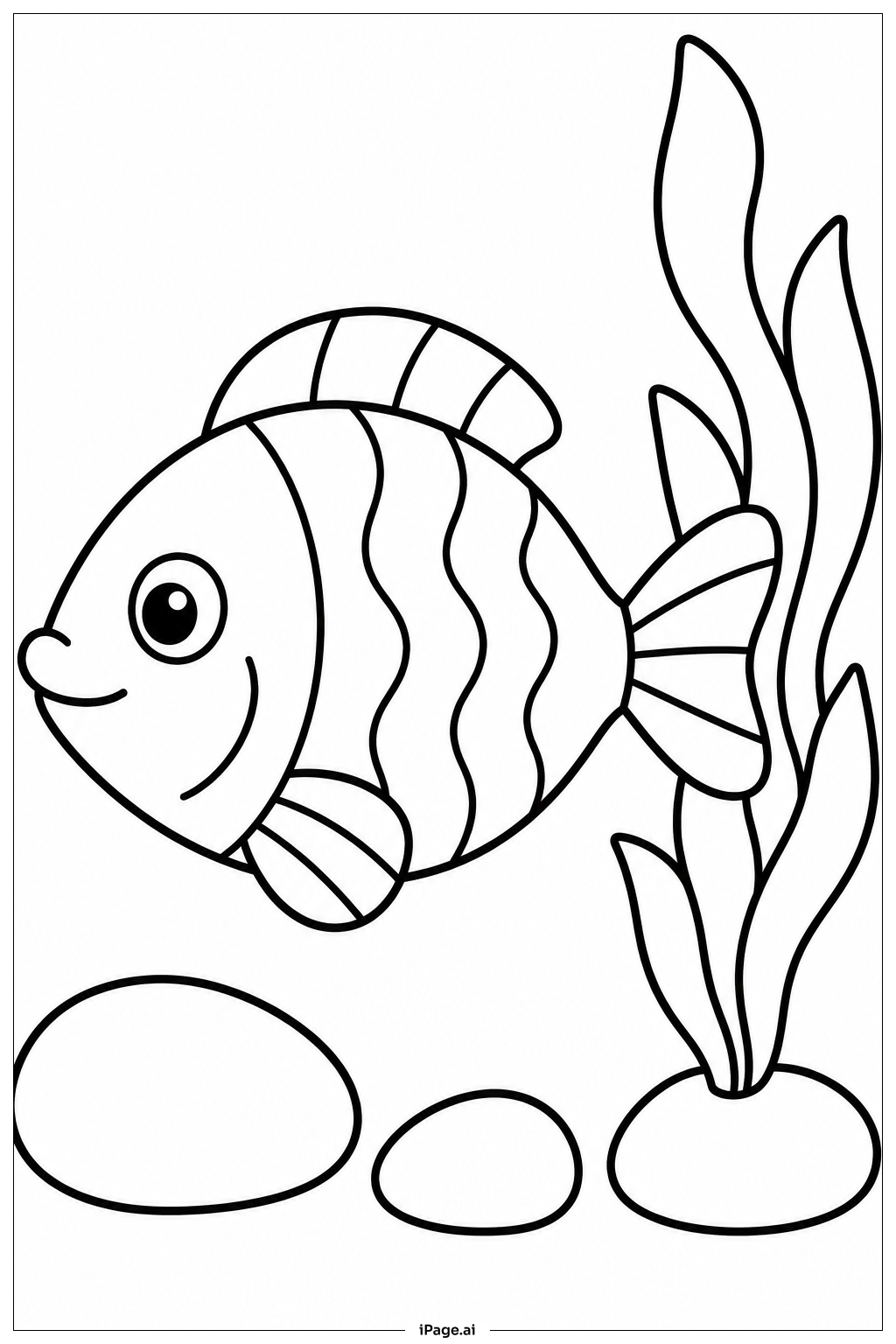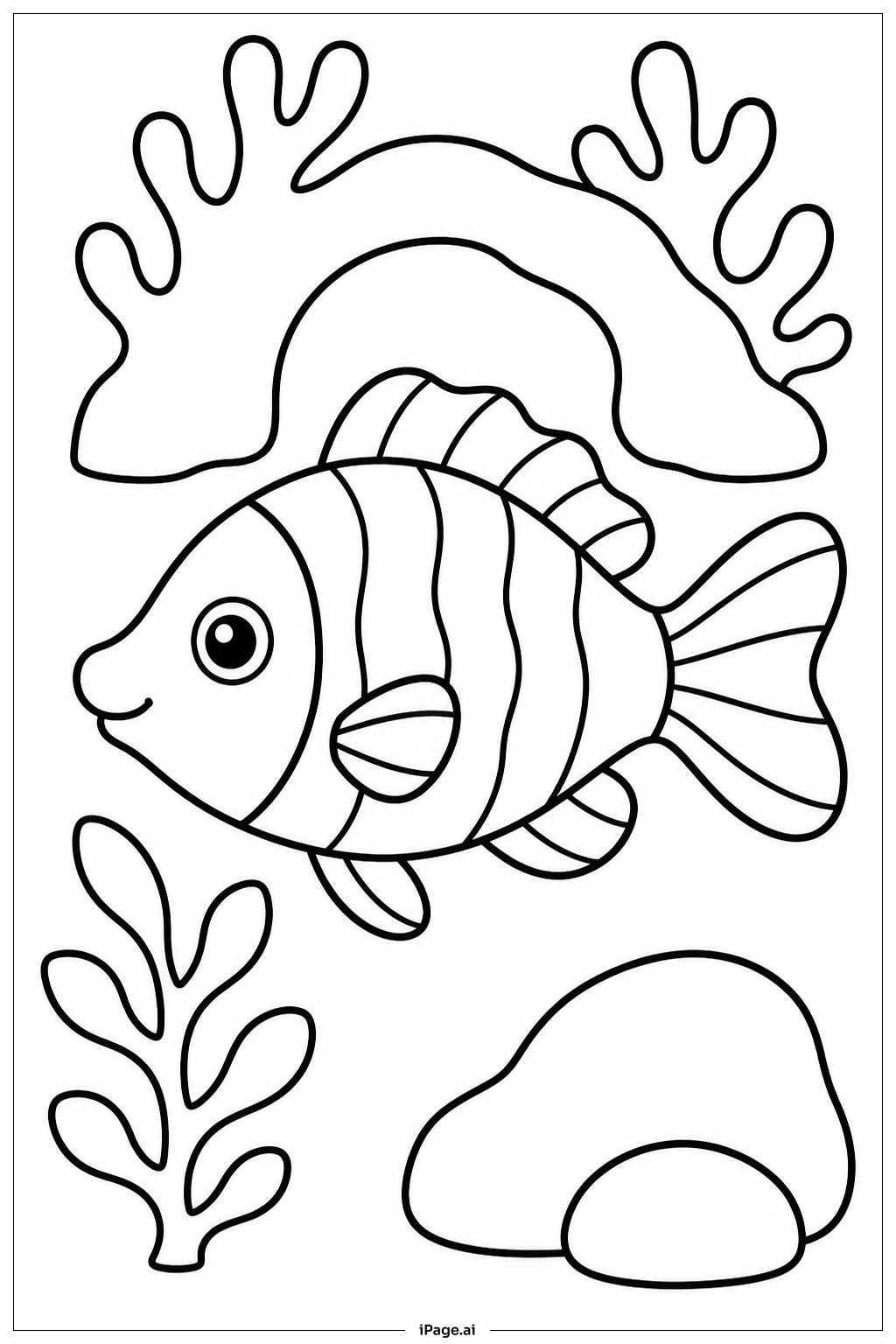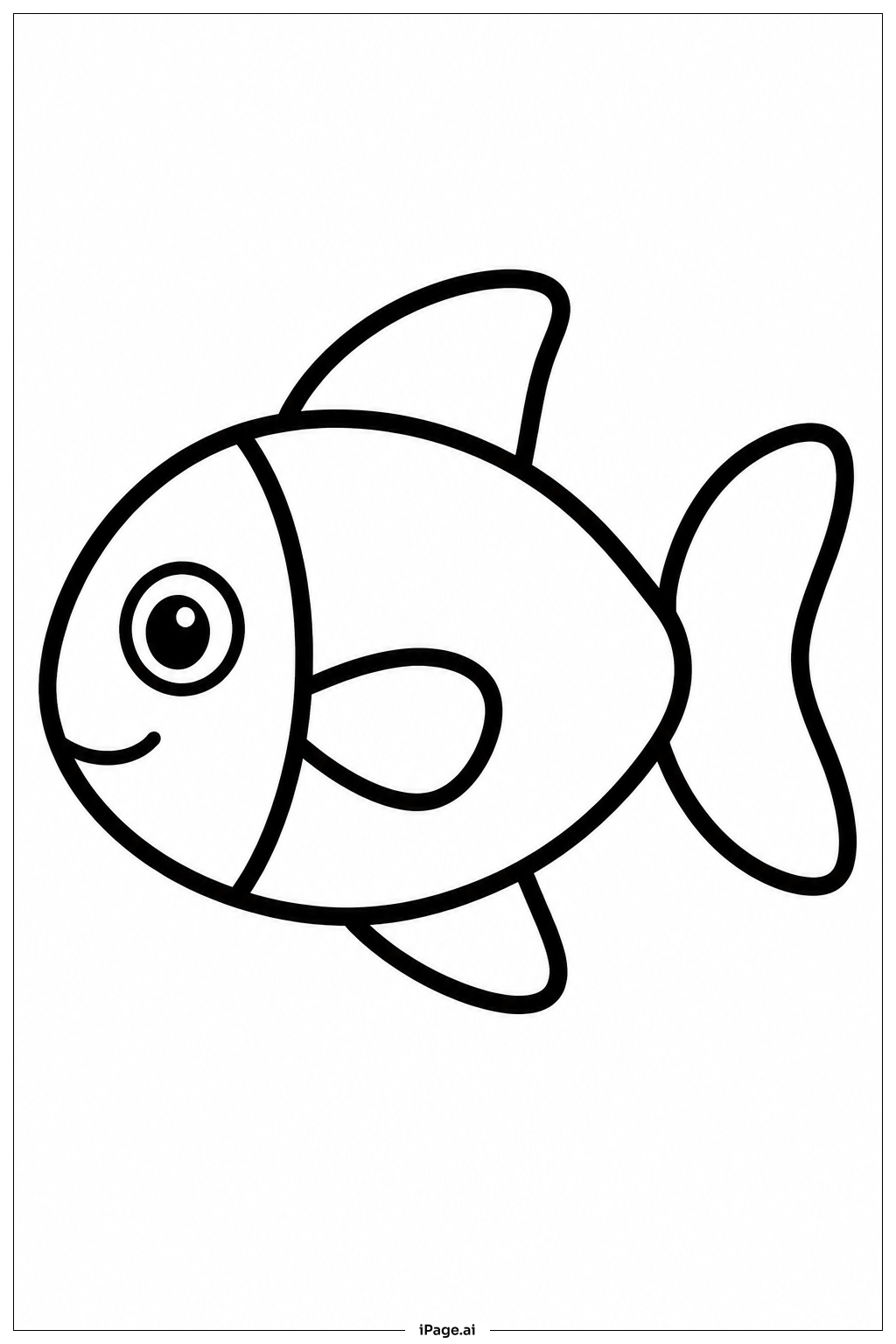
Coloring tips: How to color Side View Fish coloring page well?
Start by coloring the body of the fish in a bright, fun color like orange, blue, or yellow. You can make the belly a lighter shade to show how light hits the fish from above. Use a darker version of your main color for the back and fins to add depth. The scales can be colored in two alternating shades to make them pop. Try silver or white highlights along the middle of the body for a shiny, underwater look. Color the eye dark brown or black with a tiny white dot to make it look alive. The fins can be slightly transparent-looking by using a lighter color or leaving some areas with just a light wash. Feel free to use any colors you like — fish come in every color of the rainbow!
Coloring challenges: Which parts are difficult to color and need attention for Side View Fish coloring page?
• Scale Pattern Consistency: The fish body is covered in many small, overlapping scales arranged in neat rows. Coloring each scale individually while keeping the overall pattern consistent and tidy can be tricky, especially for younger children. It requires patience and a steady hand to stay within each tiny section without smudging into neighboring scales.
• Fin Shading and Transparency: The fins are thin and delicate structures. Capturing a natural, slightly transparent look takes careful layering of light colors. Applying too much color too quickly can make the fins look heavy and flat instead of light and flowing. Blending two shades gently is the key challenge here.
• Body Gradient and Depth: A real fish has a lighter belly and a darker back due to how light filters through water. Recreating this natural gradient on a flat page requires smooth color transitions. Beginners may find it hard to blend colors without creating harsh, uneven lines across the body.
• Small Facial Details: The eye area and the open mouth are small but important focal points. The eye especially needs careful attention — coloring a dark iris, a pupil, and a small highlight dot in a tiny circular space demands precision. Using the wrong tool size can easily ruin the expression of the fish.
• Outline Preservation: With so many detailed inner lines for scales, fins, and body contours, it is easy to accidentally color over the outlines. Keeping the bold boundary lines clean and visible throughout the coloring process is a constant challenge, particularly when switching between colors in closely spaced areas.
Benefits of coloring books: Advantages of drawing Side View Fish coloring page
Coloring this Side View Fish page offers a wide range of benefits for children and beginners alike. Working on the detailed scale pattern helps build fine motor skills and improves hand-eye coordination, as kids learn to control their coloring tools within small, defined spaces. This kind of focused activity also strengthens concentration and the ability to pay attention to detail.
Choosing colors for the fish sparks creativity and imagination. Kids get to decide if their fish lives in a tropical reef, a deep ocean, or a magical fantasy world — and their color choices tell that story. This creative decision-making builds confidence and self-expression.
The repetitive, structured nature of coloring the scales can also be calming and meditative, helping children and adults manage stress and anxiety. It encourages a sense of mindfulness, keeping the mind focused on the present task.
Learning about fish anatomy through the image — identifying the dorsal fin, tail fin, scales, and eye — quietly supports science education in a fun, hands-on way. Kids absorb knowledge about the natural world without it feeling like a lesson.
Finally, completing the page gives a real sense of accomplishment. Finishing a detailed coloring page builds patience and persistence, qualities that are valuable both in and out of the classroom.