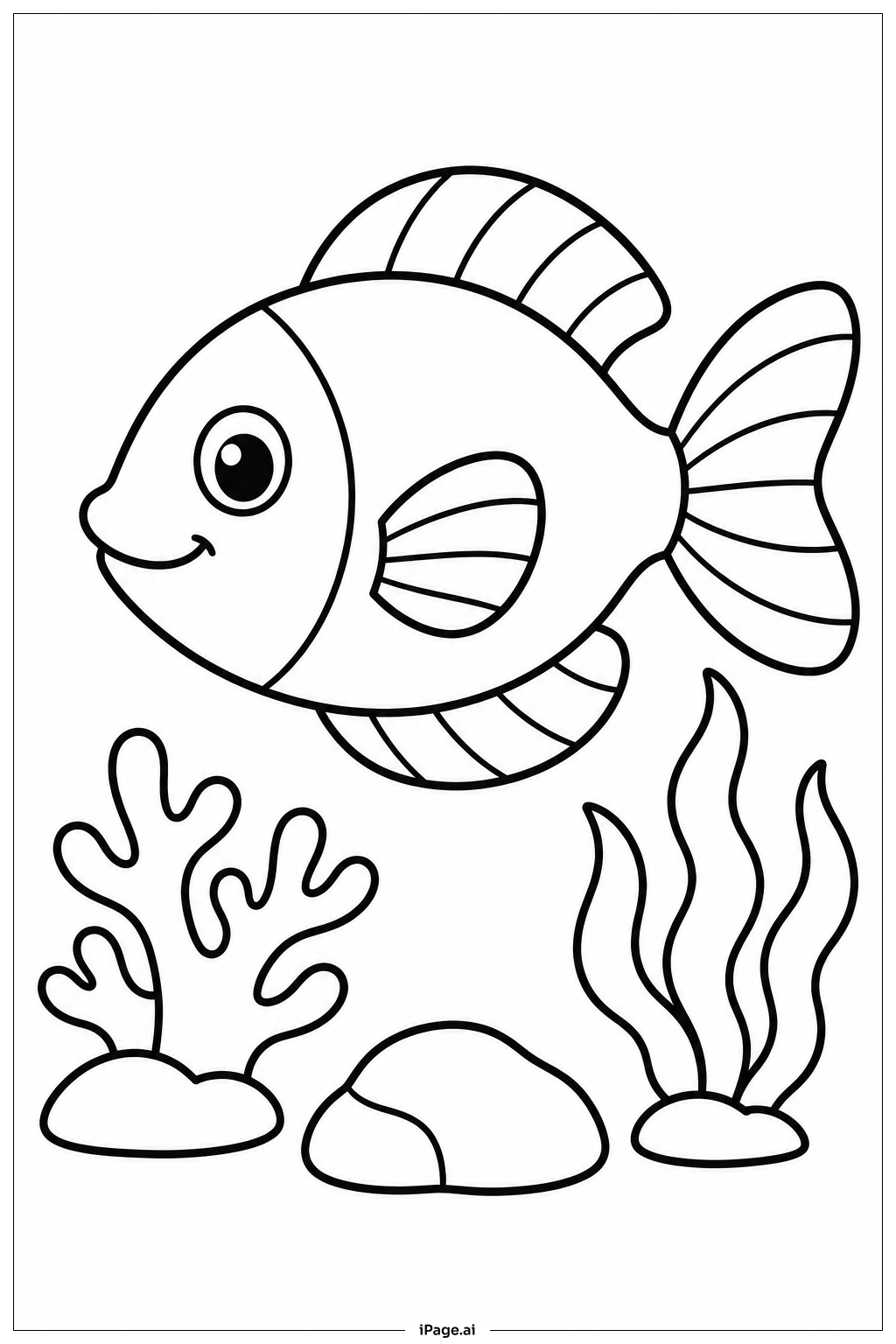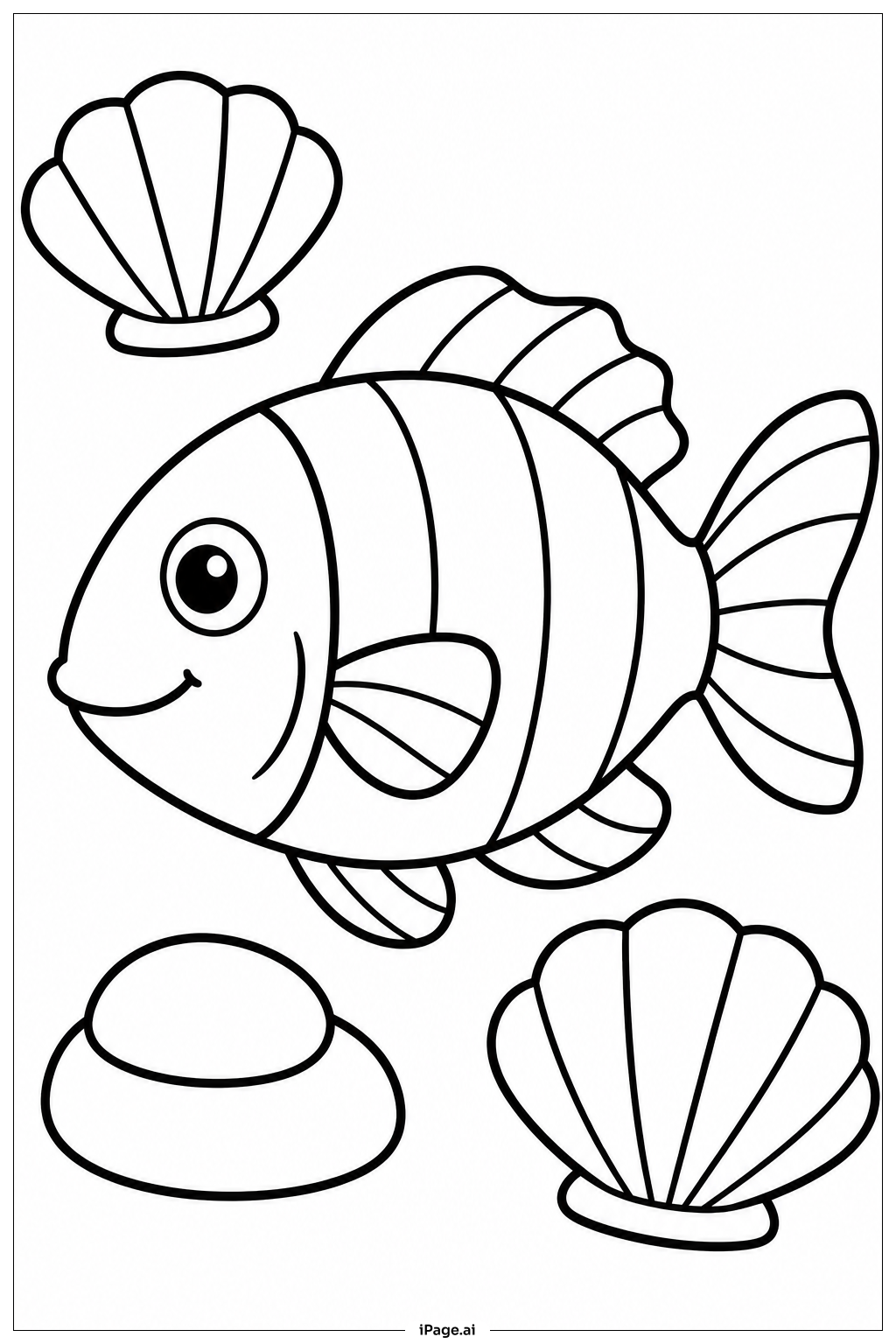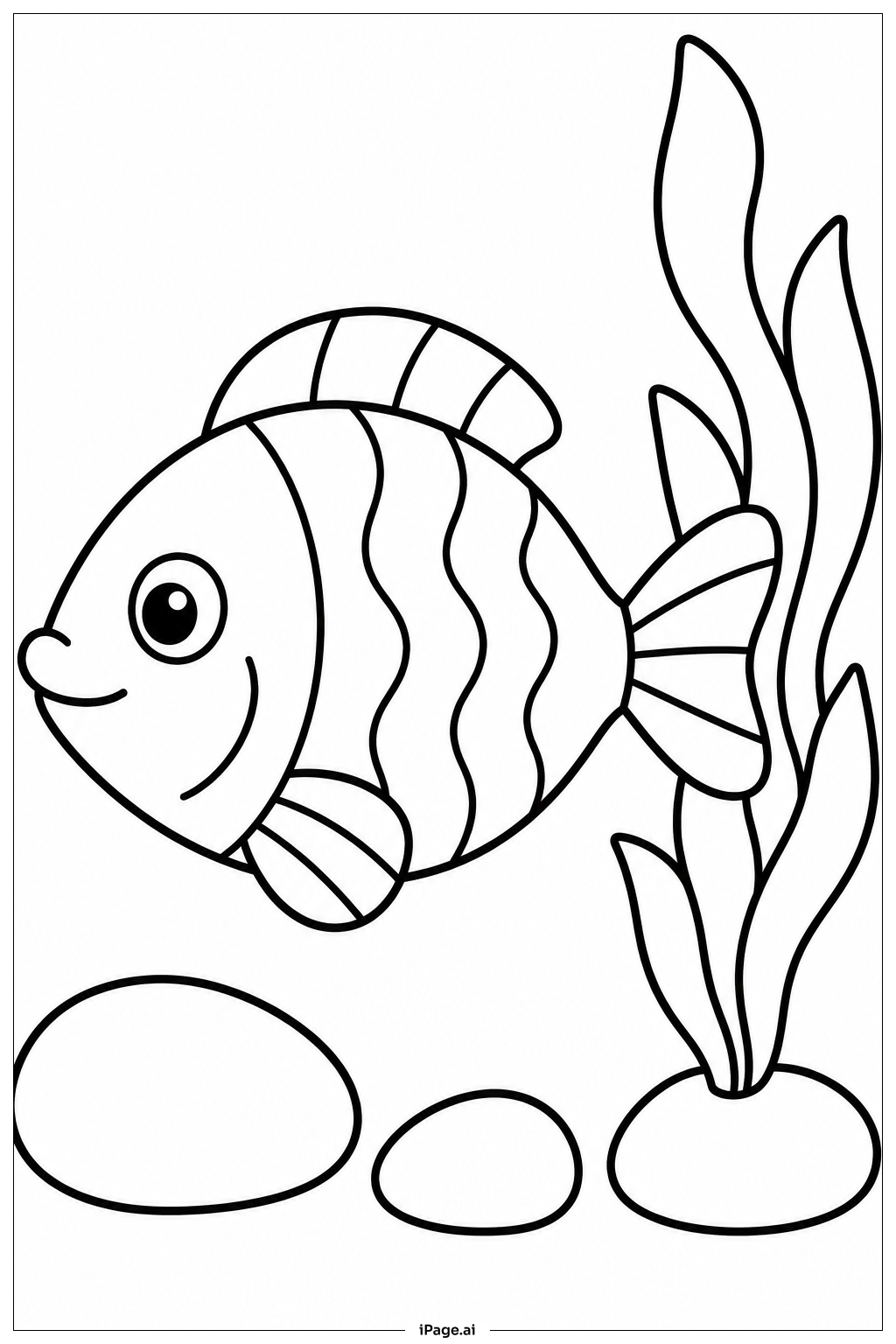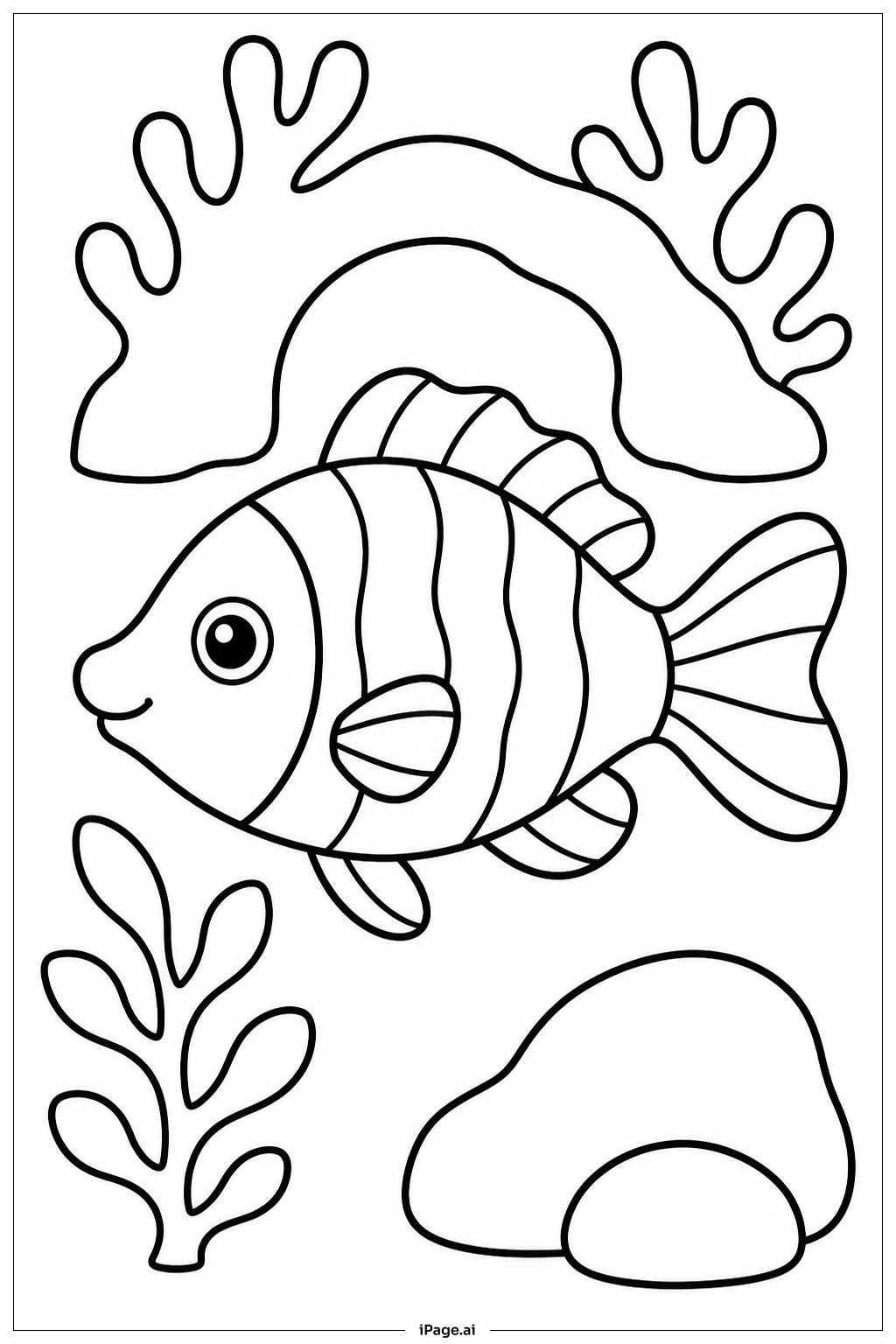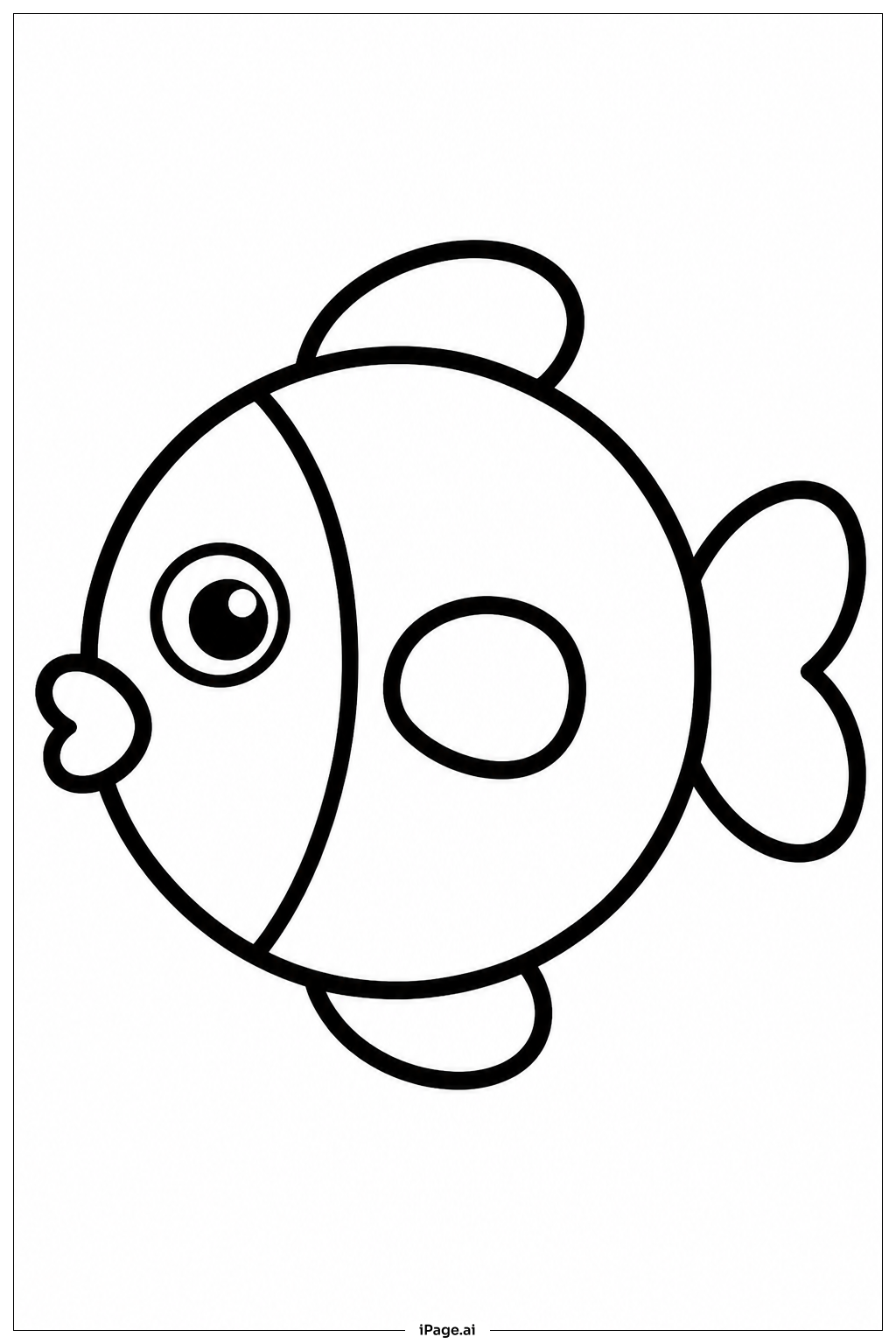
Coloring tips: How to color Round Fish coloring page well?
Start by choosing a base color for the fish's round body. Bright colors like orange, yellow, or blue work great and make the fish look lively. Use a slightly darker shade of the same color to add depth to the scales — color alternate scales a little darker to create a pattern. For the fins and tail, try a lighter or contrasting color so they stand out from the body. The large eyes look best with a dark pupil surrounded by a bright color like green or gold. Use light blue or aqua for the bubbles and the water around the fish. Leave small white dots on the bubbles to make them look shiny. Kids can try bold, rainbow patterns on the scales to make the fish look magical and unique. There are no wrong choices — have fun experimenting with your favorite colors!
Coloring challenges: Which parts are difficult to color and need attention for Round Fish coloring page?
• Scale Patterns: The fish's body is covered with rows of overlapping scales. Each scale is small and close to the others, making it tricky to color them individually without going over the lines. Take your time and use a fine-tipped coloring tool to stay inside each scale. Coloring alternate scales in slightly different shades will give a realistic and eye-catching look.
• Rounded Body Shading: Because the fish has a perfectly round, chubby body, adding shading to show its three-dimensional shape can be a challenge. To make the body look round and full, use a lighter color in the center and gradually add a darker shade near the edges. Blending smoothly is key to getting a natural effect.
• Detailed Fin Edges: The fins have delicate, curved edges and fine line details inside them. These thin lines are easy to accidentally color over. Use a sharp pencil or a fine marker to carefully follow each line within the fins. Coloring the inner lines a slightly darker tone than the base color of the fin helps bring out the detail.
• Small Bubbles: The tiny bubbles around the fish are very small and round. Staying inside such small circles without smudging is difficult, especially for younger colorists. Try using a thin marker or the very tip of a colored pencil. Leaving the center of each bubble white or very lightly colored makes them look realistic and glossy.
• Eye Detail: The large eye has several layers — a white outer area, a colored iris, and a dark pupil. Keeping each layer neat and distinct requires a steady hand and careful color choices to avoid muddying the layers together.
Benefits of coloring books: Advantages of drawing Round Fish coloring page
Coloring this Round Fish page offers wonderful benefits for children of all ages. The fun, chubby shape of the fish makes it immediately appealing and encourages kids to pick up their coloring tools and get creative right away.
For younger children, tracing and staying within the clear, bold outlines helps develop fine motor skills and hand-eye coordination. Choosing colors for the scales, fins, and bubbles also supports early decision-making and builds confidence.
For older kids and teens, the detailed scale patterns and shading challenges offer a satisfying creative workout. Practicing light and shadow on the round body helps develop an understanding of color, depth, and artistic technique.
Coloring is also a calming activity. Focusing on filling in the fish's details can reduce stress and improve concentration — skills that carry over into schoolwork and everyday life.
The underwater theme sparks imagination, too. Kids might start thinking about ocean life, other sea creatures, and marine environments, turning a simple coloring activity into a springboard for learning and storytelling.
Most importantly, finishing this page gives kids a real sense of achievement. Seeing their own colorful, completed fish is a boost to self-esteem and a reminder that art is something everyone can enjoy.