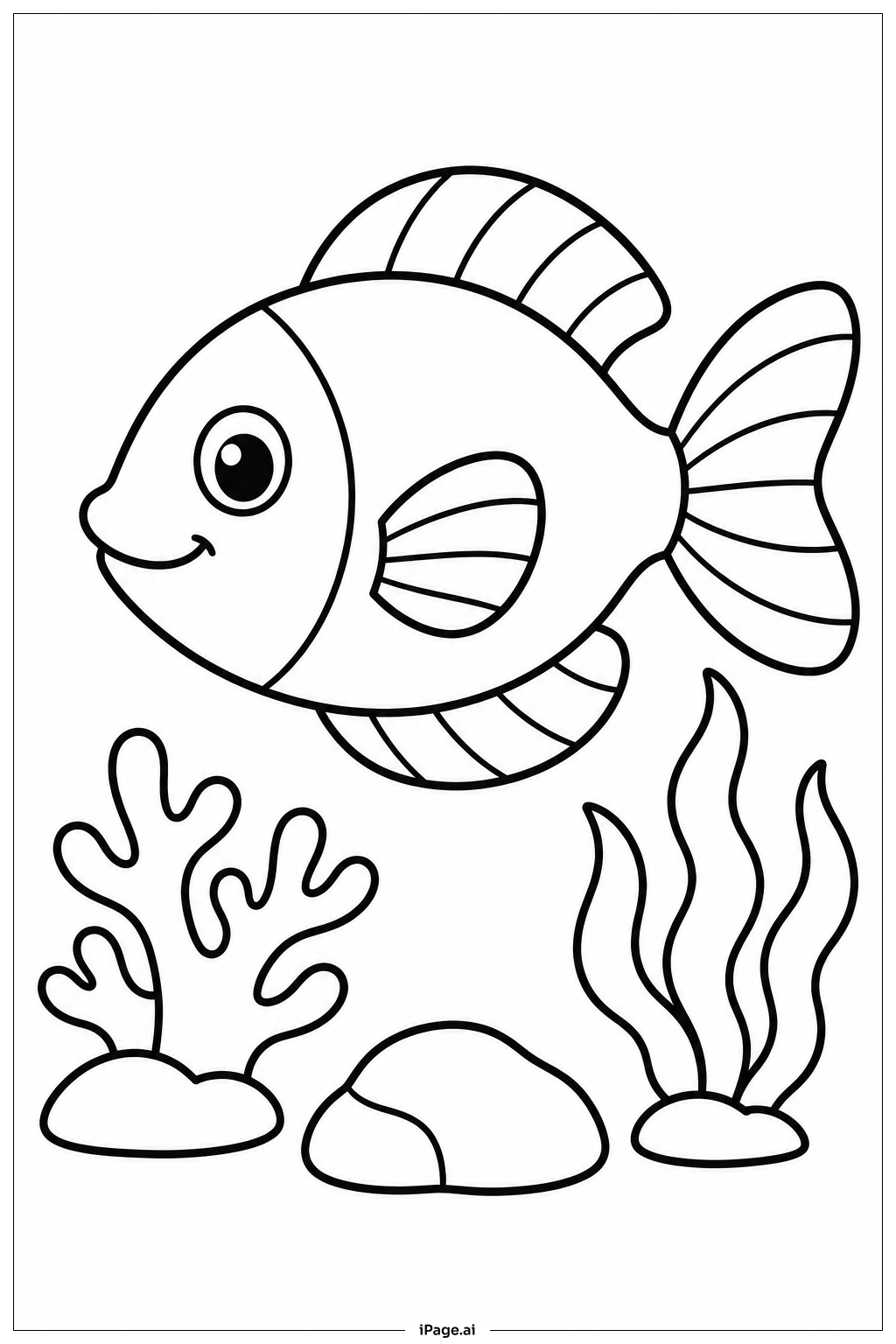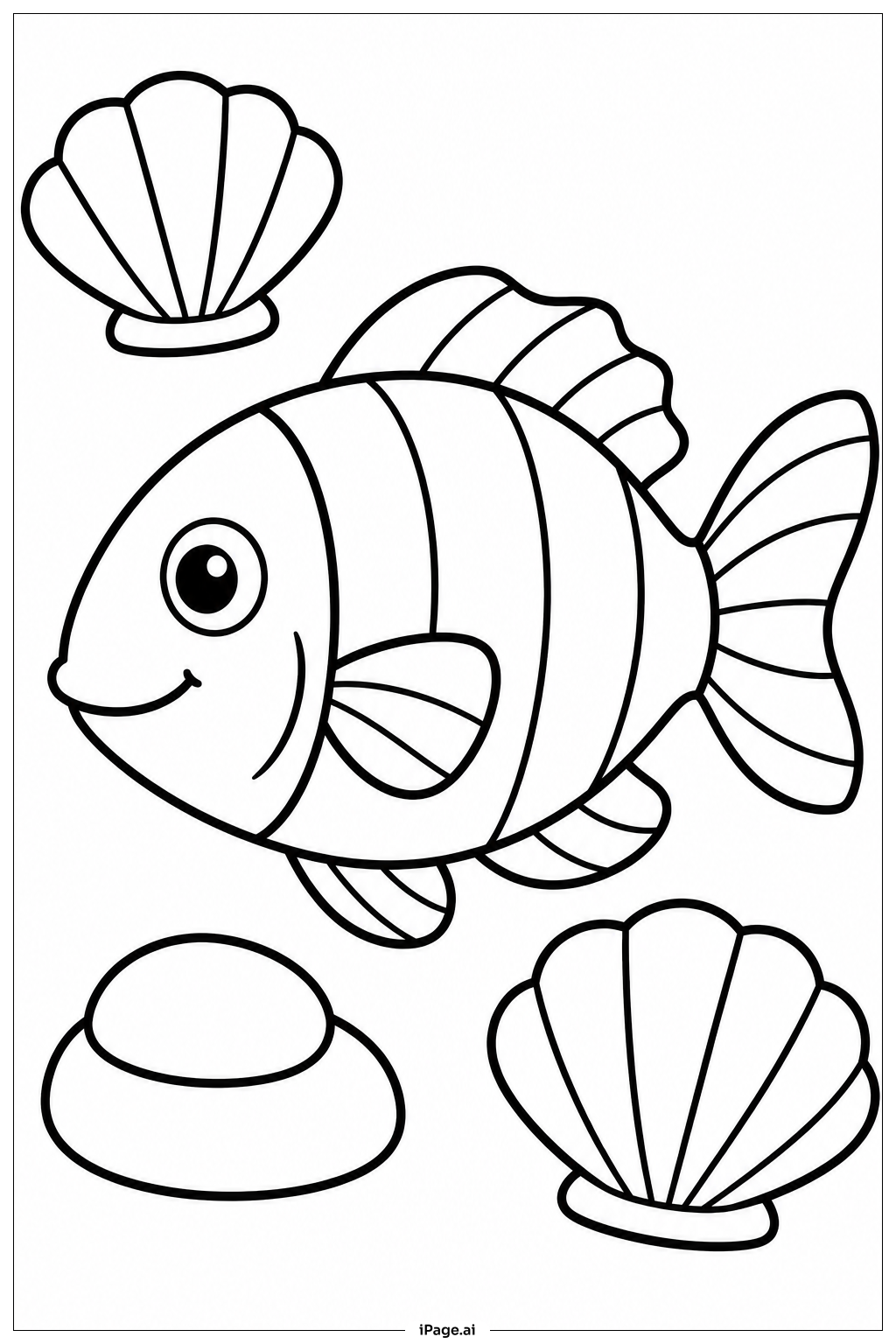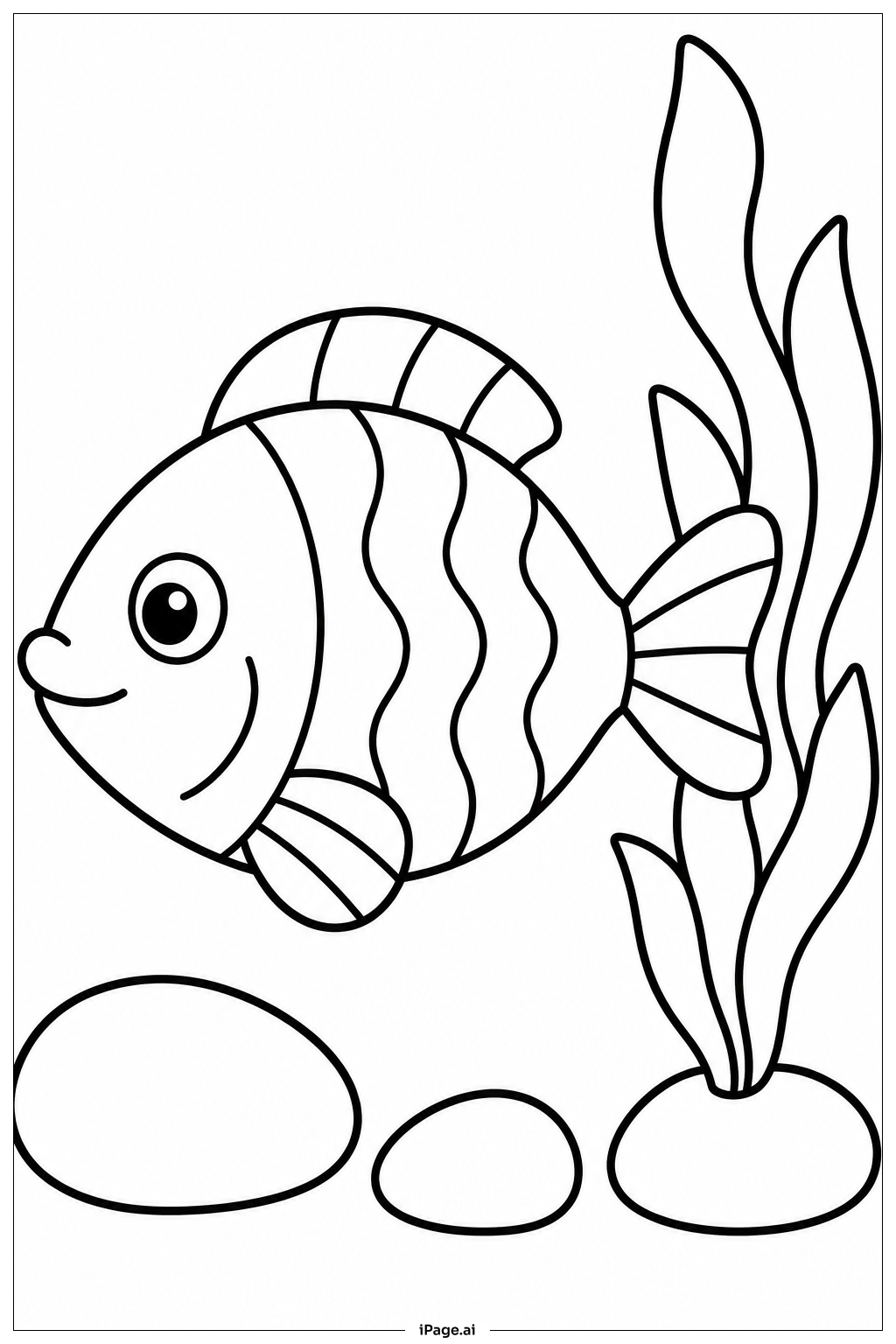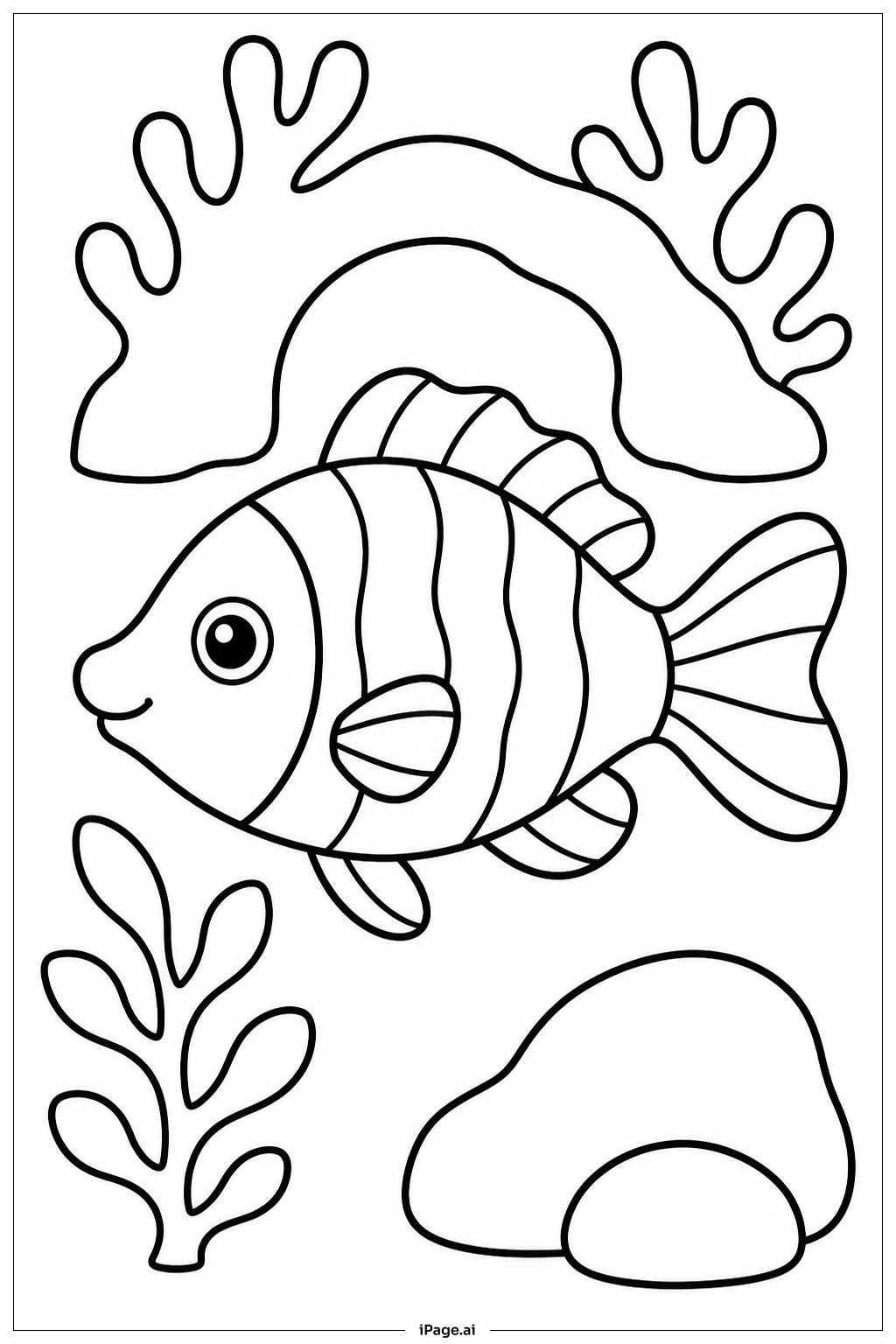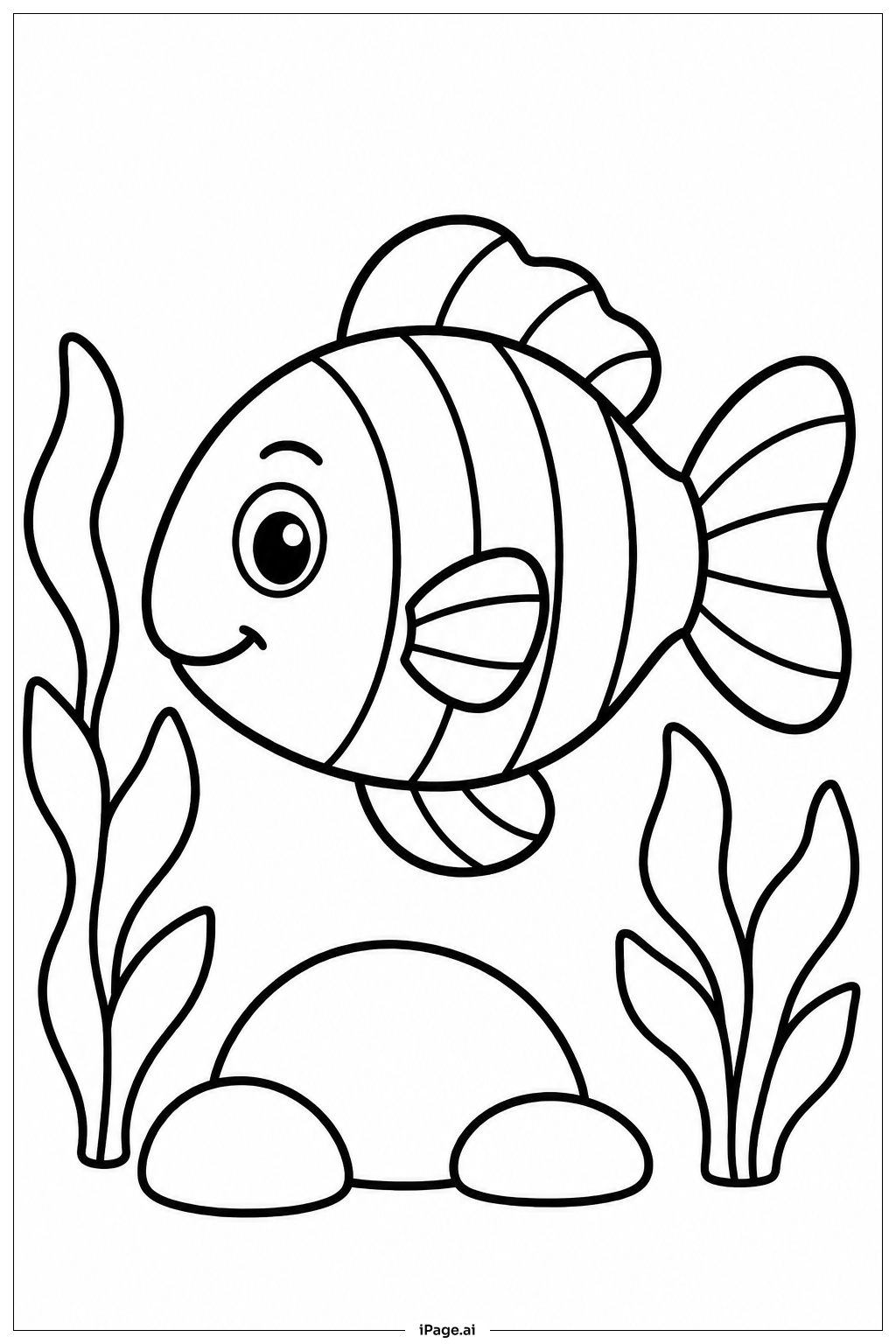
Coloring tips: How to color Fish And Seaweed coloring page well?
Start with the fish body and use bright, cheerful colors like orange, yellow, or red to make it stand out. You can add a lighter shade of the same color on the belly to give it a soft, rounded look. Use a darker shade along the back and fins for depth. Color the scales one by one if you want extra detail, or fill the whole body in one color for a simpler look. For the seaweed, try different shades of green — dark green for the base and lighter green toward the tips. The background can be light blue or turquoise to suggest water. Add purple or teal as accent colors on the fins for a fun, creative touch. Use a white or very light yellow for the bubbles, leaving some areas uncolored to keep them looking round and shiny. This image works well with crayons, colored pencils, or watercolor paints.
Coloring challenges: Which parts are difficult to color and need attention for Fish And Seaweed coloring page?
• Scale Patterns: The fish body is covered with many individual scales arranged in overlapping rows. Coloring each scale neatly without going over the lines requires patience and a fine-tipped tool. Keeping a consistent color pattern across all the scales while adding shading takes careful attention and steady hand control.
• Fin Details: The fins have thin, delicate lines running through them. These lines are narrow and close together, making it easy to accidentally color outside the borders. Using a sharp pencil or a thin marker works best here. Blending two colors along the fins can look beautiful but adds difficulty.
• Seaweed Strands: The seaweed ribbons twist, overlap, and curl in multiple directions. Where strands cross over each other, it can be tricky to decide which one goes in front and how to show that layering through color choices. Using slightly different shades of green for different strands helps separate them visually.
• Small Bubbles: The bubbles scattered throughout the image are very small and round. Filling them with color without losing their circular shape is challenging, especially for younger colorists. Leaving a small white highlight inside each bubble makes them look more realistic and three-dimensional.
• Background Balance: The open water background needs to be colored carefully so it does not overpower the fish and seaweed. Applying color too heavily in the background can make the main subjects harder to see. Using light, even strokes and a pale color helps keep the fish and seaweed as the clear focal point of the image.
Benefits of coloring books: Advantages of drawing Fish And Seaweed coloring page
Coloring this fish and seaweed scene offers a wide range of benefits for children and beginners alike. Working on the detailed scale pattern helps build fine motor skills and teaches hand control, which supports handwriting and other precise tasks. Choosing colors for the fish, plants, and water encourages creative thinking and color awareness in a fun, low-pressure way.
The underwater theme sparks curiosity about ocean life. Kids may become interested in learning more about real fish species, seaweed, and marine ecosystems simply by engaging with this image. This natural curiosity supports early science learning.
Focusing on staying inside the lines and completing the full image builds concentration and patience. These are valuable habits that carry over into school and everyday tasks. For children who find it hard to sit still, a satisfying coloring activity like this can provide a calming, structured outlet.
Finishing the page also gives colorists a strong sense of accomplishment. Seeing their own color choices bring a plain outline to life builds confidence and encourages them to try more creative projects. Overall, this image is a wonderful way to combine relaxation, learning, and artistic expression in one enjoyable activity.