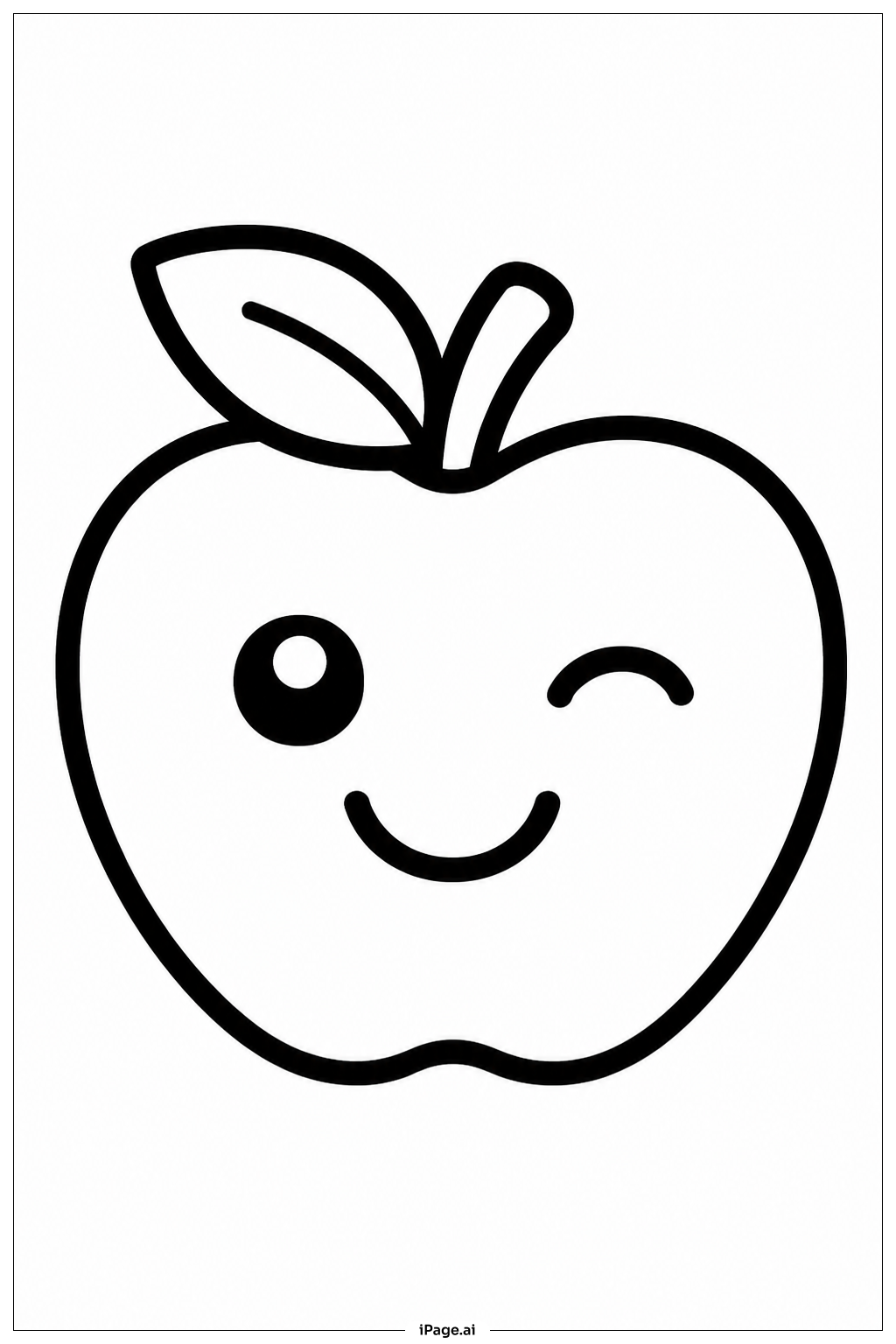
Coloring tips: How to color Winking Apple coloring page well?
Start by choosing a bright red or green for the apple’s body to make it look fresh and ripe. Use a light brown for the stem and a rich green for the leaf to add natural contrast. For the face details, you can use black or dark brown for the eyes and mouth outlines. Add highlights with white or light yellow to give the apple a shiny, plump look. To make the winking eye stand out, consider coloring the lashes carefully or adding a hint of pink on the cheek for a playful blush. Keep the colors simple and bold to make it easy and fun for children aged 4 to 16 to enjoy.
Coloring challenges: Which parts are difficult to color and need attention for Winking Apple coloring page?
• Facial Expression Balance: Coloring the winking eye and the open eye requires attention to keep the playful expression correct and balanced.
• Small Details: The eyelashes, eyebrows, and smile lines are thin and may be tricky for younger children to color inside without going out of the lines.
• Color Transitions: Adding highlights or a shiny effect on the apple’s surface can be a challenge because it involves blending lighter and darker shades smoothly.
• Leaf and Stem Texture: Coloring the leaf with veins and giving the stem a natural look might be difficult for beginners who are not familiar with subtle color changes.
• Staying Inside the Lines: The curved edges and small facial features demand careful coloring to keep the character neat and clear.
Benefits of coloring books: Advantages of drawing Winking Apple coloring page
Coloring this Winking Apple image helps improve hand-eye coordination and fine motor skills as children carefully color the face’s details and round shapes. The playful expression encourages creativity, allowing kids to experiment with colors and shading to bring the apple’s personality to life. Coloring the highlights and shadows develops an understanding of light and texture in art basics. This activity also promotes focus and patience, especially when working on the smaller facial features. Finally, it inspires a fun connection with healthy foods by turning a simple apple into a cheerful character kids want to color again and again.