Coloring tips: How to color Apple Pie Kitchen Scene coloring page well?
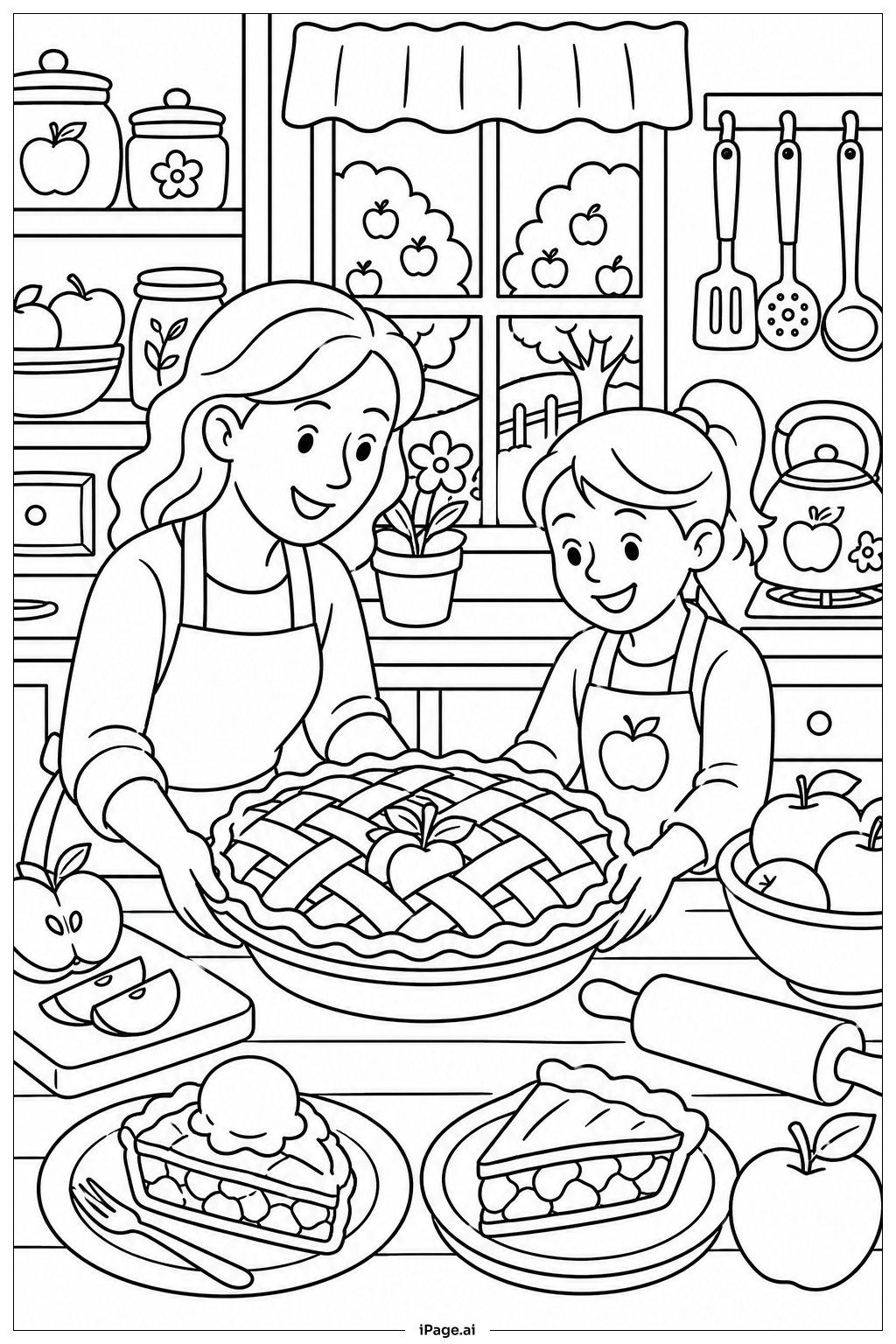
For coloring this Apple Pie Kitchen Scene, start by using warm tones like golden yellows, soft browns, and rich reds to bring the apple pie to life. Color the apples in shades of red, green, or yellow to show their natural variety. The kitchen walls can be light pastel colors such as pale yellow or cream to keep the feeling cozy and bright. Use a shiny silver or gray for the baking tools like the whisk and measuring cups. For the wooden countertop and rolling pin, soft beige or light brown shades work well. Adding gentle shadows around objects can make the scene more realistic and fun to color. Don’t forget to color the apron in a cheerful and vibrant color like red or blue.
Coloring challenges: Which parts are difficult to color and need attention for Apple Pie Kitchen Scene coloring page?
• Small Details: The lattice crust on the apple pie has many thin strips that can be tricky to color neatly, requiring fine motor control to stay within the lines.
• Textured Surfaces: Capturing the textures of the apples, pie crust, and wooden countertop demands patience and careful blending of colors to show realistic surfaces.
• Overlapping Objects: Some kitchen tools and ingredients overlap each other, which can be challenging to color distinctly without mixing colors or blending edges.
• Light and Shadow: Showing natural light coming through the window adds depth but also requires attention to shading to create a warm and inviting feel.
• Varied Objects: The scene contains many different items, like jars, utensils, fruits, and fabrics, each needing different coloring techniques for materials such as glass, metal, cloth, and food.
Benefits of coloring books: Advantages of drawing Apple Pie Kitchen Scene coloring page
Coloring this Apple Pie Kitchen Scene helps children improve their attention to detail and develop fine motor skills by working on complex shapes and textures. It encourages creativity by allowing them to choose realistic or imaginative colors for food and kitchen items. The scene promotes focus and patience as they navigate overlapping objects and shading. Moreover, it introduces basic concepts of light and shadow, helping young artists understand how colors change with light. Finally, this activity can inspire interest in cooking and baking, making it a fun and educational experience that connects art with everyday life.