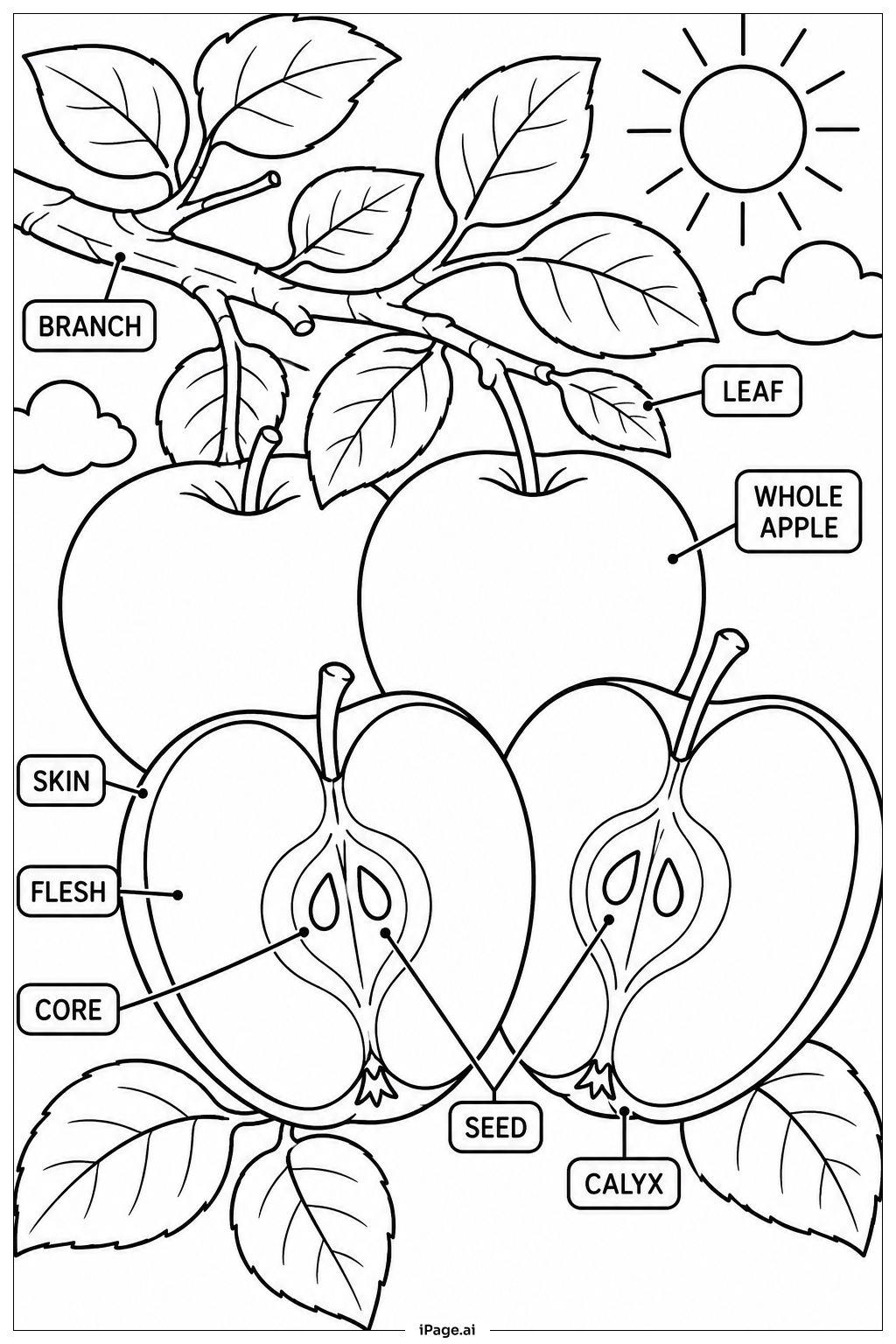
Coloring tips: How to color Cross Section Apple Anatomy coloring page well?
You can use bright red, green, or yellow to color the apple skin, depending on your favorite type of apple. The flesh inside can be colored light cream or white to look juicy and fresh. The seeds in the core are best colored dark brown or black to make them stand out. For the stem on top, try using brown or a darker green shade. Adding some shading or blending with colored pencils can make the layers look more 3D and real. Don’t forget to color the spaces carefully to show the different parts clearly.
Coloring challenges: Which parts are difficult to color and need attention for Cross Section Apple Anatomy coloring page?
• Small seed areas: The seeds inside the apple core are small and require careful coloring to avoid going outside the lines. This can be challenging for younger children who are still developing fine motor skills.
• Layer distinction: Coloring the different layers such as the skin, flesh, and core clearly needs attention. Choosing colors that contrast well helps, but blending too much may make the layers look less distinct.
• Curves and details: The round shape of the apple and the curved lines around the core need smooth coloring to avoid harsh edges, which can be hard for beginners.
• Stem texture: The stem has fine lines and a narrow shape, which makes even coloring difficult without coloring tools that are precise.
• Maintaining neatness: Because this image has many small sections close together, it is easy to color outside boundaries if not careful, which can affect the final look of the drawing.
Benefits of coloring books: Advantages of drawing Cross Section Apple Anatomy coloring page
Coloring this apple cross section can help children improve their hand-eye coordination and fine motor control as they fill in small, detailed areas. It encourages focus and patience because of the many parts that need attention. The image also teaches children about fruit anatomy, sparking curiosity about how things grow and what is inside the foods they eat. This promotes both creativity and learning at the same time. Coloring different shades also helps develop an understanding of color mixing and layering to create realistic effects.