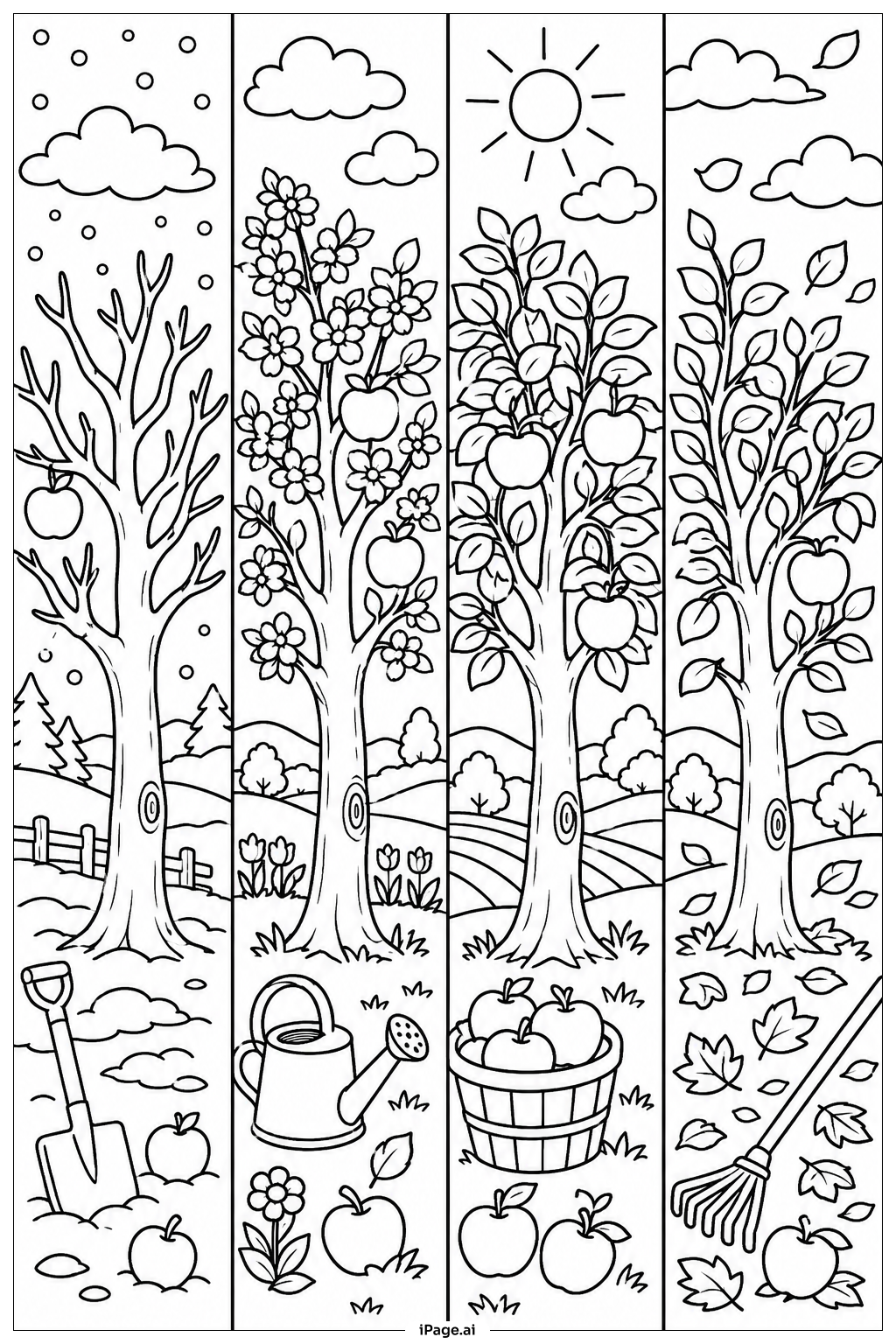
Coloring tips: How to color Apple Tree In Four Seasons coloring page well?
To color this Apple Tree In Four Seasons, try using bright pinks and whites for the spring blossoms to show freshness. Choose deep greens for the summer leaves and bright red for the juicy Apples to make them stand out. For autumn, use warm colors like orange, yellow, and browns on the leaves and a few remaining apples for a cozy feel. In the winter section, soft greys, whites, and light blues can show snow and chilly weather. Use different shades of green and brown for the tree trunk and branches to give it texture. You can also add a blue or grey sky depending on the season. Feel free to be creative with background colors to show how nature changes in each season.
Coloring challenges: Which parts are difficult to color and need attention for Apple Tree In Four Seasons coloring page?
• Seasonal Detail Differences: Each section of the tree shows different appearances for the seasons, which means you have to switch colors and shading styles frequently to capture changing leaves, blossoms, fruit, and snow accurately. This requires attention to detail. • Small Areas to Color: There are small Flowers, Apples, and leaves that need careful coloring inside tight spaces to keep them neat and recognizable. • Tree Textures: The bark and branches have line details that need blending of brown and grey shades to look natural, which can be challenging for beginners. • Snow and Shadows: In the winter area, showing snow on the branches and around the tree with subtle shading requires delicate coloring to avoid making the area look flat. • Background Changes: Coloring clouds, grass, and sky differently for each season helps the image feel alive but requires switching color palettes skillfully for smooth transitions.
Benefits of coloring books: Advantages of drawing Apple Tree In Four Seasons coloring page
Coloring this Apple Tree In Four Seasons helps children learn about the changes in nature throughout the year. It improves their ability to recognize the colors and characteristics of each season, boosting observation skills. The mix of large and small details trains fine motor skills by encouraging careful and precise coloring. Switching between warm and cool colors enhances their understanding of color harmony and contrast. Additionally, focusing on seasonal differences nurtures creativity and imagination as children decide how to represent natural scenes. Overall, it offers a fun and educational experience that connects art with the world around them.