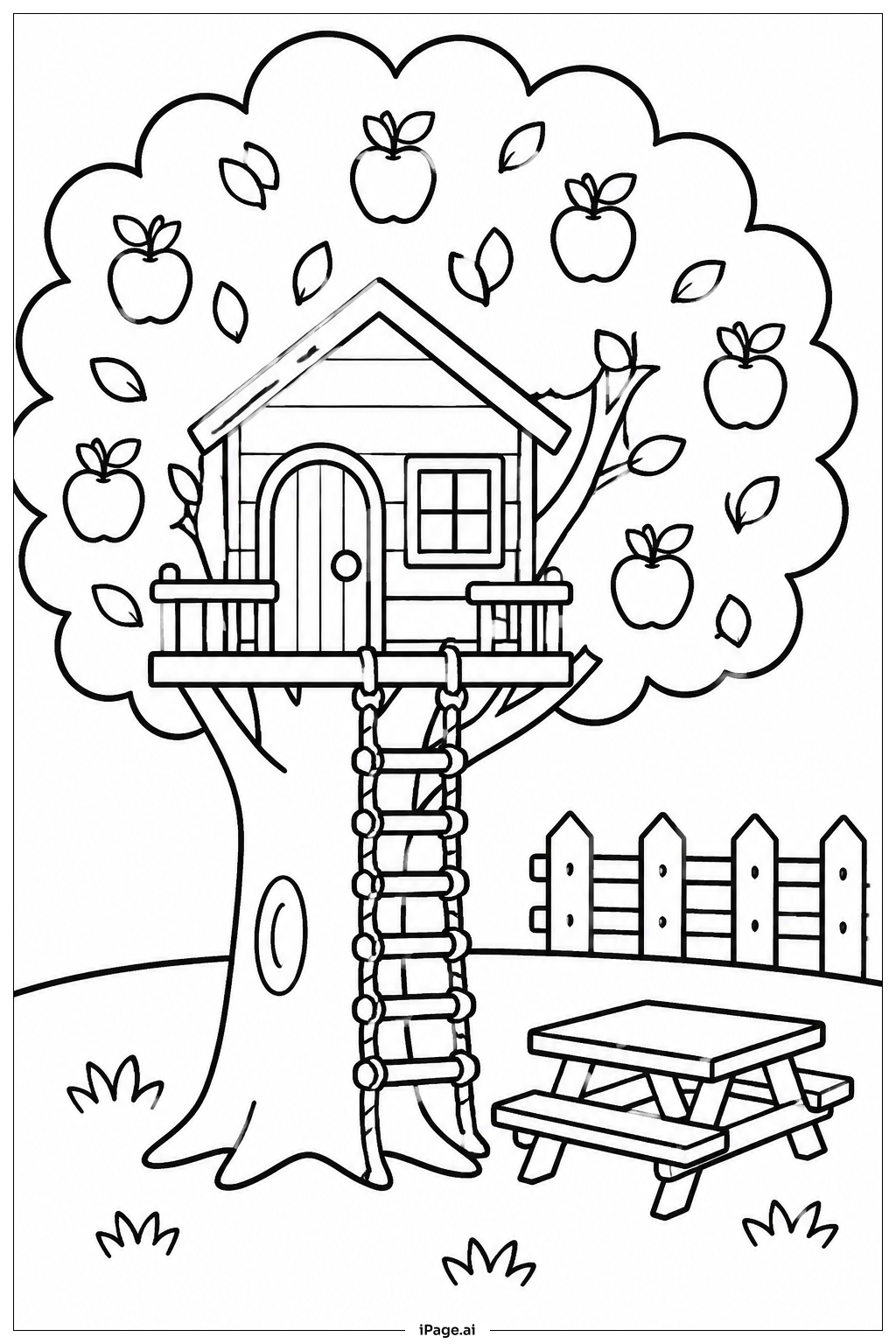
Coloring tips: How to color Apple Tree House coloring page well?
Start with the apple house using various shades of red, from deep crimson to light pink, adding highlights to create dimension. The tree trunk and branches work beautifully in different browns, from rich chocolate to light tan. Color the leaves in vibrant greens, mixing lighter and darker tones for a natural look. The door could be a warm wooden brown or a cheerful color like blue or yellow. Windows might have light blue or yellow tints to suggest glass reflecting sky or warm interior light. The ladder can be natural wood tones or painted colors. Consider adding subtle shading around the door and windows to create depth, and use lighter colors on one side to show sunlight direction.
Coloring challenges: Which parts are difficult to color and need attention for Apple Tree House coloring page?
• Apple House Shading: Creating a three-dimensional rounded appearance on the large apple requires careful color blending and understanding of light sources. Children need to use lighter shades where light hits and darker tones in shadowed areas, particularly around the curved edges and near the door and window openings. This curved surface challenge helps develop advanced shading techniques.
• Tree Bark Texture: The trunk and branches require realistic wood grain and rough bark texture, which demands varied brown tones and careful line work. Young artists must layer colors and use directional strokes to mimic natural wood patterns, avoiding flat uniform coloring while maintaining the cylindrical shape of the trunk.
• Leaf Canopy Depth: The collection of leaves at the top needs color variation to show individual leaves while maintaining overall unity. This requires mixing different green shades, adding yellow or blue tints, and creating shadows where leaves overlap. Understanding which leaves are in front versus behind adds complexity.
• Window and Door Details: The small architectural elements like window panes, door panels, and the ladder rungs need precision coloring within tight spaces. Staying within lines on these tiny features while adding appropriate colors and possible reflections or wood grain tests fine motor control and patience.
• Overall Composition Balance: Coordinating colors across all elements so the apple stands out as the focal point while the tree, leaves, and accessories complement rather than compete requires color theory understanding and planning before starting.
Benefits of coloring books: Advantages of drawing Apple Tree House coloring page
Coloring this Apple Tree House design offers wonderful developmental benefits for children. It enhances fine motor skills through detailed work on small features like window panes and ladder rungs, building hand-eye coordination essential for writing. The image encourages creative thinking as children imagine who lives in this magical home and what adventures happen there. Color selection and blending practice develops artistic confidence and understanding of how colors work together. The nature elements teach about trees, fruit, and organic shapes while the architectural features introduce basic structure concepts. Completing this moderately complex design builds patience, focus, and a sense of accomplishment. The whimsical subject matter sparks storytelling and imaginative play beyond the coloring activity itself.