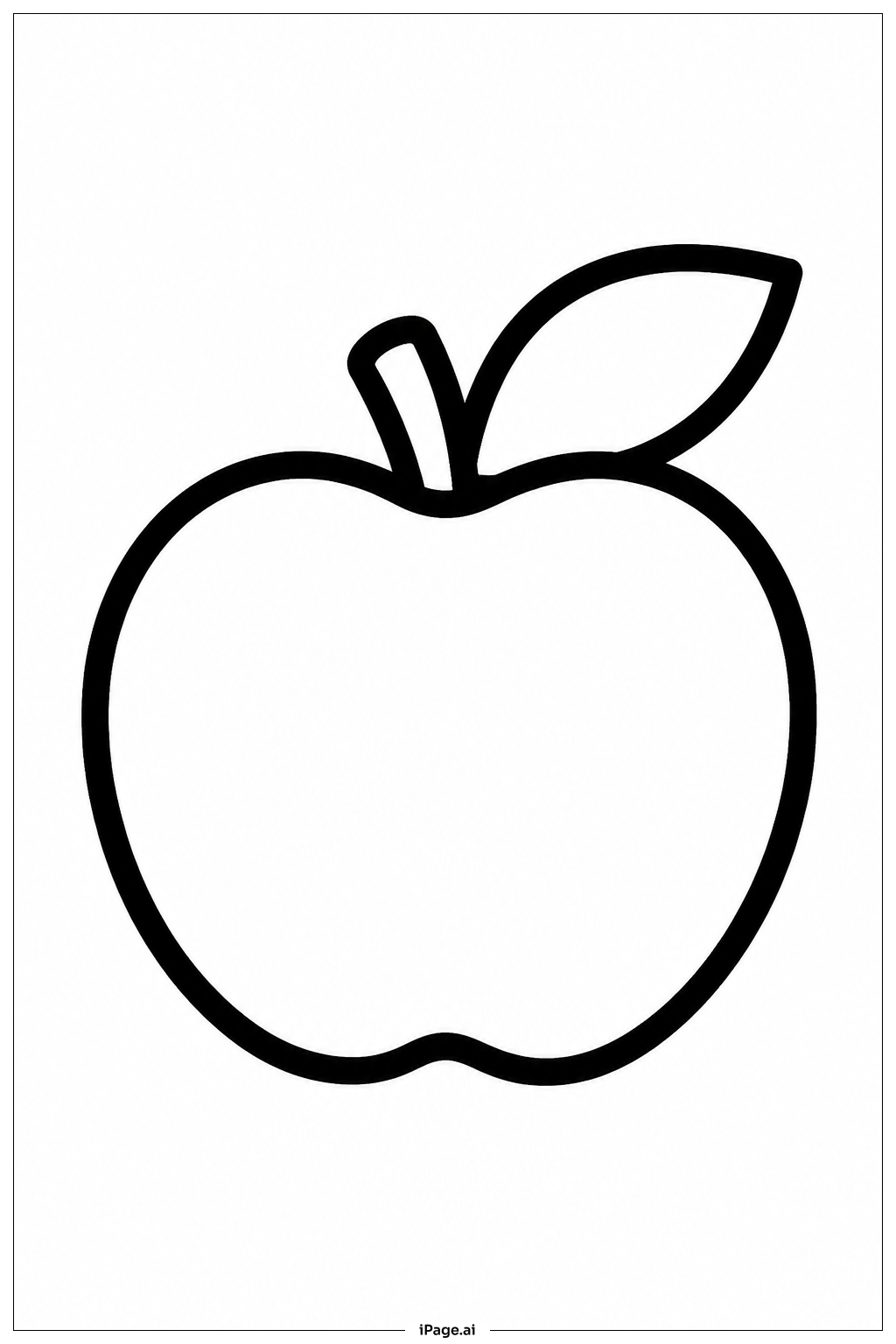
Coloring tips: How to color Single Apple coloring page well?
For coloring this Single Apple, consider using bright red tones for the main body, which is traditional and instantly recognizable. You can add lighter red or pink highlights to show a shiny, fresh look. The leaf can be colored in various shades of green to create depth and texture. Try blending different greens, like light green for the parts catching the light and dark green for shadowed areas. The stem can be a soft brown or even a dark green. Feel free to experiment with creative colors like yellow or orange for a unique apple or to represent different apple varieties. You can also add small touches of white or a very light color to create the effect of light reflecting off the apple's surface.
Coloring challenges: Which parts are difficult to color and need attention for Single Apple coloring page?
• Leaf Vein Details: The small, thin veins on the leaf require careful coloring to stay inside the lines. It can be tricky to add color evenly without losing the delicate vein pattern. • Smooth Surface Shading: Creating a smooth, rounded look on the apple means careful blending of different shades to show its roundness and shine. This requires attention to gradual color transitions. • Stem Coloring: The stem is narrow with subtle curves, so coloring it neatly without crossing into the apple or the leaf can be challenging for younger artists. • Proportion Balance: Maintaining the right balance when coloring the apple's body, leaf, and stem so that no single part overwhelms the rest takes some planning. • Limited Detail Areas: Since the image is simple, adding realistic texture or depth depends on subtle shading rather than many lines, which can be difficult to master for beginners.
Benefits of coloring books: Advantages of drawing Single Apple coloring page
Coloring this Single Apple helps children develop fine motor skills by practicing precise coloring within small shapes like the leaf veins and stem. It encourages attention to detail as they blend colors to create light and shadow effects on the apple’s smooth surface. This activity promotes creativity by allowing kids to choose realistic or imaginative colors. It also helps improve hand-eye coordination and patience since careful strokes are needed to stay inside outlines. Additionally, coloring a familiar object like an apple can spark curiosity about fruits and healthy eating habits.