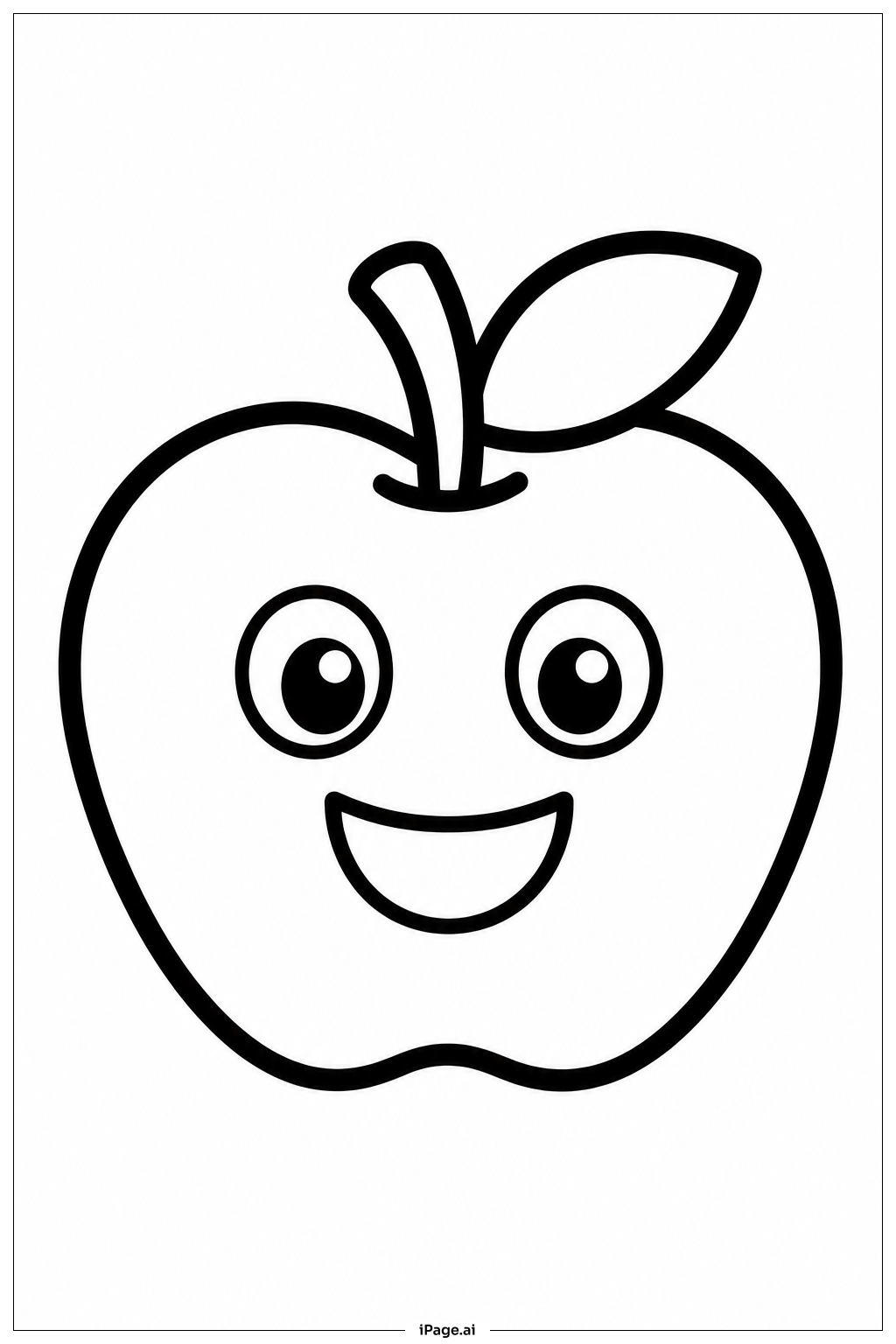
Coloring tips: How to color Happy Apple coloring page well?
For coloring this Happy Apple, use bright and warm colors to enhance its cheerful mood. Start with shades of red for the apple’s body to give it a classic look, or try fun colors like green or yellow to make it unique. The leaf can be colored in fresh green shades to add natural contrast. Use soft pink or light red for the cheeks to show its friendly smile. The eyes and eyebrows can be black or dark brown to stand out clearly. For the arms, you can use a softer tone of the apple’s main color or add some shading to show depth. Remember to keep the colors vibrant and bold to match the happy spirit of this apple character.
Coloring challenges: Which parts are difficult to color and need attention for Happy Apple coloring page?
• Smooth Round Shape: Coloring the large, round body of the apple evenly can be tricky. It requires gentle, consistent strokes to avoid uneven patches and to create a smooth finish.
• Small Details on the Face: The eyes, eyebrows, and mouth are small but important parts that need careful coloring to maintain their friendly expression without going outside the lines.
• Leaf Texture: Adding different shades of green on the leaf to show veins and texture can be challenging, especially for younger children who are still practicing fine motor control.
• Arm Positioning: The arms stretch out in a wave, and coloring them to appear natural and three-dimensional requires subtle shading to avoid a flat look.
• Cheek Highlighting: Coloring the cheeks with soft gradients or rosy highlights to suggest happiness involves blending, which can be difficult without practice.
Benefits of coloring books: Advantages of drawing Happy Apple coloring page
Coloring this Happy Apple helps children develop fine motor skills by practicing controlled movements within curves and small areas like the facial features. It encourages creativity by allowing them to experiment with different color choices, from traditional apple colors to imaginative variations. The simple but expressive design fosters emotional connection, helping young artists recognize and recreate joyful expressions. Working on this image also boosts concentration and patience as children focus on shading and blending to bring the apple to life. Overall, coloring the Happy Apple combines fun and learning in a way that is rewarding and accessible for kids.