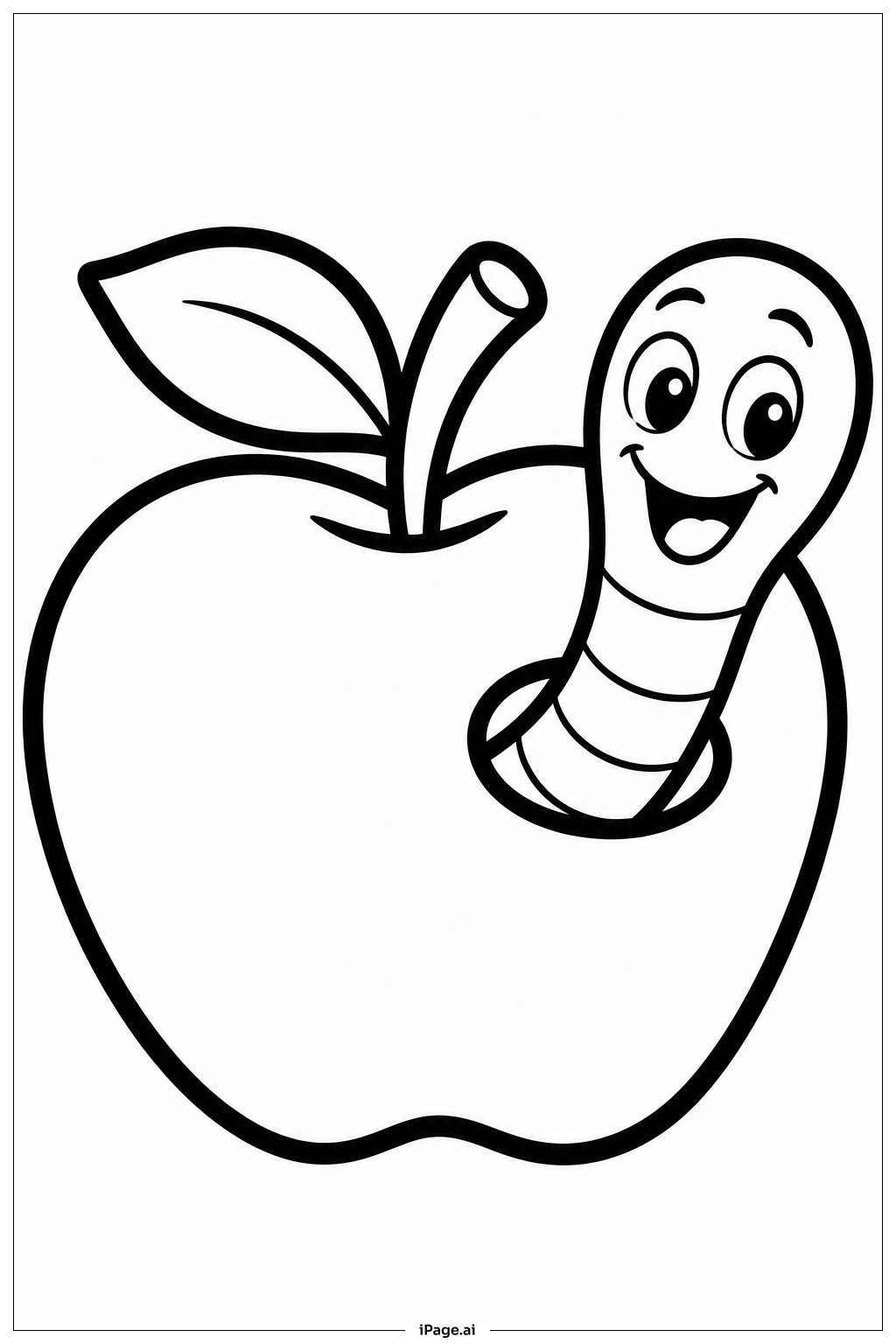
Coloring tips: How to color Apple With Worm coloring page well?
To color this apple, start by choosing a bright red or green shade for the apple skin. You can even blend light and dark red tones to show roundness and shine. Use a fresh green color for the leaf to make it look lively. For the stem, a brown or tan shade works well. The worm can be colored in fun shades like light green, pink, or yellow to make it stand out and look friendly. Add highlights with lighter colors on the apple and worm for a 3D effect. Feel free to get creative and add tiny details like small dots or stripes to the worm for extra fun.
Coloring challenges: Which parts are difficult to color and need attention for Apple With Worm coloring page?
• Shape Shading: The round shape of the apple requires shading to show its volume properly, which might be tricky for younger children still learning about light and shadows. • Small Details: The worm’s face has small eyes and a smiling mouth, which need careful coloring inside tight spaces without going outside the lines. • Smooth Leaf Texture: Coloring the leaf evenly without streaks might be challenging, as kids have to fill the shape with consistent strokes. • Overlapping Elements: The worm appears inside the apple, so coloring the edges where the worm meets the apple requires precision to keep the two distinct and clean. • Color Blending: Adding highlights to both the apple and worm for a realistic look requires blending multiple colors smoothly, which is an advanced skill for younger artists.
Benefits of coloring books: Advantages of drawing Apple With Worm coloring page
Coloring this image helps children improve their fine motor skills by practicing precise coloring within small areas like the worm and leaf. It encourages creativity by allowing kids to explore different color combinations for the apple and worm. The image also teaches observation skills through shading and highlighting techniques that show volume and texture. Engaging with this image promotes focus and patience, as some parts require careful attention to detail. Overall, it offers a fun way to learn about nature and develop artistic abilities in a playful context.