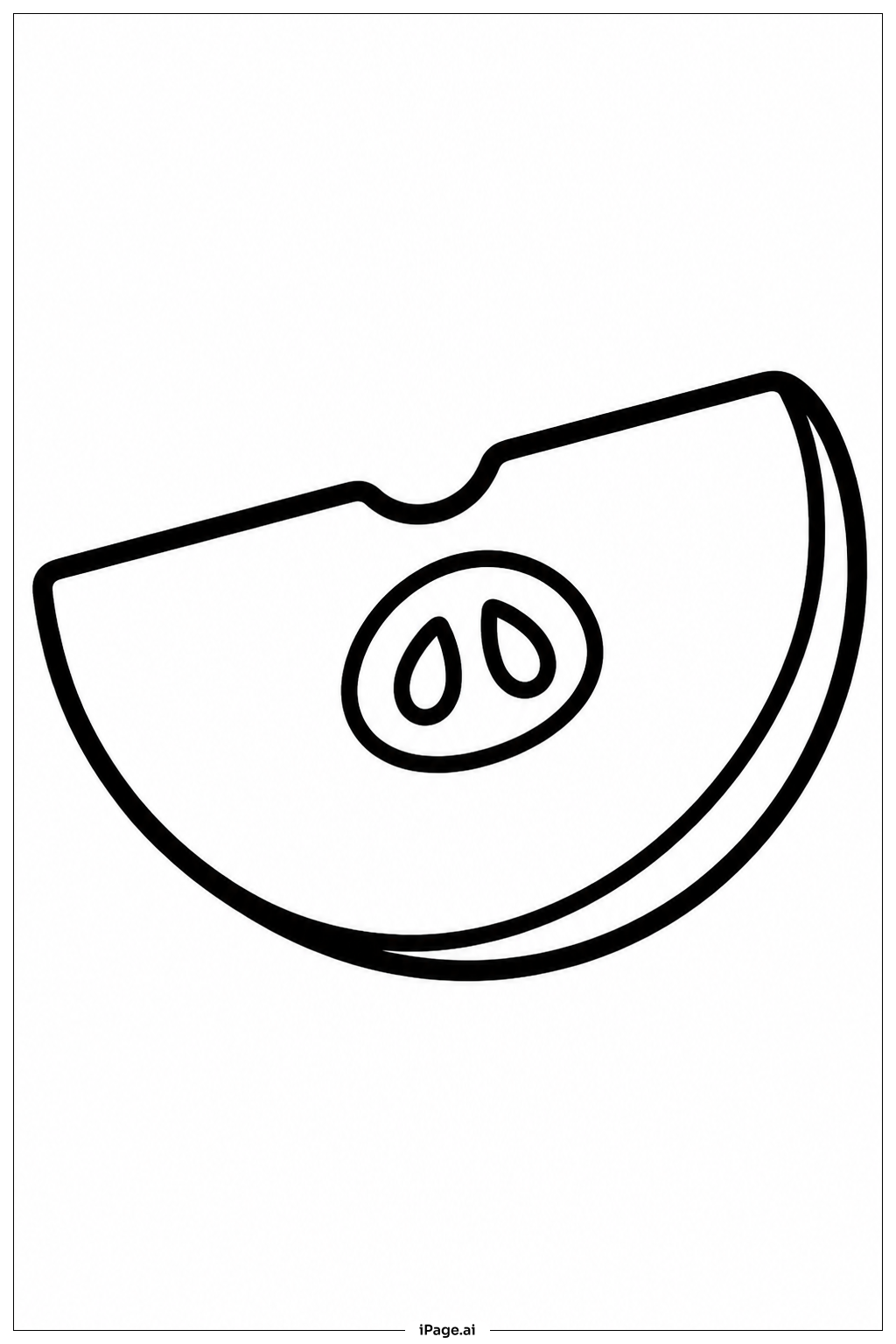
Coloring tips: How to color Apple Slice coloring page well?
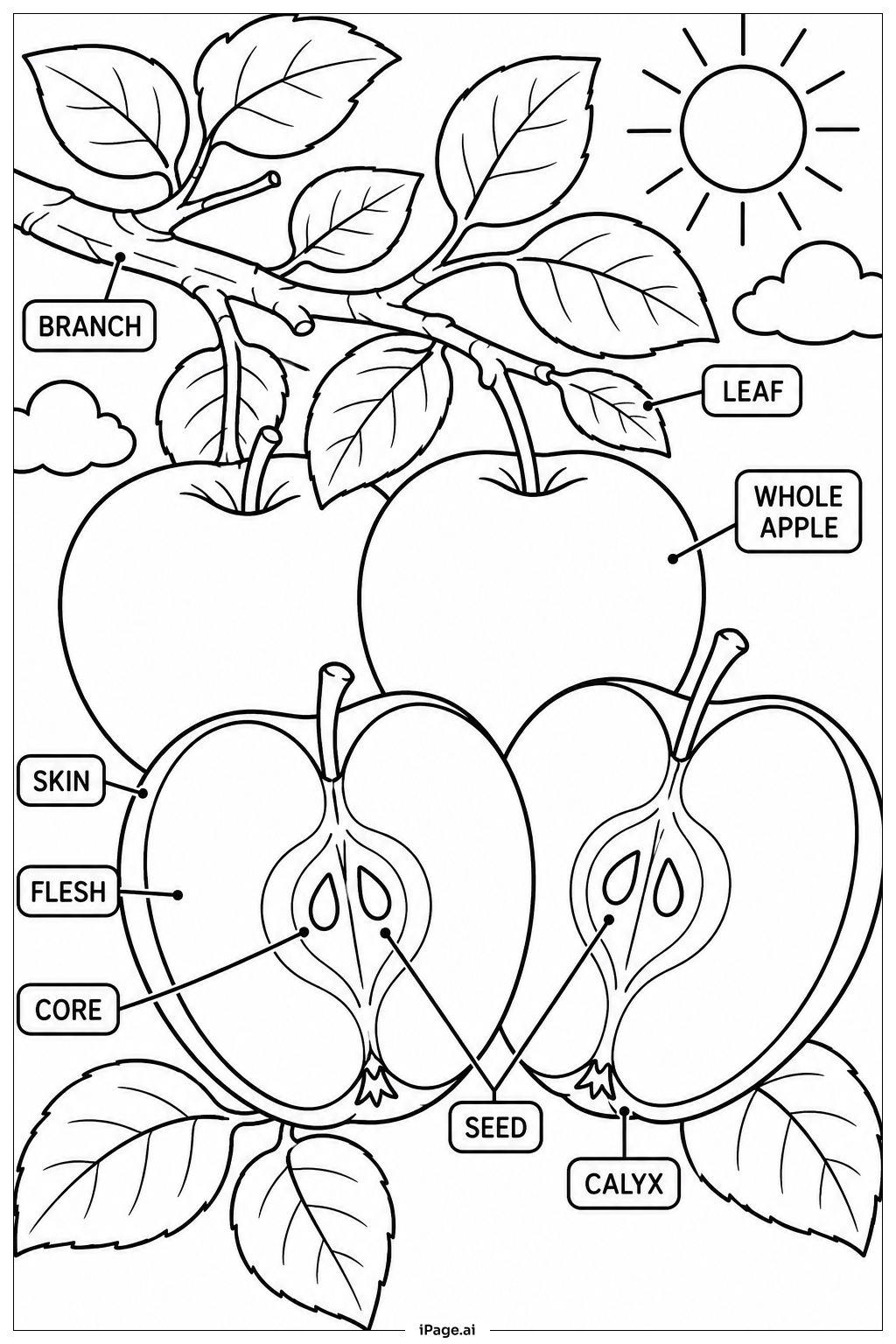
Start with the outer skin of the apple slice. You can use a bright red, a deep green, or a warm yellow — all are natural apple colors. Pick your favorite! For the inner flesh, use a light cream or soft pale yellow. This gives it a fresh, juicy look. The seeds can be colored dark brown or black. The seed pockets around them look great in a slightly deeper tan or beige. For the skin edge, try adding a slightly darker shade along the rim to give it depth. You can even blend two colors on the flesh to make it look shiny and ripe. If you want a fun twist, try a rainbow apple slice using many colors on the flesh. There are no strict rules — just enjoy the process and make it your own!
Coloring challenges: Which parts are difficult to color and need attention for Apple Slice coloring page?
• Coloring the Flesh Smoothly: The inner flesh of the apple slice covers a large open area. Keeping the color even and smooth without streaks or patches can be tricky, especially when using colored pencils. Try coloring in small circular strokes or gentle back-and-forth lines to fill it in neatly.
• Staying Within the Seed Pockets: The seeds and their surrounding pockets are small and closely grouped near the center. Coloring these tiny shapes without going outside the lines takes a steady hand and a sharpened pencil or a fine-tipped marker.
• Creating Depth on the Skin Edge: The curved outer skin is a narrow strip along the top and side of the slice. Adding a slightly darker shade along this edge to show thickness and depth can be challenging because the area is thin and easy to overcolor.
• Blending the Flesh Gradient: To make the flesh look realistic and juicy, you may want to blend a lighter shade near the center and a slightly deeper tone near the skin. Smooth blending without harsh color lines is a skill that takes patience and practice.
• Keeping Colors Consistent: Because the flesh, skin, seeds, and core are all different parts touching each other, it can be easy to accidentally use similar shades that make the parts hard to tell apart. Choosing clearly different colors for each section helps the slice look defined and lively.
Benefits of coloring books: Advantages of drawing Apple Slice coloring page
Coloring this apple slice page brings many great benefits for kids and beginners alike. First, it helps build fine motor skills. Carefully staying within the lines of the small seeds and thin skin edge trains the hand muscles and improves pencil control. Second, it teaches color awareness. Choosing between red, green, or yellow for the skin, and finding the right soft tone for the flesh, helps children learn how colors work together in nature. Third, it encourages creativity. There is no single correct way to color an apple slice, so children feel free to experiment and express themselves. Fourth, it builds focus and patience. The small detailed areas like the seed pockets require concentration, which helps children practice sitting still and working carefully. Fifth, it is a calming activity. The simple, familiar shape of an apple slice is comforting and satisfying to color, making it a great way to relax after a busy day. Overall, this Coloring Pages image is a fun and healthy way to spend creative time.