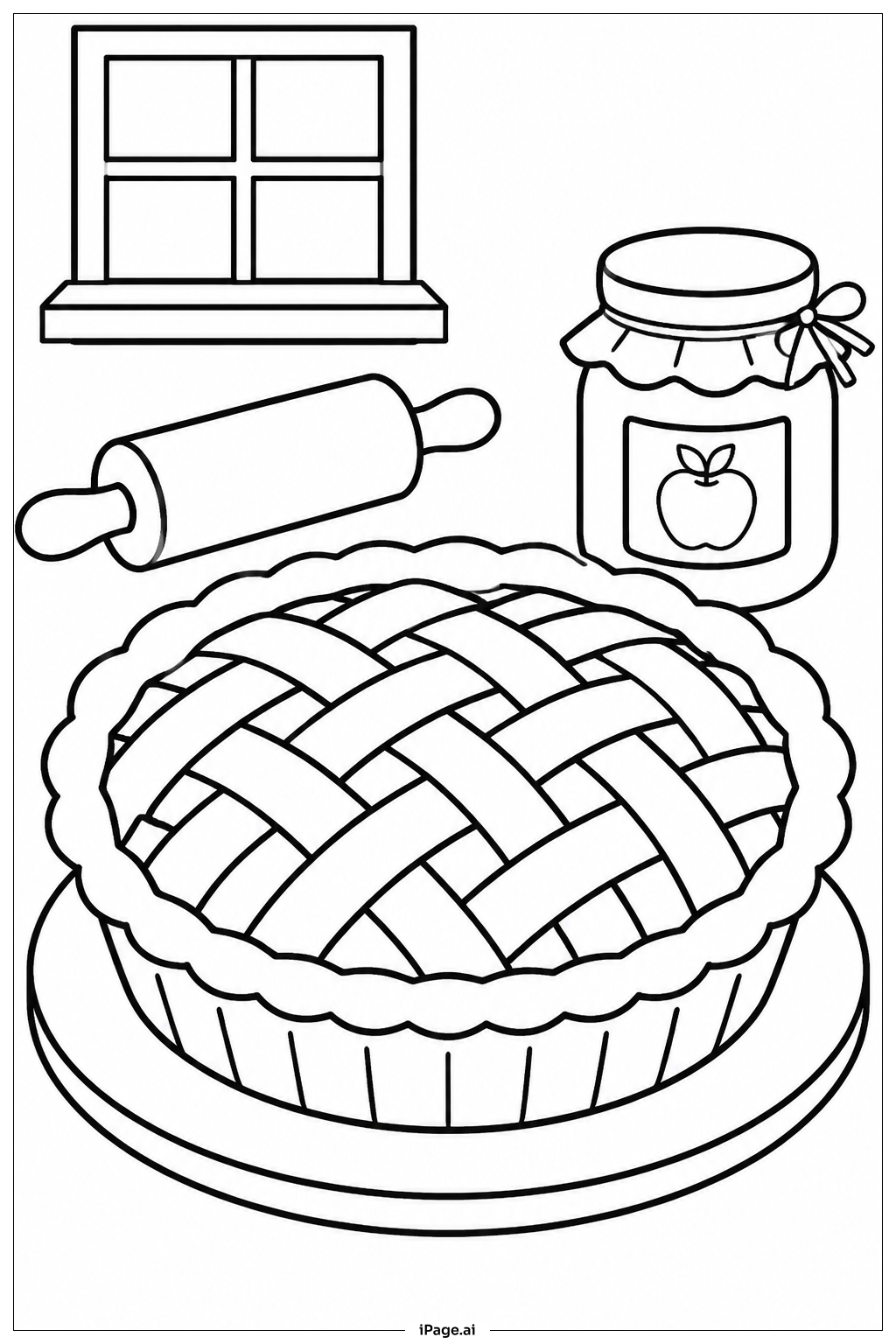
Coloring tips: How to color Apple Pie on Table coloring page well?
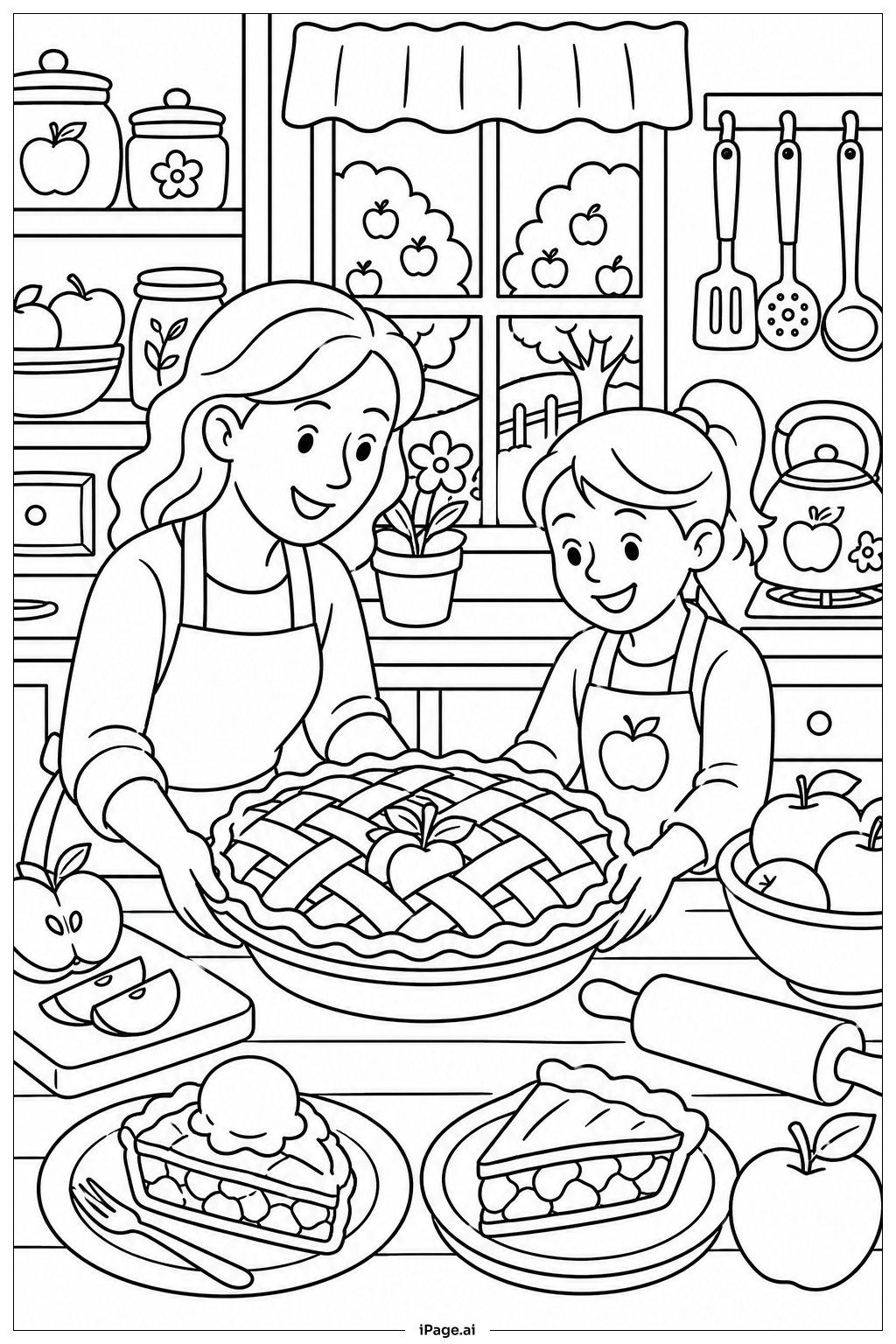
For the apple pie, use golden yellows and warm browns for the lattice crust to create a freshly baked appearance. Color the visible apple filling with shades of amber, caramel, and light brown mixed with touches of red to show the cooked apples. The crimped edges can be darker brown to show where the crust has caramelized. Use light gray or white for the steam rising from the pie. For the whole apples on the table, choose bright reds, greens, or a combination of both colors to create realistic apple varieties. Add green to the leaves and brown for the stems. The wooden table can be colored in various shades of brown, tan, or honey tones, with darker lines following the wood grain to add texture and dimension.
Coloring challenges: Which parts are difficult to color and need attention for Apple Pie on Table coloring page?
• Lattice Pattern Precision: The interwoven lattice crust requires careful attention to create depth and dimension. Colorists need to distinguish between the top strips and bottom strips of dough, using lighter and darker shades to show which pieces cross over and which go under. This overlapping effect challenges spatial reasoning and requires consistent shading techniques throughout the pattern.
• Wood Grain Texture: The table surface presents the challenge of creating realistic wood texture through color variation. Colorists must follow the directional lines of the grain while blending multiple shades of brown smoothly. Creating the natural variations found in wood, including knots and lighter and darker streaks, requires patience and careful observation of how real wood appears.
• Apple Filling Visibility: Coloring the apple filling visible through the lattice openings demands a different approach than the crust. The filling needs to appear deeper and more recessed than the raised crust strips. This requires understanding light and shadow placement, with darker colors in the center of each opening and gradual lightening toward the edges where light would naturally hit.
• Steam Effect: Creating convincing steam rising from the hot pie is particularly challenging because it requires subtlety. Using too much color makes the steam look solid, while too little makes it invisible. Colorists must master light pressure and gentle strokes with white, very light gray, or leaving areas uncolored to achieve a wispy, translucent appearance that suggests warmth and freshness.
Benefits of coloring books: Advantages of drawing Apple Pie on Table coloring page
Coloring this apple pie scene offers wonderful benefits for developing fine motor skills, especially when working on the intricate lattice pattern that requires precise movements and hand-eye coordination. The repetitive nature of coloring the woven strips helps build patience and focus while creating a satisfying sense of accomplishment as the pattern comes to life. This image encourages color theory exploration as children and adults experiment with creating warm, appetizing tones and learn how different shades work together to create realistic food textures. The comforting subject matter promotes relaxation and positive emotions, making it an excellent mindfulness activity. Additionally, this coloring page can spark conversations about baking, family traditions, and seasonal activities, connecting the creative process to real-world experiences and memories.