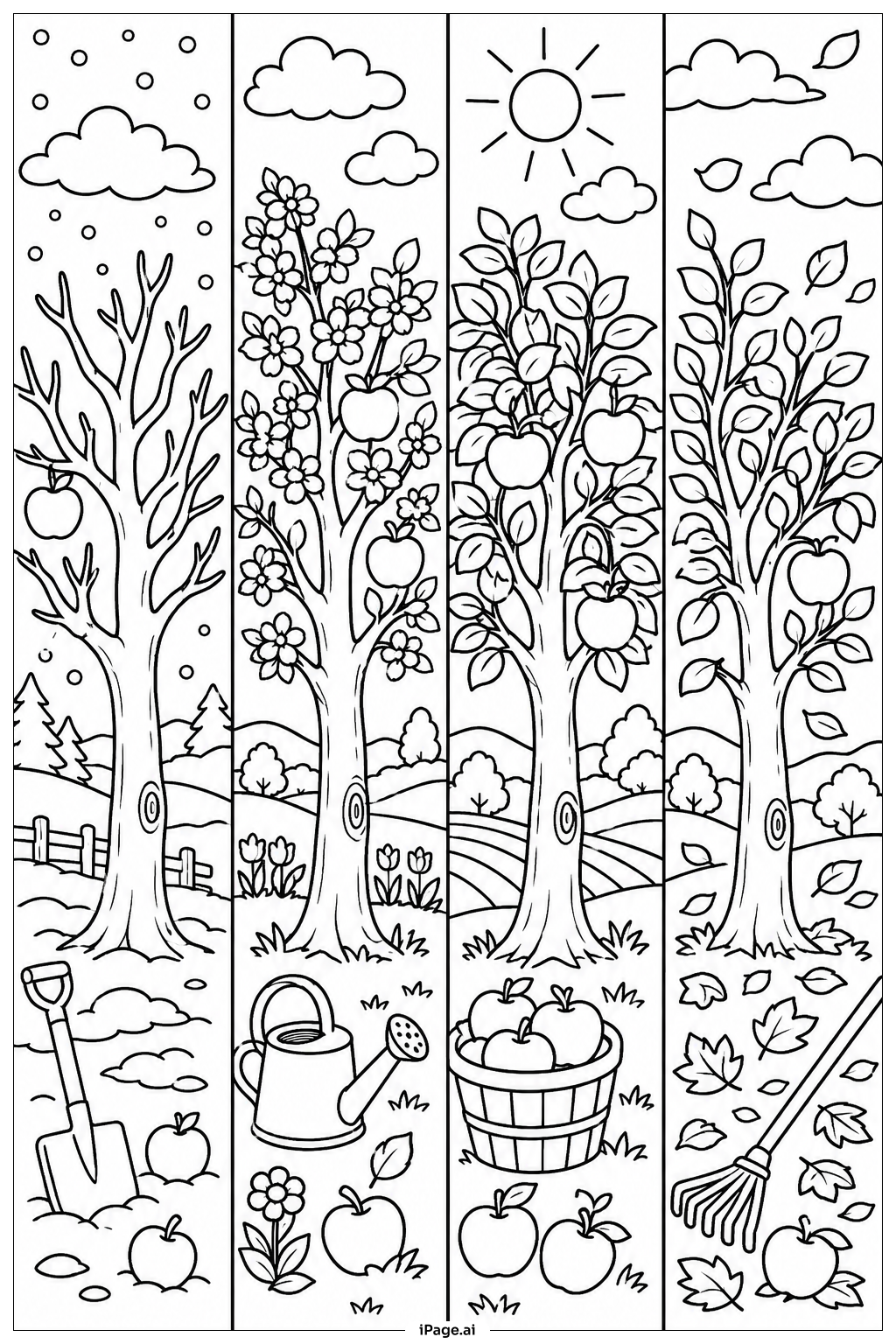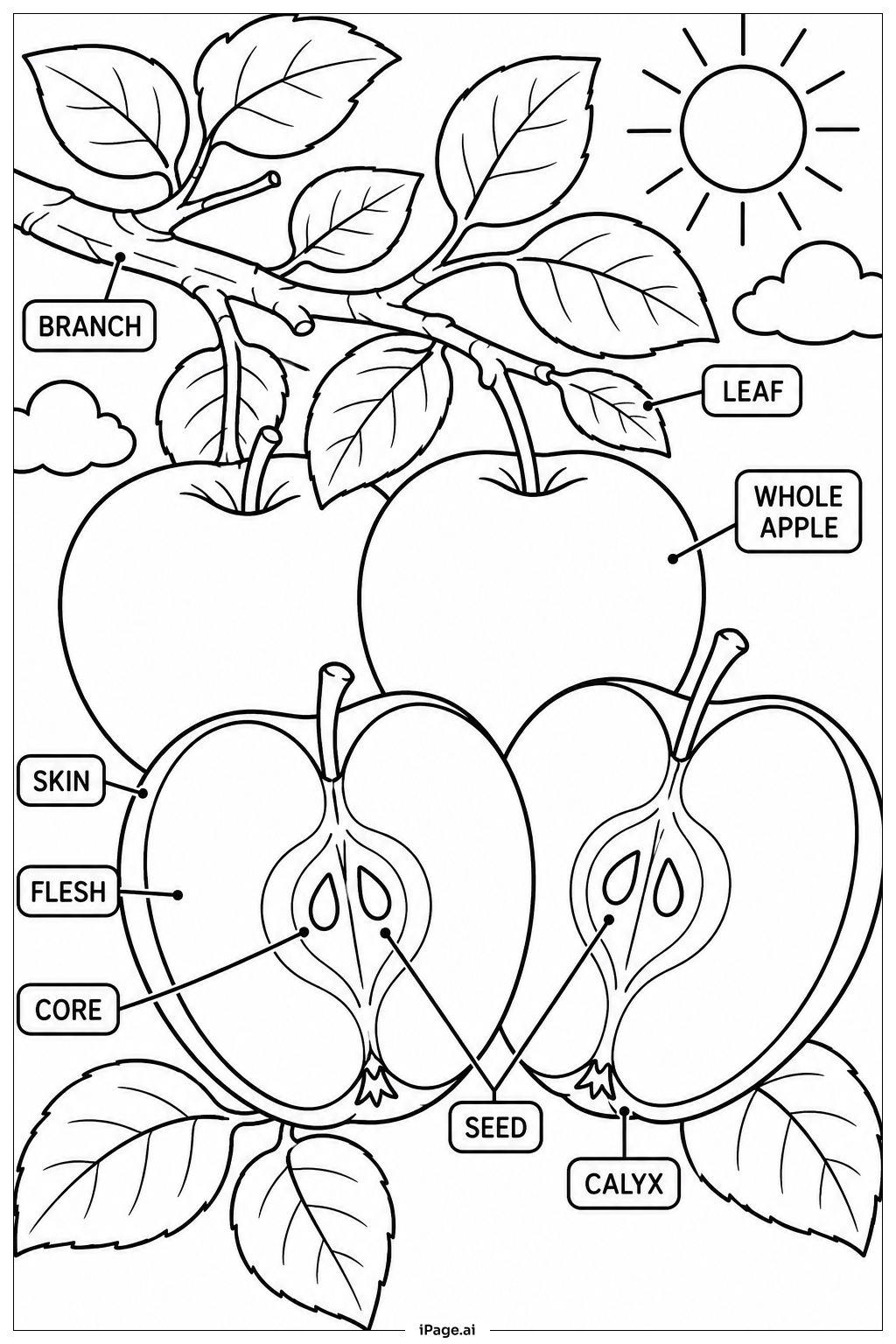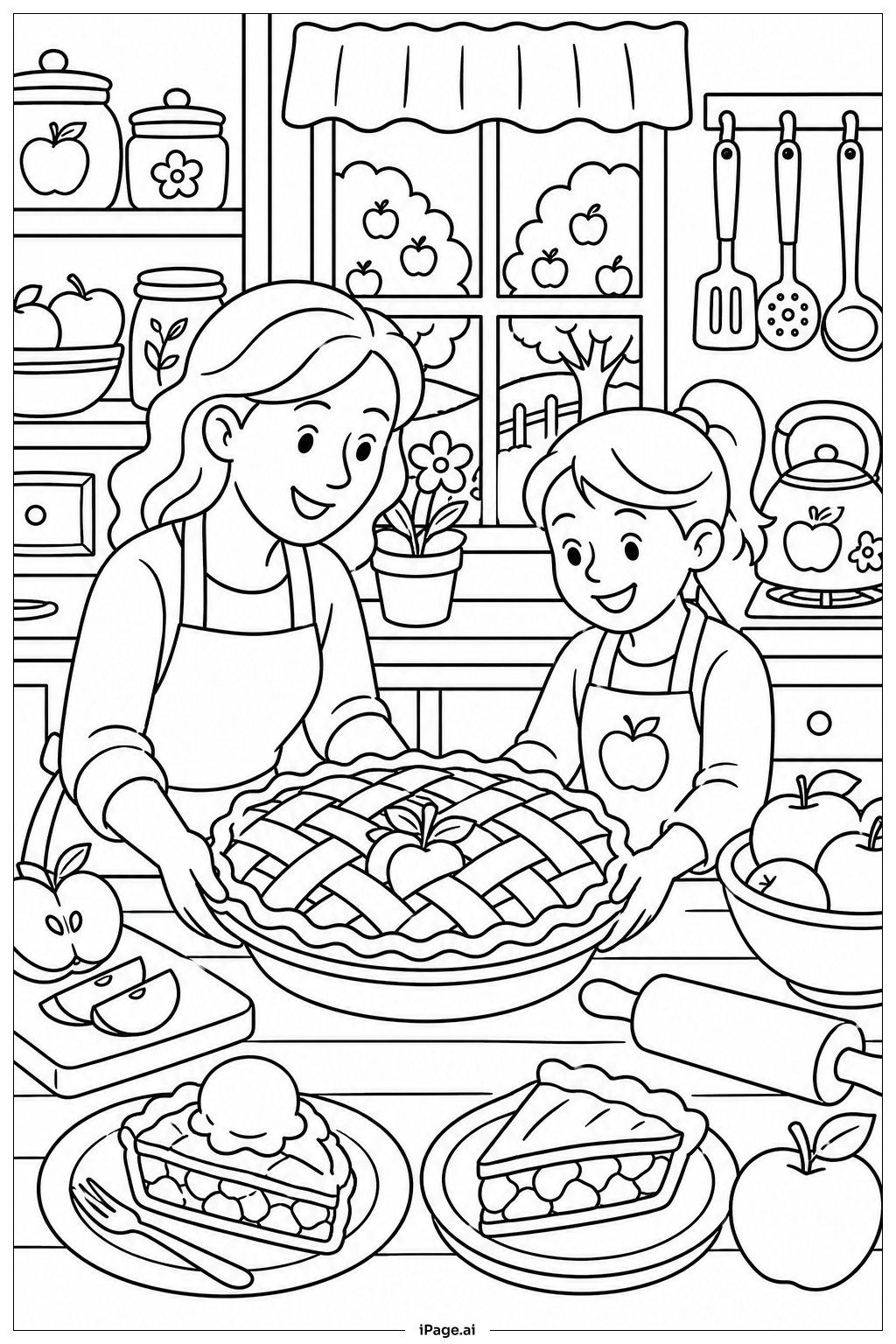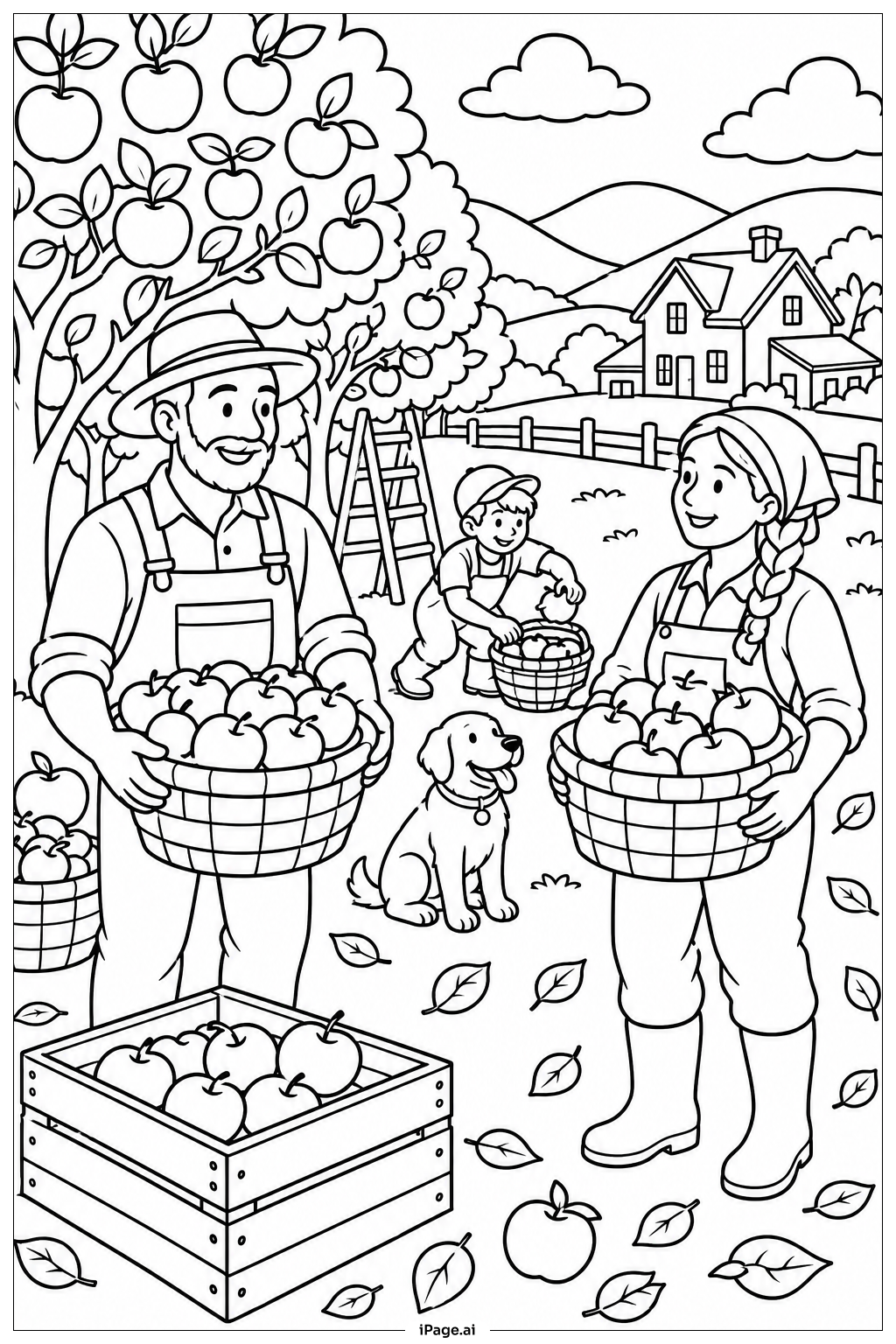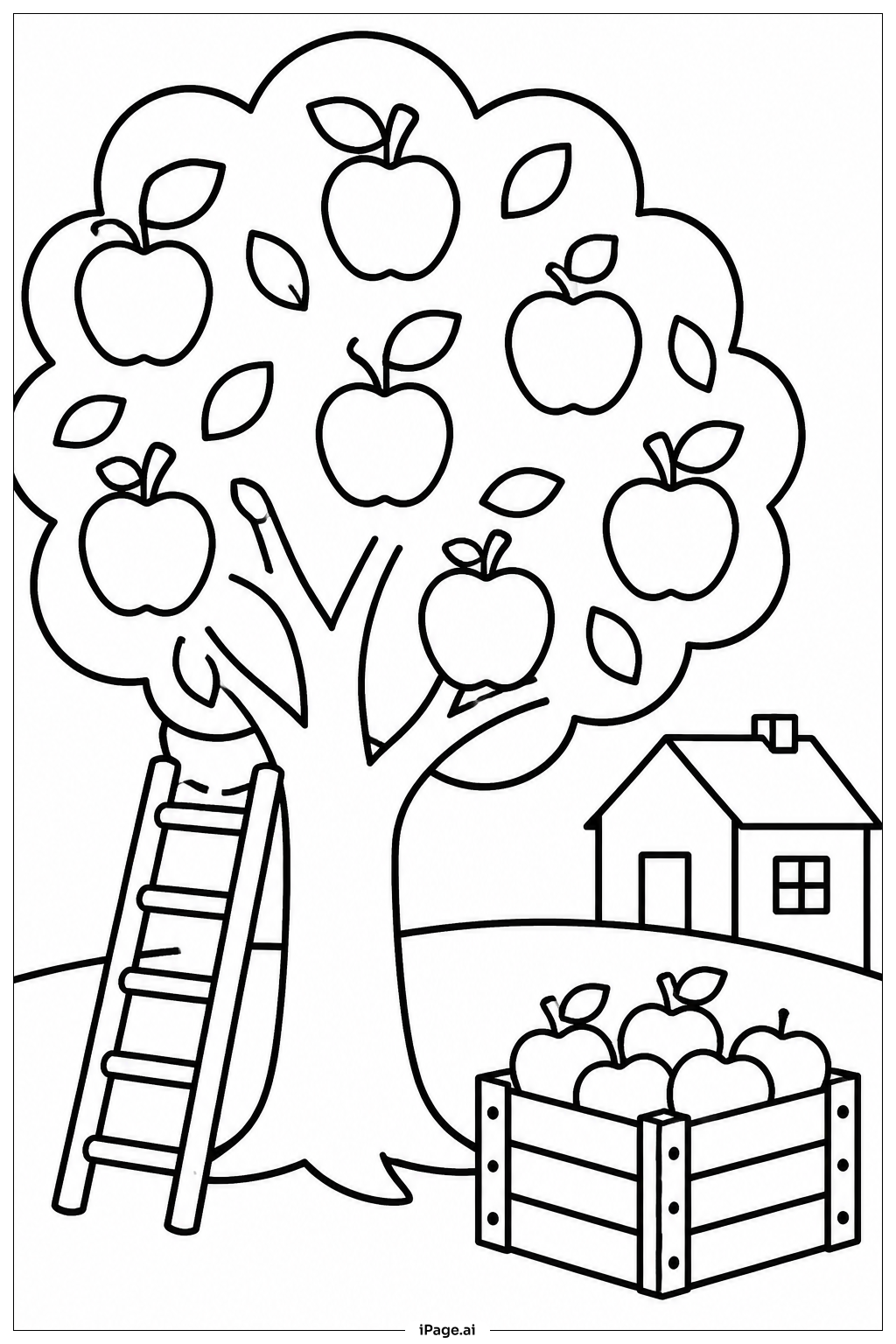
Coloring tips: How to color Apple Orchard Tree coloring page well?
Start with the tree trunk and branches. Use dark brown or warm tan for the bark. Add lighter brown streaks to show texture and depth. For the leaves, use different shades of green — bright green for young leaves, darker green for shaded ones. This makes the tree look full and real. Color the apples in classic red, or mix in yellows and greens for variety. Leave a small white dot on each apple to make it look shiny. Use golden yellow or light orange for apples in sunlight. Color the grass beneath the tree in fresh green, and add a soft blue or light gray sky in the background if there is space. Take your time with each section. Small, careful strokes work best for leaves and apples.
Coloring challenges: Which parts are difficult to color and need attention for Apple Orchard Tree coloring page?
• Overlapping Leaves and Apples: The canopy is packed with leaves and fruit that overlap each other. It can be tricky to color each shape separately without blending into the next one. Take your time and use the tip of your colored pencil or marker to stay within the lines. Switching between different shades of green and red helps each element stand out clearly.
• Tree Bark Texture: The trunk and branches have rough, uneven lines meant to show real bark texture. Filling these narrow grooves and ridges with color takes patience and a sharp pencil. Using two tones of brown — one darker, one lighter — and coloring in the direction of the lines will give the bark a natural, three-dimensional look.
• Depth and Shadow in the Canopy: A real tree has areas of light and shadow. The outer leaves catch more light, while leaves deeper inside the canopy are darker. Showing this depth means using at least two or three shades of green. This is a more advanced technique, but even a simple light-and-dark approach makes a big difference.
• Small Fallen Apples at the Base: The apples resting on the ground near the roots are small and close together. Coloring them neatly without going outside their outlines requires a fine-tipped tool and a steady hand. These tiny details reward careful, slow coloring.
• Consistent Apple Coloring: With many apples spread across the tree, keeping them looking consistent — same base color, same highlight spot — takes focus. Coloring all apples of one color before moving to the next helps keep things tidy and visually balanced.
Benefits of coloring books: Advantages of drawing Apple Orchard Tree coloring page
Coloring this apple orchard tree page offers a wonderful range of benefits for kids and beginners alike. Working through the many leaves, apples, and branches is a great way to build fine motor skills and hand control. Staying inside the lines and switching between tools strengthens the small muscles in the hands and fingers, which supports handwriting and other precise tasks.
The variety of shapes in this image — round apples, curved leaves, and rough bark — helps young colorists learn to observe details and think about how real objects look. Choosing colors for the apples and leaves encourages creative thinking and builds early color theory skills, like understanding light, shadow, and contrast.
The repetitive, focused nature of coloring a detailed tree is also deeply calming. It helps reduce stress and supports mindfulness, making it a healthy screen-free activity for children after school. For older kids, the challenge of adding depth and texture to the image develops patience and artistic confidence.
Coloring nature scenes like an orchard also sparks curiosity about the natural world — where food comes from, how trees grow, and the beauty of the changing seasons. It is a simple, joyful activity that quietly teaches while keeping hands and minds happily busy.