Coloring tips: How to color Apple Blossom Branch coloring page well?
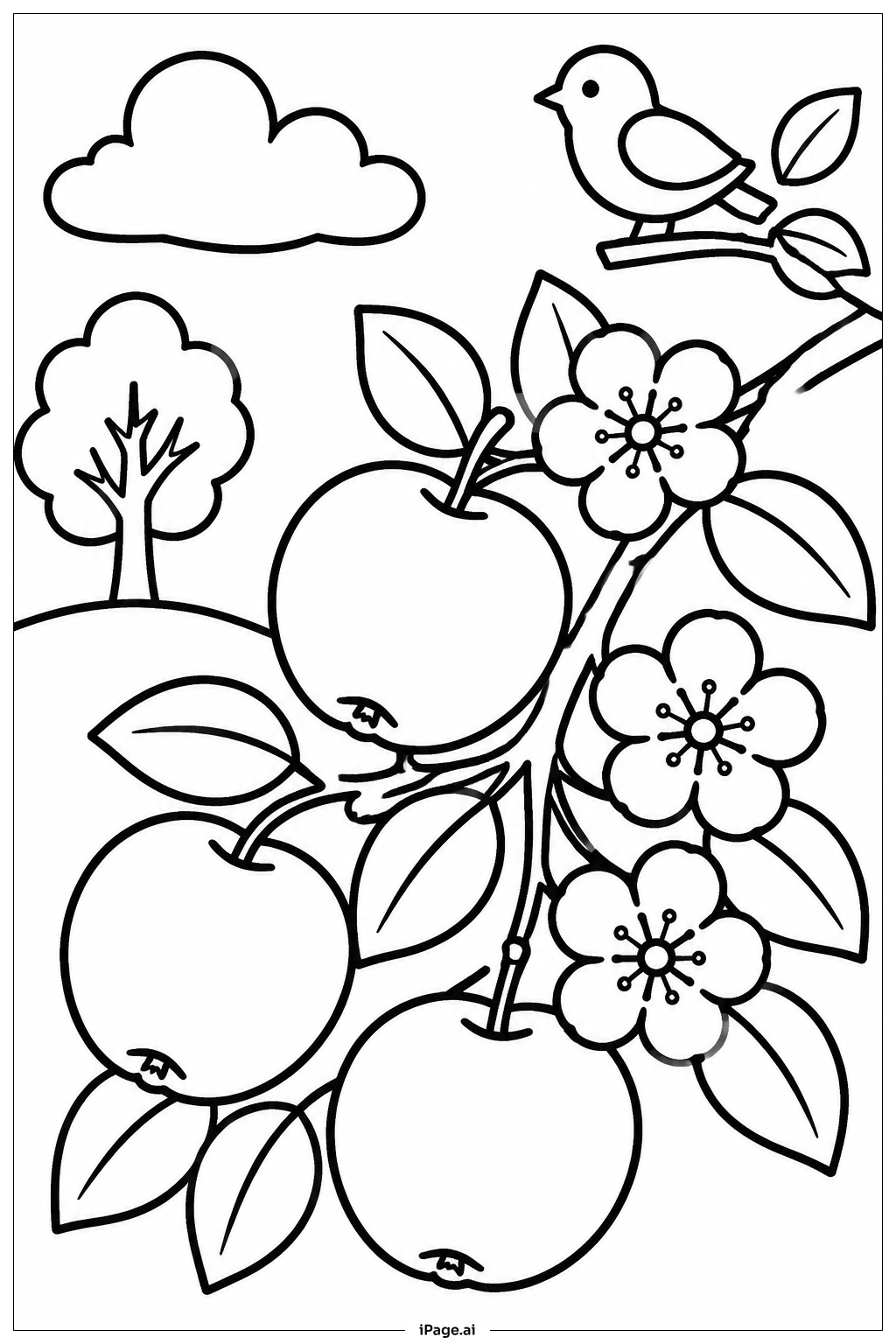
For this Apple Blossom Branch, start by using gentle shades of pink and white for the apple blossoms petals. You can blend soft pinks to show areas where the sunlight hits the petals and lighter whites where shadows are minimal. Use fresh green colors for the leaves and stem. Try mixing different greens to make the leaves look lively and natural. The branch itself can be colored with browns and a touch of gray to reflect real bark textures. You can add a soft blue background to represent the clear sky in spring. Don’t hesitate to use subtle shading to make the flowers and leaves stand out beautifully.
Coloring challenges: Which parts are difficult to color and need attention for Apple Blossom Branch coloring page?
• Fine Petal Details: The apple blossoms have many thin petals that overlap and create delicate shapes, making it challenging to color inside small spaces neatly. Careful attention is needed to avoid coloring outside the petal edges.
• Varying Shades: To make the blooms look realistic, blending different shades of pink and white is required. Beginners might find it difficult to smoothly transition colors without harsh lines.
• Stamen and Pistil Complexity: The flower centers have multiple fine parts that require precise coloring to bring out their detailed structure without smudging.
• Leaf Shapes and Textures: The leaves near the blossoms have irregular shapes and vein lines that can be tricky to color while keeping a natural look.
• Branch Texture: The bark of the branch has subtle texture changes. Representing this using different brown tones takes patience and layering skills, which can be challenging for younger colorers.
Benefits of coloring books: Advantages of drawing Apple Blossom Branch coloring page
Coloring this Apple Blossom Branch encourages children and adults to observe nature closely. It helps develop fine motor skills through careful coloring of small, detailed flower petals and leaves. The process of blending pinks, greens, and browns sharpens color recognition and shading techniques. This activity enhances concentration as colorers pay attention to tiny parts like stamens and veins. Moreover, coloring such natural images fosters an appreciation for springtime beauty, encouraging mindfulness and relaxation. The image also allows for creativity in choosing color combinations and backgrounds, promoting self-expression while boosting confidence.