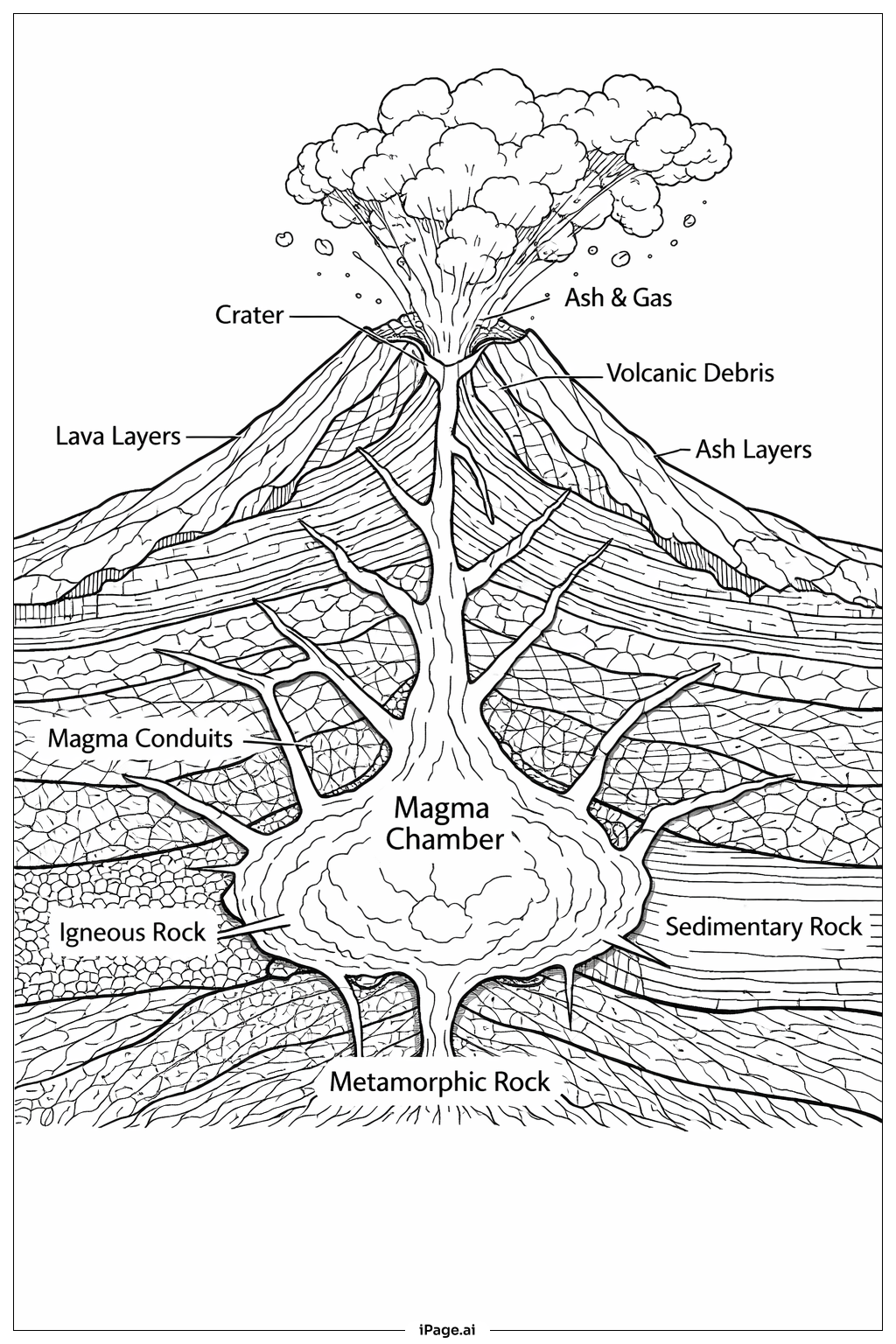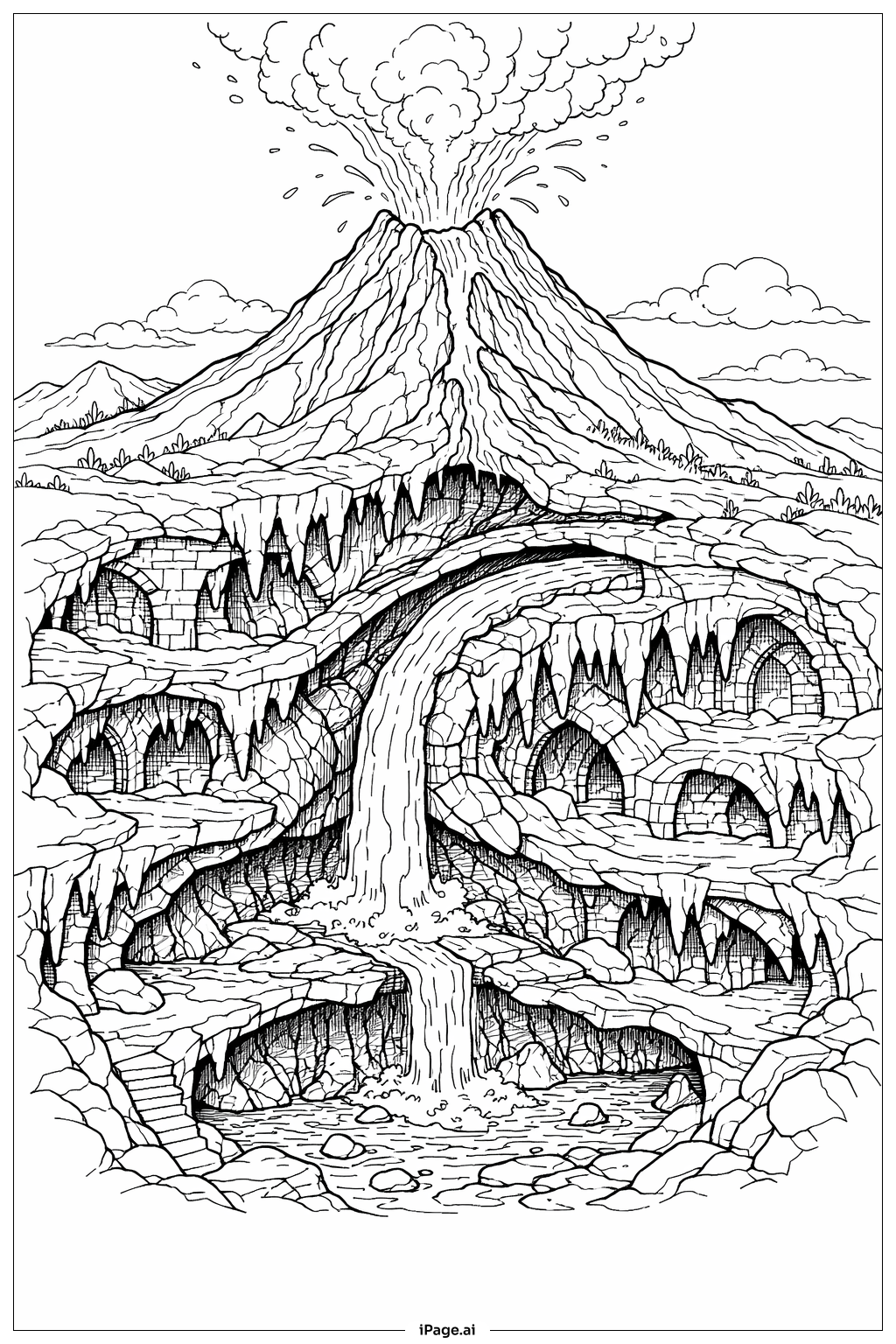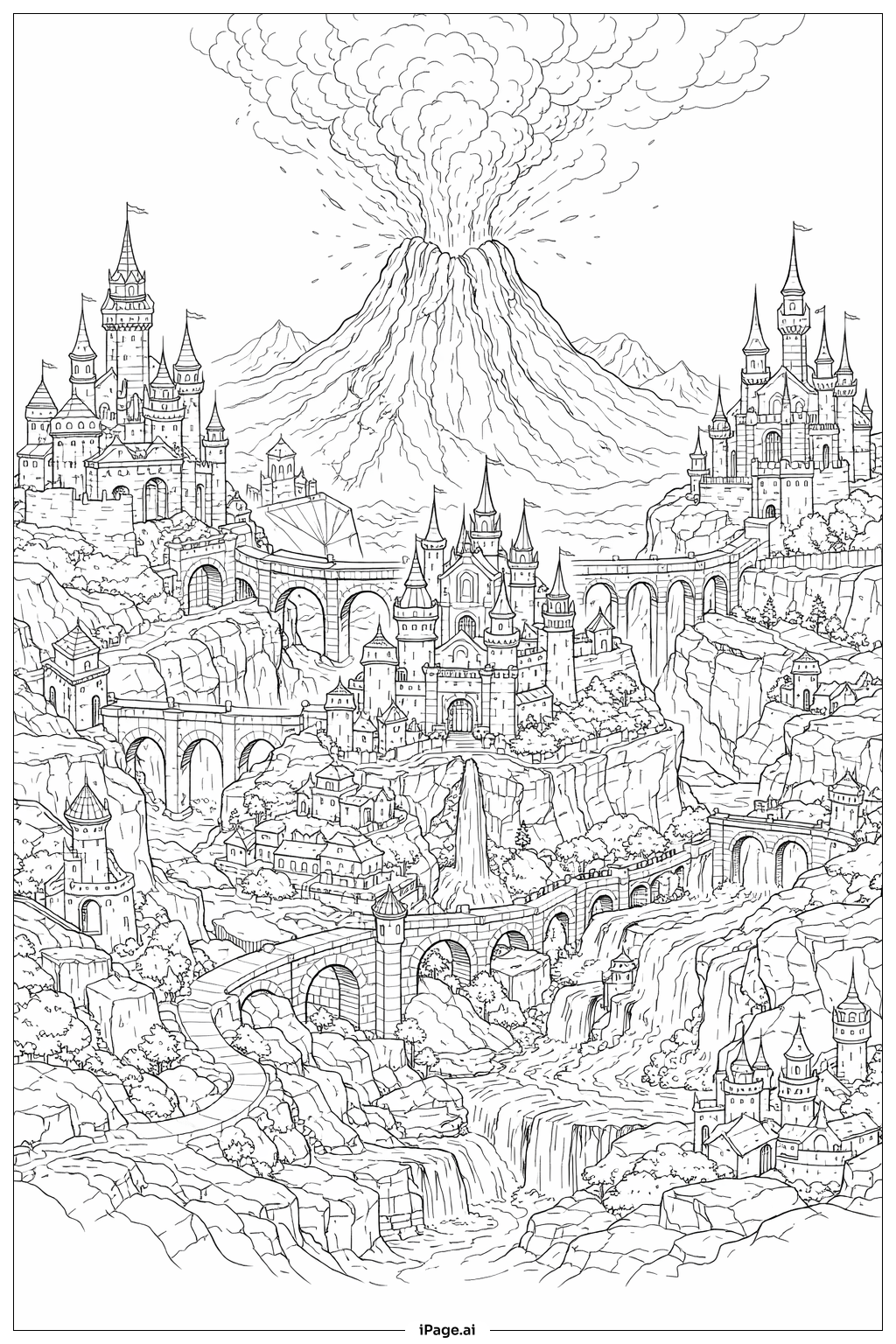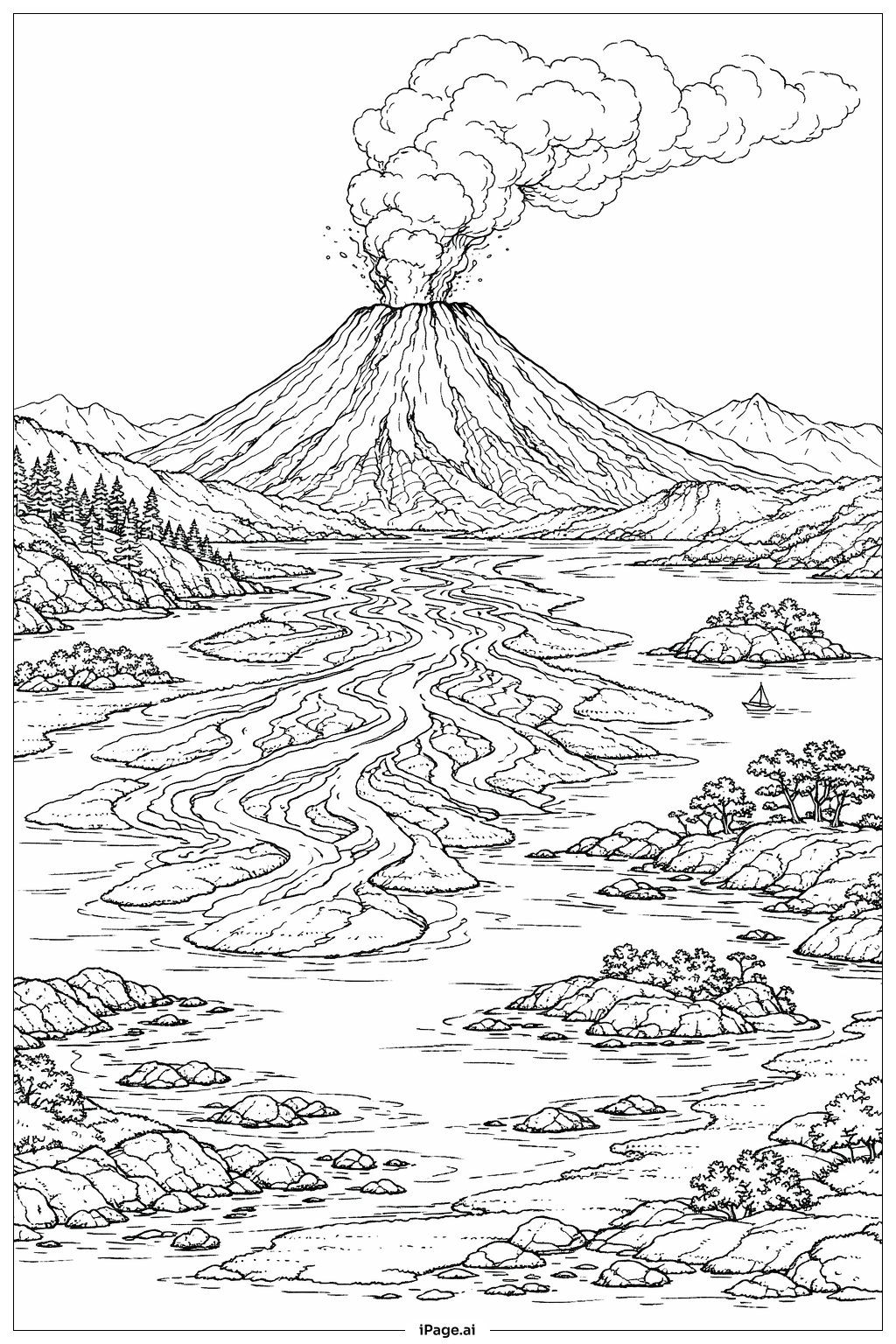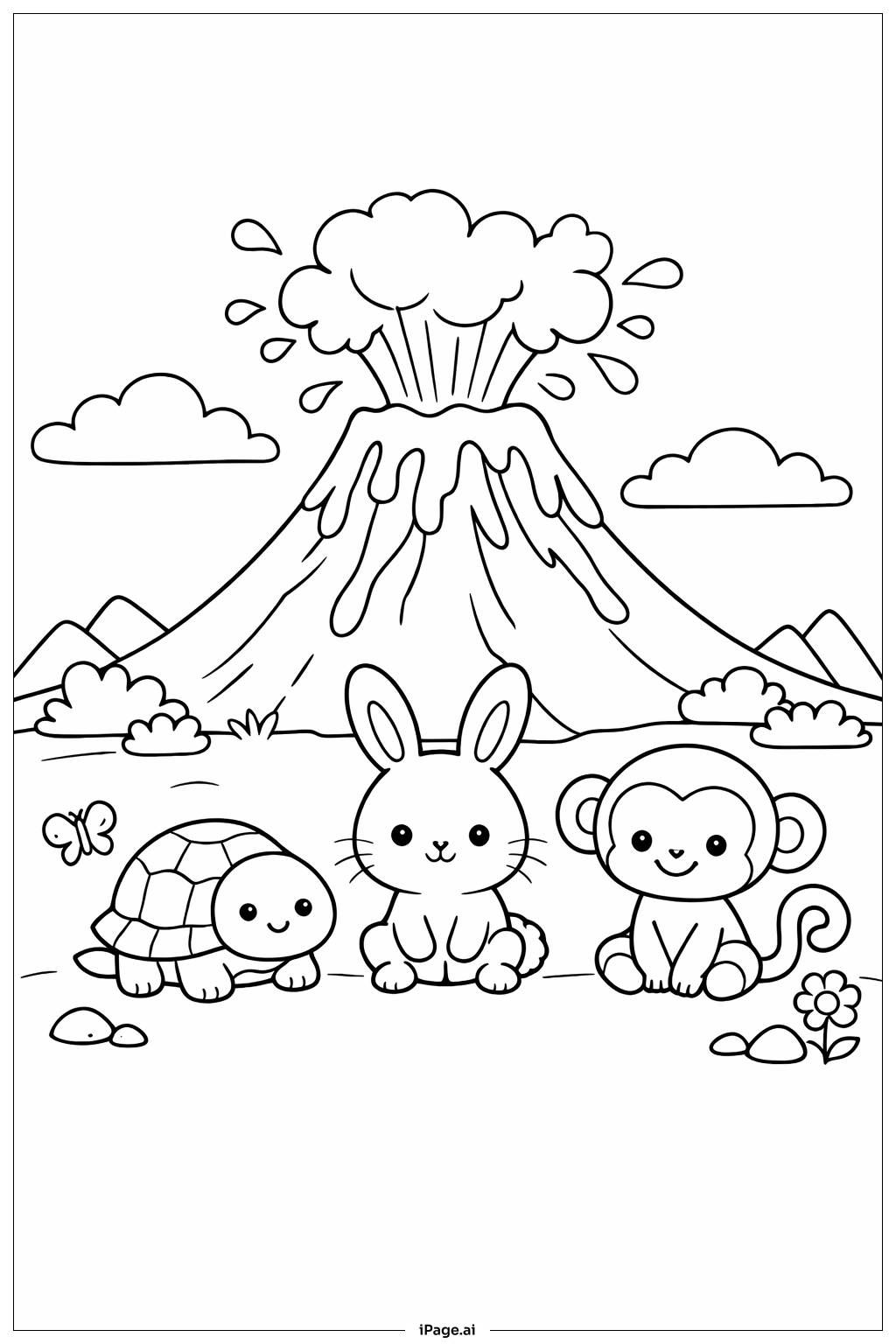
Coloring tips: How to color Volcano with Small Animals coloring page well?
Start with the sky and volcano peak. Use light blue or purple for the sky and a warm gray or brown for the rocky volcano body. Color the lava flows in bright orange, red, and yellow to make them glow with heat and energy. Use deep greens for the bushes and grasses at the base. For the small animals, keep things fun and natural — brown or gray for rabbits and squirrels, bright green for frogs, and soft yellows or blues for birds and butterflies. Add pink or purple to the wildflowers for a pop of color. Use lighter shades first, then layer darker tones to add depth. Let kids mix colors freely to give each animal its own personality. There are no rules here — a rainbow-colored frog or a neon pink rabbit can be just as wonderful!
Coloring challenges: Which parts are difficult to color and need attention for Volcano with Small Animals coloring page?
• Lava Flow Gradients: The lava streams flowing down the volcano require careful color blending. Achieving a realistic glowing effect means transitioning smoothly from bright yellow at the center to deep orange and red at the edges. Young colorists may find this layering technique tricky without practice, but even simple flat colors can look striking.
• Small Animal Details: The tiny animals scattered around the scene have small features — eyes, ears, paws, and tails — that are easy to color outside the lines. Younger children may need a fine-tipped marker or a well-sharpened pencil to stay within these detailed areas. Patience is key when working on these tiny figures.
• Busy Background Elements: The scene is packed with rocks, plants, flowers, and clouds, all overlapping one another. Keeping track of which area belongs to which element can be confusing. It helps to color one section at a time and use contrasting colors for neighboring shapes so everything stands out clearly.
• Smoke and Cloud Textures: The smoke curling from the volcano top and the surrounding clouds are soft, rounded shapes. Giving them a natural, wispy look using light grays, whites, or soft purples requires gentle, feathery strokes. Heavy-handed coloring can make them look too solid and flat.
• Balancing the Overall Color Palette: With so many elements in one scene — animals, plants, rocks, lava, and sky — it can be a challenge to make everything look balanced without the image feeling too busy or clashing. Choosing a consistent color palette and spreading bright accent colors evenly across the page helps tie the whole composition together beautifully.
Benefits of coloring books: Advantages of drawing Volcano with Small Animals coloring page
Coloring this volcano and small animals scene offers a wonderful range of benefits for children and young artists. The mix of a dramatic natural landmark and adorable wildlife makes the page exciting and engaging, helping to hold attention and build focus over time. Working on the detailed animal figures develops fine motor skills and hand-eye coordination as children practice staying within small, precise outlines. Choosing colors for the lava, sky, and animals encourages creative decision-making and builds confidence in personal expression. The scene also sparks curiosity about nature — children may start asking questions about volcanoes, wildlife habitats, and how animals live near natural wonders. Blending warm lava tones and cool sky shades introduces early concepts of color theory in a fun, hands-on way. Completing the full image gives a strong sense of accomplishment and pride. Whether tackled alone or with friends and family, this page turns coloring into a joyful, enriching, and imaginative experience for all ages.