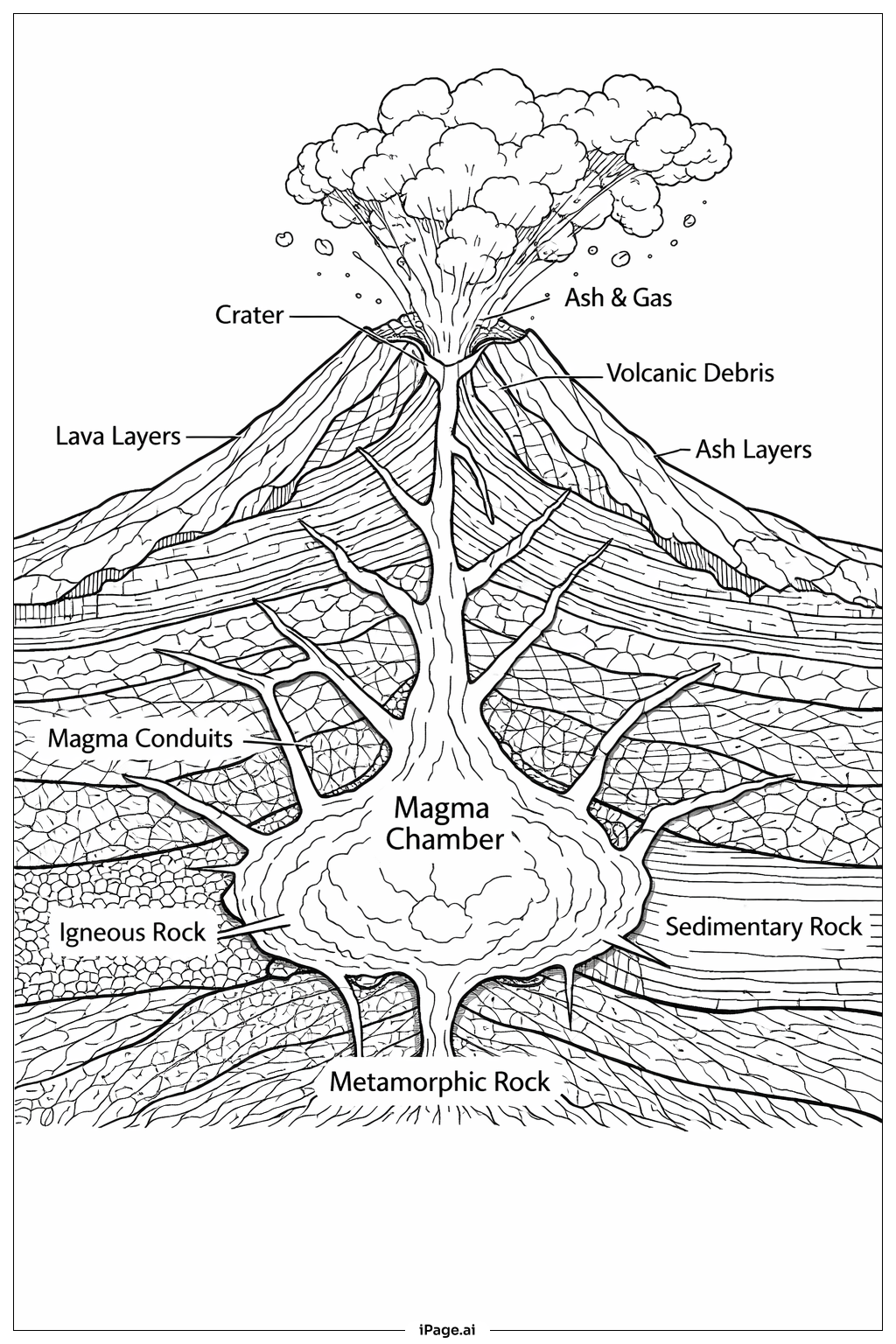
Coloring tips: How to color Volcano Study Cutaway coloring page well?
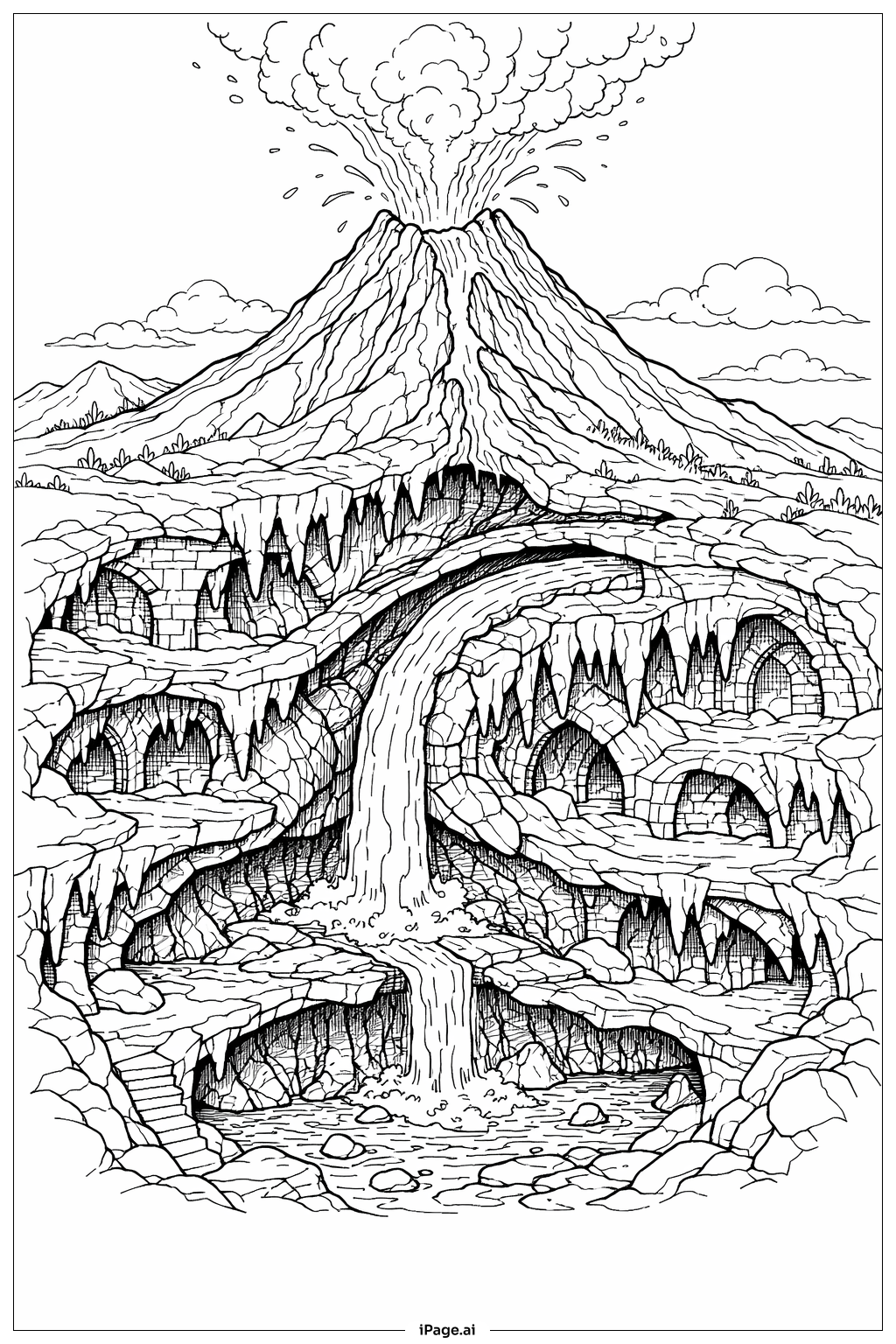
Start from the inside and work your way out. Use deep reds and bright oranges for the magma chamber and lava flows — these are the hottest, most glowing parts of the volcano. Add yellow highlights near the center of lava streams to show intense heat. Color the rock layers in shades of brown, tan, and gray to show different geological formations. Use dark charcoal or black for cooled hardened lava rock. The outer slopes can be earthy greens and browns if vegetation is shown. For the eruption cloud at the top, try mixing light gray, white, and soft purple to create a dramatic billowing effect. Color the sky behind the eruption in deep blues or fiery sunset tones to add contrast and drama. Take your time with the cross-section layers — using different shades for each layer makes the diagram easier to read and much more visually exciting.
Coloring challenges: Which parts are difficult to color and need attention for Volcano Study Cutaway coloring page?
• Magma and Lava Gradient: The hardest part is making lava look hot and glowing. You need to blend bright yellow at the center, then shift to orange, and finally deep red at the edges. Blending these colors smoothly takes practice and patience, especially in narrow lava tube sections where space is limited.\n\n• Rock Layer Differentiation: The cutaway shows multiple geological layers stacked on top of each other. Each layer needs a slightly different shade of brown, gray, or tan so they appear distinct. Using colors that are too similar will cause the layers to blend together and lose their scientific clarity.\n\n• Eruption Cloud Details: The ash cloud and smoke rising from the crater look best when they have depth and volume. Coloring them with flat gray makes them look dull. You need to layer light and dark grays, add white highlights, and maybe soft purple shadows to make the cloud look thick and three-dimensional.\n\n• Small Vent and Conduit Lines: The secondary vents, conduit passages, and fissure lines are thin and narrow. Filling these small areas with color without going outside the lines requires a fine-tipped colored pencil or marker. Young colorists may find this especially tricky.\n\n• Balancing Warm and Cool Tones: The volcano has both fiery warm tones inside and cooler rocky tones outside. Keeping this contrast balanced throughout the whole image is a real artistic challenge. Too much warm color makes the exterior look unrealistic, while too little makes the lava lose its dramatic impact.
Benefits of coloring books: Advantages of drawing Volcano Study Cutaway coloring page
Coloring this volcano cutaway is a wonderful activity that combines creativity with learning. As kids and teens fill in each section, they naturally absorb information about how volcanoes work — from the magma chamber deep underground all the way up to the erupting crater. This makes science feel fun and hands-on rather than like reading a textbook.\n\nWorking through the detailed layers helps build focus and patience. Children learn to slow down, pay attention to small areas, and think carefully about color choices. Choosing the right shades for lava, rock, and ash clouds also encourages creative thinking and artistic decision-making.\n\nFor younger children, the large open areas like lava flows and rock slopes are easy and satisfying to fill in. For older kids and teens, the fine details of vents, conduits, and layered geology offer a real challenge that builds fine motor skills and hand control.\n\nSharing the finished page with a parent or teacher becomes a natural conversation starter about geology, earth science, and natural disasters. It turns a coloring session into a meaningful educational moment. Overall, this image gives colorists of all ages a rewarding mix of art, science, and storytelling in a single page.