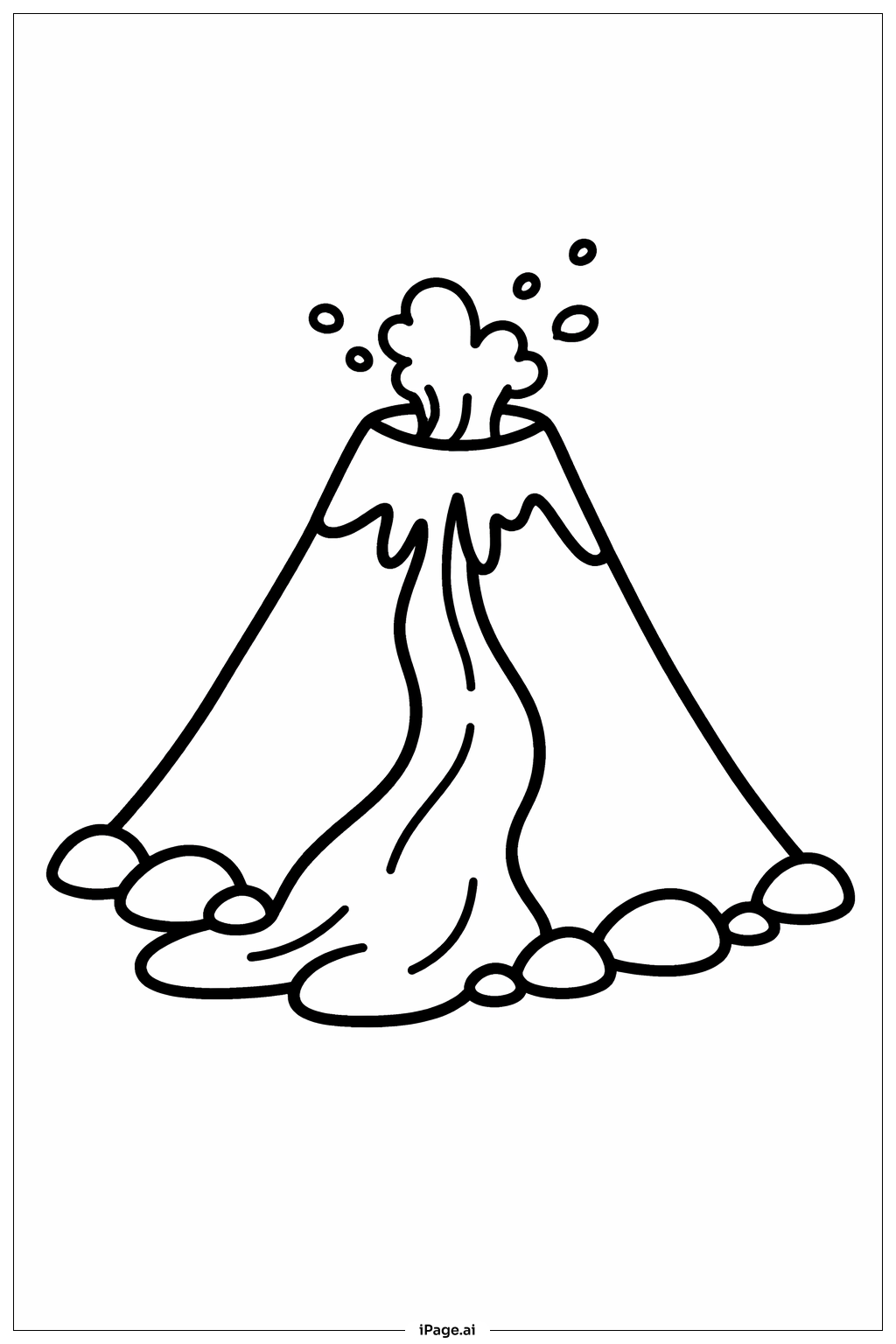
Coloring tips: How to color Volcano with Big Lava Stream coloring page well?
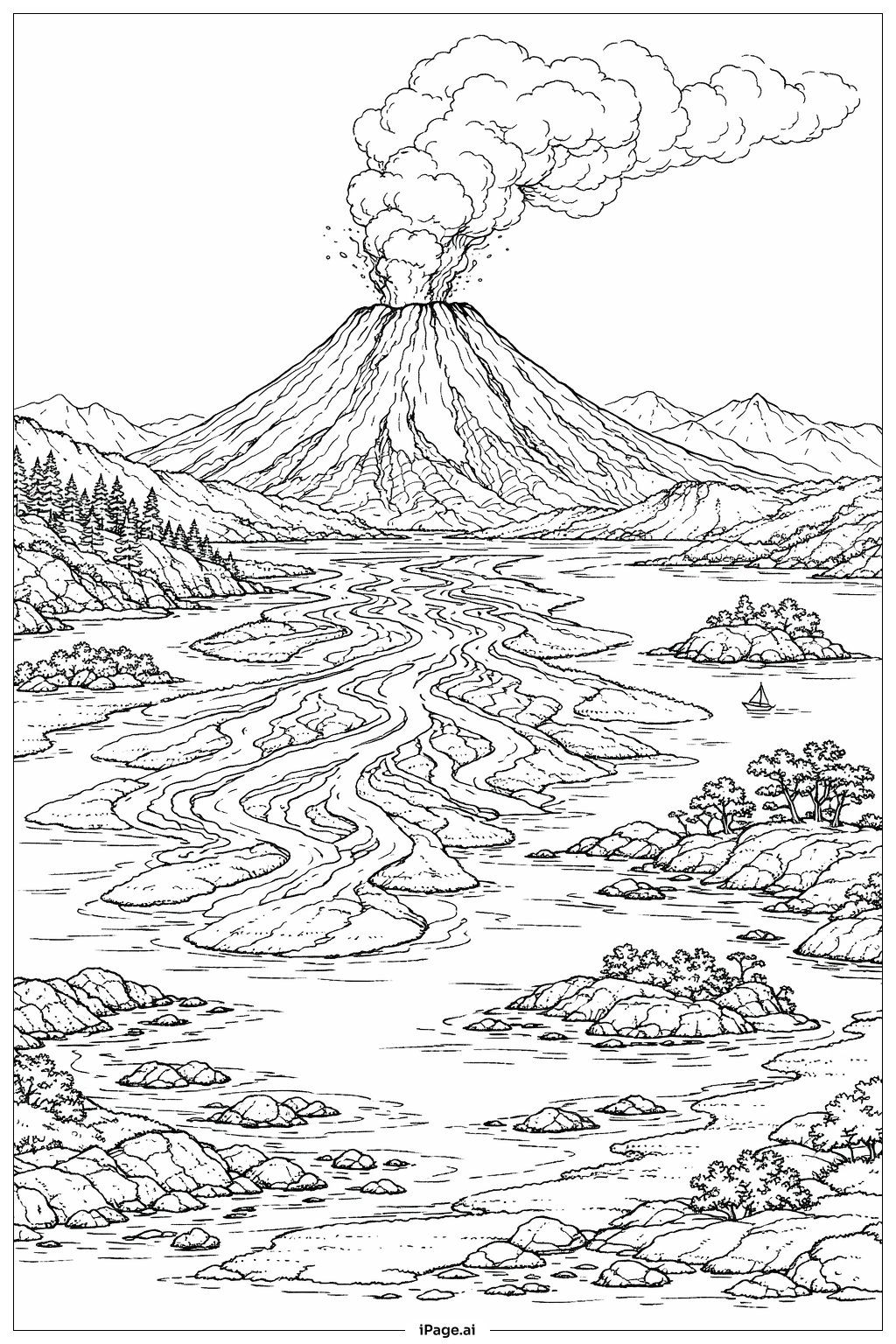
Start with the volcano's rocky body using shades of gray and dark brown to show its rugged, hardened surface. For the lava streams, use bright reds and oranges at the center to show intense heat, then blend into darker reds and browns at the edges where the lava cools. The crater at the top can glow with yellow and orange tones. Color the smoke clouds with light grays and soft purples to contrast the fiery lava. The sky can be done in deep oranges and reds near the top of the volcano, fading into darker grays and blacks higher up to show the dramatic atmosphere of an eruption. Add touches of yellow for glowing hot spots along the lava flow. Keep the rocky ground at the base in dark browns and blacks to represent cooled, hardened lava. Using layered colors and gentle blending will bring this powerful volcanic scene to life.
Coloring challenges: Which parts are difficult to color and need attention for Volcano with Big Lava Stream coloring page?
• Lava Gradient Blending: The lava streams require careful color blending to show the difference between glowing hot centers and cooler, darker edges. Transitioning smoothly from bright yellow to orange, then to deep red and brown, without harsh lines is a real challenge, especially for younger colorists.\n\n• Smoke and Ash Clouds: The billowing clouds of smoke above the crater need subtle shading to look soft and three-dimensional. Using multiple shades of gray and purple while keeping the edges light and airy takes patience and a gentle touch.\n\n• Rocky Texture Details: The volcano's surface is covered in jagged rocks and uneven terrain. Coloring these small, irregular shapes with varied tones of gray, brown, and black to suggest depth and texture requires attention to detail and careful control of the coloring tool.\n\n• Sky Atmosphere: The dramatic sky surrounding the eruption involves multiple color transitions, from fiery oranges and reds near the volcano to darker, stormier tones higher up. Keeping this gradient consistent across a wide area without muddy colors can be tricky.\n\n• Lava Stream Branching: Where the main lava stream splits into smaller flows at the base, colorists must carefully fill narrow, branching paths while keeping each stream looking connected and part of the same flowing system. This requires steady hands and good brush or pencil control.
Benefits of coloring books: Advantages of drawing Volcano with Big Lava Stream coloring page
Coloring this volcano scene offers a wonderful mix of fun and learning for children and adults alike. Working through the fiery lava streams and dramatic rocky landscape helps build focus and concentration, as each section requires careful attention to stay within the lines and blend colors thoughtfully.\n\nThis image is a great way to learn about warm and cool colors. Children can explore how reds, oranges, and yellows represent heat and energy, while grays, blacks, and purples suggest smoke, shadow, and cooled rock. This naturally builds color awareness and understanding of contrast.\n\nThe detailed textures of the rocky volcano surface and the flowing lava encourage fine motor skill development. Carefully filling small, irregular shapes strengthens hand-eye coordination and pencil control, which are important skills for young learners.\n\nColoring such a powerful, dramatic scene also sparks curiosity about earth science and natural phenomena like volcanoes, eruptions, and lava. It can be a great starting point for conversations or lessons about geology and how our planet works.\n\nFinally, the creative freedom of choosing colors and blending techniques makes this a satisfying and confidence-building activity. Completing a complex, dynamic image like this gives colorists of all ages a real sense of accomplishment.